
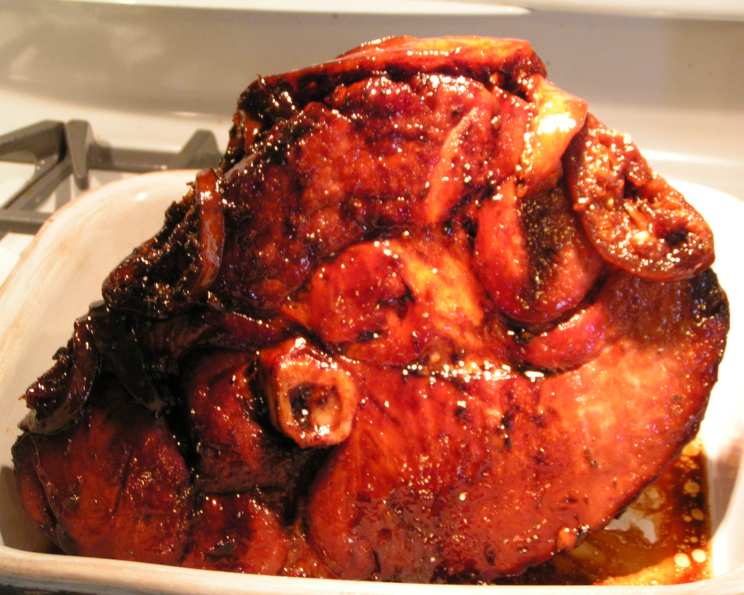
Tangerine Glazed Ham With Fresh Sage: A Holiday Centerpiece
There are certain aromas that instantly transport me back to childhood Christmases. The scent of pine from the freshly cut tree is certainly one, but nothing quite compares to the sweet and savory fragrance of a glazed ham slowly roasting in the oven. I remember my grandmother meticulously basting the ham every half hour, the kitchen filled with anticipation. The resulting ham, a glistening masterpiece, always took center stage on our holiday table, a symbol of warmth, family, and shared joy. It’s a tradition I cherish and continue to this day, always striving to recreate that perfect balance of flavors and create new memories with loved ones.
Recipe Overview
- Prep Time: 20 minutes
- Cook Time: 4 hours
- Total Time: 4 hours 20 minutes
- Servings: 12
- Yield: 1 ham
- Dietary Type: Not specified
Ingredients
- 1 (8 lb) smoked ham, bone-in, skin on
- Kosher salt
- Fresh ground black pepper
- 15 fresh sage leaves (one large bunch – do not use dried sage)
- ¼ cup extra virgin olive oil
- 1 cup unsalted butter, cut in chunks
- 2 tangerines, sliced thin, seeds removed
- 2 cups freshly squeezed tangerine juice (approx. 8-10 tangerines)
- 2 cups light brown sugar, packed
- 1 cup water
- ¼ teaspoon whole cloves
- 2 cinnamon sticks
Equipment Needed
- Large roasting pan
- Sharp knife
- Small bowl
- Saucepan
- Cutting board
Instructions
-
Preheat the oven to 300 degrees F (150 degrees C).
-
Place the ham in a large roasting pan, fat-side up.
-
Using a sharp knife, score the ham with cuts across the skin, about 2 inches apart and ½ inch deep.
-
Cut diagonally down the slashes to form a diamond pattern; season the meat generously with salt and pepper. Don’t be shy! This is your opportunity to season the meat directly.
-
Chop about 8 of the sage leaves and put them in a small bowl; mix with the olive oil to make a paste. This sage oil will infuse the ham with a wonderful herbal note.
-
Rub the sage-oil all over the ham, being sure to get the flavor into all the slits. This ensures the sage flavor penetrates the ham, adding depth to the overall flavor profile.
-
Bake the ham for 2 hours. This allows the ham to warm through before glazing.
-
While the ham is baking, assemble the glaze. In a saucepan, place over medium heat.
-
Add the chunks of butter, sliced tangerines, tangerine juice, brown sugar, water, cloves, and cinnamon sticks to the saucepan.
-
Slowly cook the liquid down to a syrupy glaze. This should take about 30 to 40 minutes. Stir occasionally to prevent sticking and ensure even cooking. The glaze is ready when it coats the back of a spoon.
-
After the ham has been baking for a couple of hours, pour the tangerine glaze all over it, including the pieces of tangerine.
-
Scatter the remaining sage leaves on top and stick the ham back in the oven and continue to cook for another 2 hours, basting with the pan juices every 30 minutes. Basting is key to achieving that beautifully caramelized glaze.
-
The ham is done when it is dark and crispy, and the whole thing is glistening with a sugary glaze. A meat thermometer inserted into the thickest part of the ham should read 140 degrees F (60 degrees C).
-
Set the ham on a cutting board to rest for 10-15 minutes before carving. This allows the juices to redistribute, resulting in a more tender and flavorful ham.
-
Serve the tangerine glaze on the side if desired. Some prefer extra glaze for dipping or drizzling over the carved ham.
Expert Tips & Tricks
- For an even deeper tangerine flavor, zest one of the tangerines before juicing and add the zest to the glaze.
- If the glaze becomes too thick during cooking, add a tablespoon or two of water to thin it out.
- To prevent the ham from drying out during baking, place a pan of water on the bottom rack of the oven.
- If the ham starts to brown too quickly, tent it with foil.
- The tangerine slices in the glaze become wonderfully candied. Don’t discard them! Serve them alongside the ham.
- For a smoky flavor, consider using smoked paprika in the glaze. Start with ½ teaspoon and adjust to taste.
- Make the glaze a day ahead of time. Store it in an airtight container in the refrigerator. Reheat gently before using.
- If you don’t have fresh tangerines, you can use high-quality tangerine juice from the store. Look for a variety with no added sugar.
- Use a sharp carving knife to ensure clean slices and prevent the ham from shredding.
Serving & Storage Suggestions
Serve the Tangerine Glazed Ham as the centerpiece of your holiday meal, accompanied by classic sides such as mashed potatoes, roasted vegetables, and cranberry sauce. For a delicious pairing, consider a dry Riesling or a crisp Sauvignon Blanc.
Leftover ham can be stored in an airtight container in the refrigerator for up to 5 days. For longer storage, wrap the ham tightly in plastic wrap and then in aluminum foil and freeze for up to 2 months.
To reheat, thaw the ham in the refrigerator overnight. Reheat in a preheated oven at 325 degrees F (160 degrees C) until warmed through, about 15-20 minutes per pound. Cover the ham with foil to prevent it from drying out.
The leftover glaze can also be stored in the refrigerator and reheated for serving alongside sandwiches or other dishes.
Nutritional Information
| Nutrient | Amount per Serving | % Daily Value |
|---|---|---|
| Calories | 939.9 kcal | N/A |
| Calories from Fat | 495 g | 53% |
| Total Fat | 55.1 g | 84% |
| Saturated Fat | 22.1 g | 110% |
| Cholesterol | 248.9 mg | 82% |
| Sodium | 5242.8 mg | 218% |
| Total Carbohydrate | 42.1 g | 14% |
| Dietary Fiber | 0.3 g | 1% |
| Sugars | 37.1 g | 148% |
| Protein | 70.4 g | 140% |
Nutritional information is an estimate and may vary depending on specific ingredients and portion sizes.
Variations & Substitutions
- Spice it Up: Add a pinch of cayenne pepper to the glaze for a touch of heat.
- Citrus Twist: Substitute the tangerine juice and slices with orange juice and slices for a slightly different flavor profile.
- Maple Glaze: Replace the brown sugar with maple syrup for a richer, more complex flavor.
- Herbaceous Ham: Experiment with different herbs, such as rosemary or thyme, in addition to the sage.
- Pineapple Glaze: For a tropical twist, substitute the tangerine juice with pineapple juice and add pineapple chunks to the glaze.
- Honey Glaze: Replace the brown sugar with honey for a sweeter, stickier glaze.
FAQs (Frequently Asked Questions)
Q: Can I use a smaller ham for this recipe?
A: Yes, you can use a smaller ham, but you will need to adjust the cooking time accordingly. Use a meat thermometer to ensure the ham reaches an internal temperature of 140 degrees F (60 degrees C).
Q: Can I make this glaze ahead of time?
A: Absolutely! The glaze can be made up to 2 days in advance. Store it in an airtight container in the refrigerator and reheat gently before using.
Q: What is the best way to carve a ham?
A: Use a sharp carving knife and start by slicing the ham parallel to the bone. Then, cut along the bone to release the slices.
Q: Can I freeze leftover ham?
A: Yes, leftover ham can be frozen for up to 2 months. Wrap it tightly in plastic wrap and then in aluminum foil to prevent freezer burn.
Q: Can I use dried sage instead of fresh?
A: While you can use dried sage in a pinch, the flavor will not be as vibrant as fresh sage. If using dried sage, use about 1 teaspoon for every tablespoon of fresh sage. However, I highly recommend using fresh sage for the best flavor.
Final Thoughts
This Tangerine Glazed Ham with Fresh Sage is more than just a recipe; it’s an invitation to create lasting memories around your holiday table. The combination of sweet, savory, and herbal flavors is simply irresistible. Don’t be intimidated by the longer cooking time – the result is well worth the effort. Gather your loved ones, savor each bite, and enjoy the warmth and joy that this magnificent dish brings. I encourage you to try this recipe and share your own culinary adventures with me. Perhaps you’ll discover new variations or serving suggestions that will become part of your own family traditions. Happy cooking!