
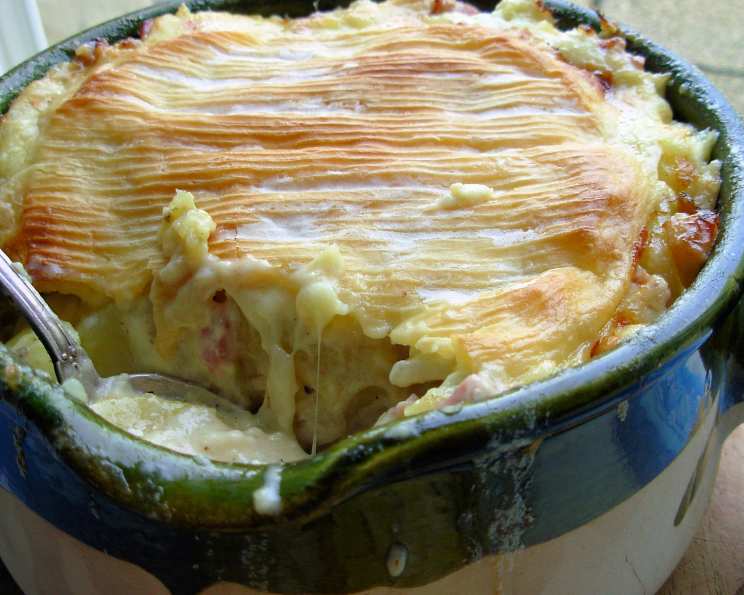
Tartiflette: Alpine Melted Cheese, Bacon, and Potato Gratin
The first time I tasted tartiflette, I was huddled in a small, family-run restaurant in the French Alps, snowflakes clinging to the windowpanes. The air was thick with the aroma of melting cheese and woodsmoke. The bubbling, golden dish that arrived was pure comfort in a cast-iron pan – potatoes soft and creamy, bacon smoky and crisp, all enveloped in the nutty, pungent embrace of Reblochon cheese. One bite, and I was transported to a world of rustic charm and simple, satisfying flavors, a culinary hug on a freezing winter’s night.
Recipe Overview
- Prep Time: 20 minutes
- Cook Time: 40 minutes
- Total Time: 60 minutes
- Servings: 4
- Yield: 1 Tartiflette
- Dietary Type: Not Gluten-Free
Ingredients
- 1 ½ kg potatoes
- 1 large onion, peeled and finely diced
- 200 g smoked lardons (8 ozs) or 200 g smoked streaky bacon, diced (8 ozs)
- 25 g butter (1 oz)
- ¼ pint white wine (1 wine glass)
- 4 tablespoons creme fraiche or 4 tablespoons sour cream
- 1 garlic clove, peeled and cut in half
- Sea salt, to taste
- Fresh ground black pepper, to taste
- 1 ripe Reblochon cheese
Equipment Needed
- Large pan
- Heavy frying pan
- Ovenproof earthenware dish
Instructions
-
Preheat the oven to 200°C/400°F/gas mark 5.
-
Bring a large pan of water to a boil and cook the potatoes whole, in their skins, for 15 minutes. This par-cooks the potatoes, ensuring they’re tender in the final dish. Be careful not to overcook them at this stage, or they’ll fall apart when slicing.
-
Meanwhile, cook the onion and bacon or lardons in the butter in a heavy frying pan over a medium heat. The goal is to sweat them down until softened, but not browned. Rendering out the bacon fat is key to the dish’s rich flavor, so don’t rush this step.
-
Once the onion and bacon are cooked, discard the excess fat. This step is crucial to prevent the tartiflette from becoming overly greasy. Then, add the white wine and the creme fraiche or sour cream to the pan. Mix well, scraping up any browned bits from the bottom of the pan – these add depth of flavor to the sauce.
-
Drain the potatoes and, as soon as they are cool enough to handle, peel them. The quicker you peel them after cooking, the easier it will be. Slice them thinly across. Aim for consistent thickness to ensure even cooking.
-
Choose an ovenproof earthenware dish and rub it well with the cut halves of garlic. This infuses the dish with a subtle garlic aroma that complements the other flavors.
-
Layer half the sliced potatoes across the base of the dish. Season them generously with sea salt and freshly ground black pepper. Don’t be shy with the seasoning – the potatoes need it to stand up to the richness of the cheese and bacon. Scatter over half the onion and bacon mixture.
-
Cut the Reblochon cheese in half through the center of the cheese, leaving you with a cut edge and a skin/rind edge. Lay one half of the cheese on top of the potato, bacon, and onion mixture.
-
Add the remaining bacon and onion mixture, followed by the rest of the potatoes and more seasoning. Remember to season each layer for the best flavor distribution.
-
Place the remaining half of cut Reblochon cheese skin/rind side up on top of the potatoes. This helps to contain the melting cheese and prevent it from spreading too thinly.
-
Bake for 10 minutes at 200°C/400°F/gas mark 5, then reduce the heat to 180°C/350°F/gas mark 4 for a further 20–25 minutes. The Reblochon should melt within its skin, dripping down throughout the dish, while the potatoes will become crispy and golden brown. If the top is browning too quickly, cover the dish loosely with foil.
-
Tartiflette is ready when the cheese is bubbly and golden brown, and the potatoes are tender when pierced with a fork.
Expert Tips & Tricks
- For an extra layer of flavor, consider adding a splash of dry vermouth to the onion and bacon mixture along with the white wine.
- If you can’t find Reblochon cheese, a good substitute is Camembert or Brie, though the flavor will be slightly different.
- To prevent the bottom layer of potatoes from sticking, lightly grease the earthenware dish with butter before rubbing it with garlic.
- For a richer flavor, use duck fat instead of butter to cook the onion and bacon.
- If you want a crispier top, remove the foil for the last 5-10 minutes of baking and increase the oven temperature slightly.
Serving & Storage Suggestions
Serve the Tartiflette hot and straight from the gratin dish. It’s a filling dish, so all you really need to accompany it is a mixed green salad, crusty French bread, and a selection of pickles. The acidity of the salad and pickles cuts through the richness of the tartiflette beautifully.
Leftover tartiflette can be stored in the refrigerator for up to 3 days. Reheat it in the oven at 180°C/350°F until heated through and bubbly, or in the microwave in short bursts, stirring occasionally. While it’s best enjoyed fresh, reheated tartiflette is still delicious. Freezing is not recommended, as the texture of the potatoes and cheese may change.
Nutritional Information
| Nutrient | Amount per Serving | % Daily Value |
|---|---|---|
| Calories | 650 kcal | 33% |
| Total Fat | 45g | 69% |
| Saturated Fat | 28g | 140% |
| Cholesterol | 120mg | 40% |
| Sodium | 500mg | 21% |
| Total Carbohydrate | 45g | 15% |
| Dietary Fiber | 5g | 20% |
| Sugars | 5g | – |
| Protein | 25g | 50% |
Note: Nutritional information is an estimate and may vary based on specific ingredients and portion sizes.
Variations & Substitutions
- Vegetarian Tartiflette: Omit the bacon or lardons and substitute with sautéed mushrooms or other vegetables of your choice. Smoked paprika can add a smoky flavor.
- Spicy Tartiflette: Add a pinch of red pepper flakes to the onion and bacon mixture for a touch of heat.
- Tartiflette with Leeks: Substitute half of the onion with thinly sliced leeks for a milder, sweeter flavor.
- Herbed Tartiflette: Add fresh thyme or rosemary to the potato layers for an aromatic twist.
- Different Cheese: While Reblochon is traditional, you can experiment with other melting cheeses like Gruyere or Fontina for a slightly different flavor profile.
FAQs (Frequently Asked Questions)
Q: Can I make tartiflette ahead of time?
A: Yes, you can assemble the tartiflette up to a day in advance and store it in the refrigerator. Add an extra 10-15 minutes to the baking time when cooking from cold.
Q: What if I can’t find Reblochon cheese?
A: If you can’t find Reblochon, Camembert or Brie are good substitutes, though the flavor will be slightly different. Look for a cheese that is ripe and has a good melting quality.
Q: Why is it important to cook the potatoes in their skins?
A: Cooking the potatoes in their skins helps to prevent them from becoming waterlogged and ensures they hold their shape when sliced.
Q: How do I know when the tartiflette is done?
A: The tartiflette is done when the cheese is melted and bubbly, the potatoes are tender when pierced with a fork, and the top is golden brown.
Q: Can I add other vegetables to tartiflette?
A: Absolutely! Mushrooms, leeks, or even roasted butternut squash can be added for extra flavor and nutrients.
Final Thoughts
Tartiflette is more than just a recipe; it’s an experience. It’s the warmth of the Alps, the comfort of a home-cooked meal, and the joy of sharing good food with loved ones. So, gather your ingredients, preheat your oven, and prepare to be transported to a world of rustic charm and cheesy goodness. I hope this recipe brings you as much joy as it has brought me over the years. Don’t hesitate to tweak it to your liking, and please share your creations and feedback – I’d love to hear about your tartiflette adventures! Serve it with a crisp glass of Savoie wine for the ultimate Alpine experience. Bon appétit!