
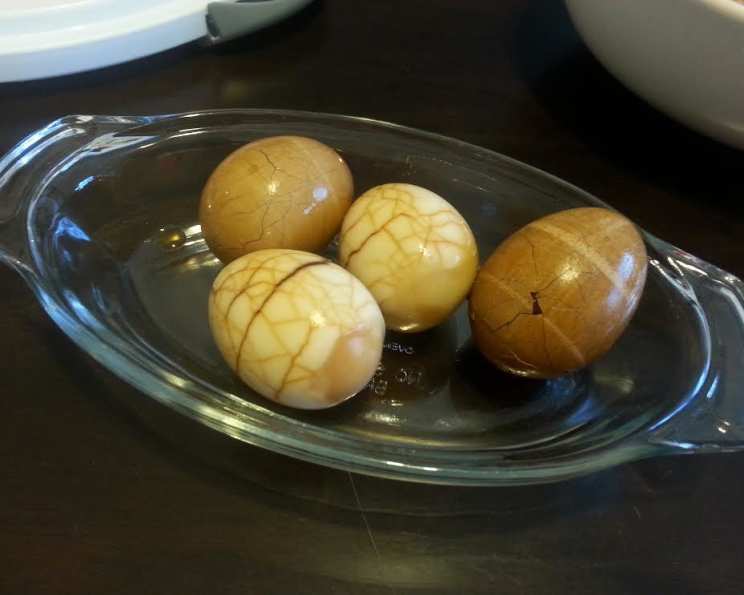
Marbled Tea Leaf Eggs: A Culinary Journey
I still remember the first time I saw tea leaf eggs. It was at a bustling night market in Taipei, Taiwan. The vendor carefully cracked the shells of these dark, mottled orbs, revealing intricate patterns that looked like miniature landscapes. The aroma of soy sauce, spices, and black tea was intoxicating. I knew I had to try one, and that first bite was an explosion of savory, subtly sweet, and deeply comforting flavors. It was more than just a snack; it was a taste of home and a cultural experience I’ll never forget. Now, I recreate that memory in my own kitchen with this classic recipe.
Recipe Overview
- Prep Time: 10 minutes
- Cook Time: 1 hour 45 minutes
- Total Time: 1 hour 55 minutes
- Servings: 10
- Yield: 10 eggs
- Dietary Type: Varies (see substitutions)
Ingredients
- 10 eggs
- 3 tablespoons soy sauce
- 5 teaspoons anise seed or 2 star anise
- 2 inches cinnamon sticks
- 2 tablespoons black tea leaves
- 1 teaspoon sugar
- 1 teaspoon salt
- 2 cups cold water
Equipment Needed
- Saucepan
- Measuring spoons and cups
- Tea ball (optional, for tea leaves)
Instructions
- Place the eggs in a saucepan and cover with cold water, ensuring the water level is at least 1 inch above the eggs. This helps to ensure even cooking.
- Rapidly bring the water to a boil. Once boiling, cover the pan tightly, reduce the heat to low, and let the eggs simmer gently for 15 minutes. This ensures the eggs are hard-boiled.
- Immediately rinse the eggs quickly in cold water until they are cool enough to handle. Drain the water. This stops the cooking process.
- Gently tap the eggs all over, creating a network of fine cracks on the shell. Be careful not to peel the shell off. The cracks are crucial for creating the marbled effect, allowing the flavorful braising liquid to seep into the egg.
- Carefully return the cracked eggs to the saucepan. Add the soy sauce, anise seed (or star anise), cinnamon sticks, black tea leaves (use a tea ball for easy removal later), sugar, salt, and 2 cups of cold water.
- Bring the mixture to a boil over medium heat. Once boiling, reduce the heat to the lowest setting, cover the pan, and simmer gently for 1 1/2 hours. If needed, add more water during the simmering process to keep the eggs covered. This long simmering time allows the flavors to fully penetrate the eggs, creating a deep, complex taste.
- Remove from heat and drain the eggs. Discard the spices and the tea (unless you used a tea ball, in which case, remove the ball).
- Chill the eggs in the refrigerator for at least 4 hours, or preferably overnight. The chilling process further enhances the marbled effect and flavor.
- To serve, gently roll the eggs between the palms of your hands to loosen the shell. Peel the eggs, starting from the larger end. This makes peeling easier.
Expert Tips & Tricks
- For a more intense flavor, let the eggs sit in the braising liquid overnight in the refrigerator after simmering.
- Use high-quality soy sauce for the best flavor.
- Adjust the amount of sugar to your preference. Some prefer a slightly sweeter egg.
- If you don’t have anise seed, you can substitute with star anise. The flavor will be slightly different but still delicious.
- To prevent the eggs from cracking too much during the initial simmering, add a tablespoon of vinegar to the water.
- Don’t overcrowd the saucepan. If you’re making a large batch, use a larger pot or cook in batches.
- Experiment with different types of tea. Oolong or pu-erh tea can offer unique flavor profiles.
Serving & Storage Suggestions
Serve tea leaf eggs chilled or at room temperature. They are a perfect snack, appetizer, or addition to a bento box. They pair well with congee, noodles, or simply enjoyed on their own.
Store peeled tea leaf eggs in an airtight container in the refrigerator for up to 3 days. Unpeeled eggs can be stored for up to a week. They are not recommended for freezing, as the texture will change significantly.
Nutritional Information
| Nutrient | Amount per Serving | % Daily Value |
|---|---|---|
| Calories | 81.9 kcal | N/A |
| Calories from Fat | N/A | 56% |
| Total Fat | 5.1 g | 7% |
| Saturated Fat | 1.6 g | 7% |
| Cholesterol | 211.5 mg | 70% |
| Sodium | 605.3 mg | 25% |
| Total Carbohydrate | 1.6 g | 0% |
| Dietary Fiber | 0.2 g | 0% |
| Sugars | 0.9 g | 3% |
| Protein | 7 g | 14% |
Variations & Substitutions
- Vegetarian: While traditionally not vegetarian, you can make a similar marinated egg using hard-boiled quail eggs and a vegetarian soy sauce alternative.
- Spicy: Add a pinch of red pepper flakes or a few slices of fresh chili to the braising liquid for a spicy kick.
- Herbal: Experiment with adding other herbs and spices to the braising liquid, such as ginger, Sichuan peppercorns, or dried tangerine peel.
- Lower Sodium: Use low-sodium soy sauce to reduce the sodium content.
- Sweet and Savory: Increase the amount of sugar for a sweeter flavor profile, or add a touch of dark soy sauce for a deeper, more complex flavor.
FAQs (Frequently Asked Questions)
Q: Why do I need to crack the shells?
A: Cracking the shells creates the signature marbled appearance of tea leaf eggs by allowing the flavorful braising liquid to seep into the egg white.
Q: Can I use different types of tea?
A: Yes! While black tea is traditional, you can experiment with other teas like oolong, pu-erh, or even jasmine tea for different flavor nuances.
Q: How do I prevent the eggs from overcooking?
A: Simmering the eggs on low heat after the initial boiling helps prevent them from becoming rubbery. Also, immediately rinsing them in cold water stops the cooking process.
Q: How long can I store tea leaf eggs?
A: Peeled tea leaf eggs can be stored in an airtight container in the refrigerator for up to 3 days, while unpeeled eggs can last up to a week.
Q: Can I make these in a slow cooker?
A: Yes, you can adapt this recipe for a slow cooker. After hard-boiling and cracking the eggs, place them in the slow cooker with the braising liquid and cook on low for 4-6 hours.
Final Thoughts
Making tea leaf eggs is more than just following a recipe; it’s about embarking on a culinary adventure. The combination of flavors, the beautiful marbled appearance, and the cultural significance of this dish make it a truly special experience. Don’t be afraid to experiment with different variations and find your own perfect recipe. I hope you enjoy making and sharing these delicious eggs as much as I do. Share your creations and any tips you discover along the way – I’d love to hear about your experiences! Consider pairing them with a steaming bowl of congee for a comforting and satisfying meal.