
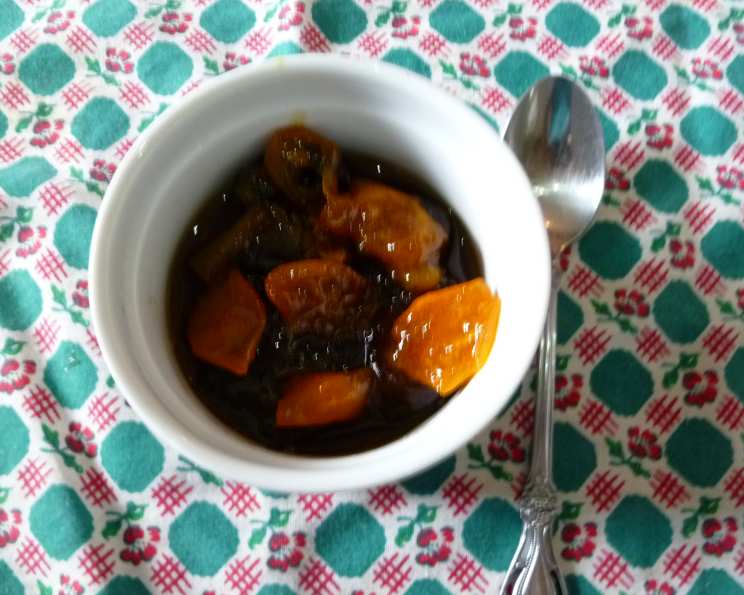
Tea-Poached Prunes & Kumquats: A Delicate Dance of Flavors
My grandmother, a woman of quiet elegance and impeccable taste, always had a small dish of prunes steeped in something fragrant waiting for guests. It was never just a snack; it was an offering of comfort, a little jewel of hospitality. Though her version leaned heavily on brandy, the memory of those plump, glistening fruits and the warm, slightly boozy aroma that permeated her parlor is forever etched in my mind. Discovering this recipe for tea-poached prunes and kumquats felt like uncovering a secret family heirloom—a nuanced variation on a beloved classic, filled with just as much potential for creating lasting memories.
Recipe Overview
- Prep Time: 15 minutes
- Cook Time: 20 minutes
- Total Time: 35 minutes
- Servings: 4-8
- Dietary Type: Vegan
Ingredients
- ½ cup sugar, divided
- 2 Earl Grey tea bags (black currant is also suggested)
- 25 prunes (with pits if you can find them)
- 1 strip lemon zest, about ½-inch-wide and 2 to 3 inches long (or orange)
- 10 kumquats, sliced and seeded
Equipment Needed
- Small saucepan
- Slotted spoon (optional)
- Deep soup plates or bowls
Instructions
- Begin by preparing the tea syrup. In a small saucepan, combine ¼ cup of the sugar with 1 cup of water. Add the 2 Earl Grey tea bags (remove any tags).
- Bring the mixture to a gentle simmer over medium heat, stirring until the sugar is completely dissolved. Be careful not to let it boil rapidly; a gentle simmer is key for infusing the tea flavor without making it bitter.
- Add the 25 prunes to the simmering tea syrup. Cover the saucepan with a lid and allow the prunes to steep for about 20 minutes, or until they are tender. The exact time may vary depending on the size and dryness of your prunes. Stir occasionally to ensure they are evenly exposed to the syrup.
- Once the prunes are tender, remove the saucepan from the heat and allow the mixture to cool to room temperature. This cooling period allows the prunes to continue absorbing the flavors of the tea and syrup.
- After the mixture has cooled, remove the tea bags from the saucepan. Gently squeeze the tea bags over the saucepan to extract any remaining flavor before discarding them.
- Set the prunes aside in their poaching liquid. This liquid is precious; it’s imbued with the delicate flavors of tea and prunes.
- Now, prepare the glazed kumquats. In another small saucepan, combine the remaining ¼ cup of sugar with 1 cup of water. Add the 10 sliced and seeded kumquats.
- Bring the kumquat mixture to a boil over medium-high heat. Once boiling, reduce the heat to a gentle simmer and cook for about 10 minutes, or until the liquid has reduced and become syrupy.
- During the last few minutes of cooking, keep a close eye on the kumquats as the syrup thickens. You want a lovely glaze, not a scorched mess.
- Remove the glazed kumquats from the heat and allow them to cool to room temperature. As they cool, the syrup will thicken further, creating a beautiful, glossy coating on the kumquats.
- To serve, place a portion of the tea-poached prunes and their liquid in deep soup plates or bowls. Spoon the glazed kumquats over the top, distributing them evenly.
Expert Tips & Tricks
- Pit Perfect: While pitted prunes are more common, seeking out prunes with pits adds a richer depth of flavor to the dish. The pit imparts a subtle almond-like essence during poaching.
- Tea Time Twist: Don’t be afraid to experiment with different tea varieties. A smoky Lapsang Souchong or a floral jasmine tea can add a unique dimension to the prunes. Avoid overly bitter teas, like some green teas, which can overpower the delicate fruit.
- Zest for Life: The lemon (or orange) zest provides a bright, citrusy counterpoint to the sweetness of the prunes and the slight bitterness of the kumquats. Be sure to use a vegetable peeler to remove the zest in strips, avoiding the white pith, which can be bitter.
- Syrupy Salvation: If your syrup becomes too thick while glazing the kumquats, add a tablespoon or two of water to thin it out. Conversely, if it’s too thin, continue simmering until it reaches your desired consistency. The consistency should be similar to honey.
- Make-Ahead Magic: Both the poached prunes and the glazed kumquats can be made a day or two in advance. Store them separately in airtight containers in the refrigerator. This allows the flavors to meld and deepen, making them even more delicious.
Serving & Storage Suggestions
Serve the tea-poached prunes and glazed kumquats chilled or at room temperature in deep soup plates or bowls. The vibrant colors and glistening syrup make for a visually appealing presentation. A dollop of thick Greek yogurt, crème fraîche, or even a scoop of vanilla ice cream can add a creamy, contrasting element.
Leftovers can be stored in an airtight container in the refrigerator for up to 5 days. The flavors will continue to develop over time, making them even more enjoyable. You can also freeze the poached prunes (without the kumquats) for longer storage, up to 2 months. Thaw them in the refrigerator overnight before serving. The kumquats are best enjoyed fresh, but can be frozen for up to 1 month.
Nutritional Information
| Nutrient | Amount per Serving | % Daily Value |
|---|---|---|
| Calories | 273 kcal | N/A |
| Fat | 0.6 g | 2% |
| Saturated Fat | 0.1 g | 0% |
| Cholesterol | 0 mg | 0% |
| Sodium | 6.2 mg | 0% |
| Carbohydrates | 70.5 g | 23% |
| Fiber | 7.3 g | 29% |
| Sugars | 52 g | N/A |
| Protein | 2.2 g | 4% |
Note: Nutritional information is an estimate and may vary based on specific ingredients and portion sizes.
Variations & Substitutions
- Spice It Up: Add a cinnamon stick, star anise, or a few cardamom pods to the tea syrup for a warm, aromatic twist.
- Boozy Boost: A splash of brandy, Armagnac, or even a dark rum added to the tea syrup can elevate the flavors and add a touch of indulgence.
- Citrus Symphony: Experiment with different citrus fruits. Tangerine zest or slices of blood orange can provide a unique and vibrant flavor profile.
- Sweetener Switch: Replace the granulated sugar with honey, maple syrup, or agave nectar for a more natural sweetener. Adjust the amount to taste.
- Fruitful Fusion: Add other dried fruits, such as apricots, figs, or cranberries, to the tea syrup along with the prunes for a more complex flavor and texture.
FAQs (Frequently Asked Questions)
Q: Can I use pitted prunes instead of prunes with pits?
A: Yes, you can definitely use pitted prunes if you prefer. However, prunes with pits tend to have a deeper, richer flavor due to the pit imparting a subtle almond-like essence during poaching.
Q: What if I can’t find kumquats?
A: If you can’t find kumquats, you can substitute them with other citrus fruits, such as Mandarin oranges or tangerines. Be sure to adjust the cooking time accordingly, as other citrus fruits may not require as much cooking to soften.
Q: Can I use a different type of tea?
A: Absolutely! While Earl Grey is recommended for its classic flavor, you can experiment with other teas such as black currant, jasmine, or even a smoky Lapsang Souchong. Just avoid overly bitter teas, which can overpower the fruit.
Q: How long will the poached prunes and kumquats last in the refrigerator?
A: The poached prunes and kumquats can be stored in an airtight container in the refrigerator for up to 5 days. The flavors will actually meld and deepen over time, making them even more delicious.
Q: Can I serve this dish warm instead of chilled?
A: Yes, you can serve this dish warm, especially during colder months. Simply reheat the poached prunes gently in a saucepan over low heat before serving. Add the kumquats at the end to warm them slightly.
Final Thoughts
This recipe for tea-poached prunes and kumquats is more than just a dessert; it’s an invitation to slow down, savor the moment, and appreciate the simple pleasures in life. The delicate dance of flavors, the subtle sweetness, and the comforting aroma create a truly memorable culinary experience. So, I encourage you to try this recipe, experiment with your own variations, and share your creations with loved ones. And if you happen to have a bit of leftover poaching liquid, don’t hesitate to add it to a sparkling wine or a cup of herbal tea for a touch of unexpected sophistication.