
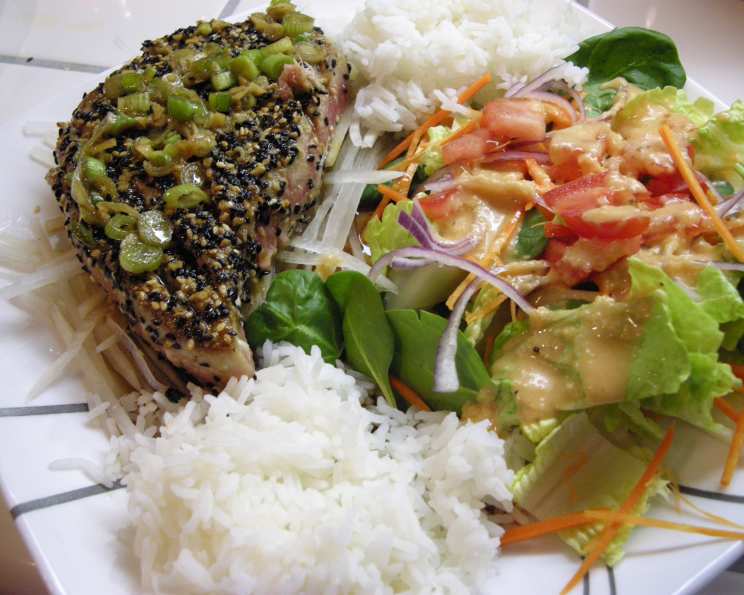
Teddy’s Mommy’s Pan-Seared Ahi Tuna with Wasabi Sauce
My first encounter with seared ahi tuna was in a small, dimly lit sushi bar in Tokyo. The chef, with hands that moved like a seasoned artist, presented me with a ruby-red slice, kissed by fire and adorned with a vibrant green wasabi dot. The taste was a revelation – the richness of the tuna melting against the fiery horseradish, a dance of textures and flavors that I’ve chased ever since. This recipe brings me back to that moment, a reminder that simple techniques can unlock culinary magic.
Recipe Overview:
- Prep Time: 15 minutes
- Cook Time: 15 minutes
- Total Time: 30 minutes
- Servings: 2
- Yield: 2 steaks
- Dietary Type: High-Protein
Ingredients:
For the Tuna:
- 2 ahi tuna steaks, 1/2 lb each, 1-inch thick
- 1/2 cup white sesame seeds, toasted
- 1 tablespoon coriander seed, crushed (or 1/2 tablespoon coriander powder)
- 1 teaspoon coarse salt
- 1 teaspoon pepper
- 1 tablespoon vegetable oil (vegetable, corn, canola, etc.)
- 1 tablespoon sesame oil
For the Sauce:
- 1/2 cup water
- 2 tablespoons wasabi paste
- 1/3 cup soy sauce (I use reduced sodium)
- 2 tablespoons vegetable oil
- 1 1/2 teaspoons sesame oil
- 1 tablespoon dry sherry
- 1 1/2 teaspoons fresh gingerroot, minced
- 4 green onions, thinly sliced
For the Garnish:
- 1 cup daikon radish, grated using large holes on a cheese grater
Equipment Needed:
- Cheese grater
- Small Mixing Bowl
- Large Mixing Bowl
- 10-inch deep frying pan (non-stick preferred)
- Cutting Board
Instructions:
-
Begin by grating the daikon radish using the large holes on a cheese grater. Divide the grated radish between two plates, spreading it out in a thin layer large enough to accommodate a tuna steak on each. Allow the radish to sit at room temperature while you prepare the rest of the dish; this brings out its best flavor.
-
Prepare the wasabi sauce. In a mixing bowl, combine the water, wasabi paste, soy sauce, vegetable oil, sesame oil, dry sherry, and minced gingerroot. Whisk all the ingredients together until well combined and set aside.
-
Rinse the tuna steaks under cold water and pat them completely dry with paper towels. This is crucial for achieving a good sear.
-
In a separate, large bowl, combine the toasted sesame seeds, crushed coriander seed (or coriander powder), coarse salt, and pepper. Mix these ingredients thoroughly.
-
Dip each tuna steak into the sesame seed mixture, ensuring that both sides are fully coated. Press the spice mix gently onto the steaks to help it adhere.
-
Heat the vegetable oil and sesame oil in a deep 10-inch frying pan (a non-stick pan is ideal) over medium-high heat (gas mark 8). The oil is ready when it appears shimmery and almost smoking.
-
Carefully place both tuna steaks into the hot oil. Be mindful of any splattering.
-
Keep a close watch on the sides of the tuna steaks. As soon as the edges begin to brown slightly (this will happen quickly, usually within 1-2 minutes), carefully flip the steaks over.
-
Brown the second side of the steaks for the same amount of time, ensuring a consistent sear. The goal is to sear the outside while leaving the center rare to medium-rare, depending on your preference.
-
Once the tuna steaks are seared to your liking, transfer them to a cutting board.
-
Using a sharp knife, slice each steak into 1/2-inch thick strips.
-
Arrange the sliced tuna on the beds of daikon radish you prepared earlier.
-
Pour half of the wasabi sauce evenly over each serving of sliced tuna.
-
Garnish with thinly sliced green onions.
-
Serve immediately.
Expert Tips & Tricks:
- Tuna Quality is Key: The quality of your ahi tuna is paramount. Look for vibrant red steaks with a firm texture. Avoid steaks that appear dull or have a fishy odor. If using frozen tuna, ensure it’s properly thawed before cooking.
- Don’t Overcook: Overcooked tuna becomes dry and loses its delicate flavor. Aim for a quick sear, leaving the center rare to medium-rare for the best texture and taste.
- Hot Pan, Quick Sear: A screaming hot pan is essential for achieving a beautiful sear. If the pan isn’t hot enough, the tuna will steam instead of sear, resulting in a less desirable outcome.
- Spice Level Adjustment: Adjust the amount of wasabi paste in the sauce to your personal preference. Start with less and add more to achieve your desired level of heat.
- Toasting Sesame Seeds: Toasting the sesame seeds enhances their flavor and adds a nutty aroma to the dish. Toast them in a dry pan over medium heat, stirring frequently, until lightly golden and fragrant.
- Make Ahead Tip: The wasabi sauce can be prepared in advance and stored in the refrigerator for up to 2 days.
Serving & Storage Suggestions:
Serve this pan-seared ahi tuna immediately after preparing for the best flavor and texture. The warm, seared tuna contrasts beautifully with the cool, crisp daikon radish and the vibrant wasabi sauce. It pairs well with a side of jasmine rice or wasabi mashed potatoes for a more substantial meal.
Leftovers can be stored in an airtight container in the refrigerator for up to 24 hours. However, the texture of the tuna may change slightly, and it’s best enjoyed fresh. Reheating is not recommended, as it can further dry out the tuna. If you have leftover sauce, it can be stored separately in the refrigerator for up to 3 days.
Nutritional Information:
| Nutrient | Amount per Serving | % Daily Value |
|---|---|---|
| Calories | 532.6 kcal | N/A |
| Calories from Fat | 441 g | 83% |
| Total Fat | 49 g | 75% |
| Saturated Fat | 6.7 g | 33% |
| Cholesterol | 0 mg | 0% |
| Sodium | 3853.5 mg | 160% |
| Total Carbohydrate | 15.9 g | 5% |
| Dietary Fiber | 6.8 g | 27% |
| Sugars | 1.7 g | 6% |
| Protein | 12.4 g | 24% |
Variations & Substitutions:
- Gluten-Free: Ensure that the soy sauce you use is gluten-free (tamari is a good option).
- Spice It Up: Add a pinch of red pepper flakes to the sesame seed mixture for an extra kick.
- Citrus Zest: Incorporate some lemon or lime zest into the spice rub for a bright, citrusy flavor.
- Alternative Radish: If daikon radish is unavailable, you can substitute it with thinly sliced cucumber or jicama.
- Sesame Oil Alternative: For a different flavor profile, try using avocado oil in place of sesame oil.
FAQs (Frequently Asked Questions):
Q: Can I use frozen tuna for this recipe?
A: Yes, you can use frozen ahi tuna steaks. Ensure they are completely thawed before cooking. Pat them dry to remove excess moisture for a better sear.
Q: How do I know when the tuna is cooked properly?
A: The tuna should be seared on the outside and still rare to medium-rare in the center. Aim for a dark brown crust on each side, and a slightly soft center when gently pressed.
Q: Can I make the wasabi sauce ahead of time?
A: Yes, the wasabi sauce can be made up to 2 days in advance and stored in the refrigerator in an airtight container.
Q: What is daikon radish, and where can I find it?
A: Daikon radish is a long, white radish with a mild, slightly peppery flavor. It’s commonly found in Asian grocery stores and some larger supermarkets.
Q: Can I use wasabi powder instead of wasabi paste?
A: Yes, you can use wasabi powder. Mix it with a little water to form a paste before adding it to the sauce. Adjust the amount to your desired level of spiciness.
Final Thoughts:
This Pan-Seared Ahi Tuna with Wasabi Sauce is more than just a recipe; it’s an experience. The combination of textures and flavors, from the crispy sesame crust to the tender tuna and the fiery wasabi kick, is truly unforgettable. I encourage you to try this recipe and discover the culinary magic that awaits. Feel free to experiment with the variations and substitutions to create your own unique twist. And don’t forget to share your creations and feedback – I’d love to hear how it turns out! Pair it with a crisp Sauvignon Blanc for a truly delightful meal.