
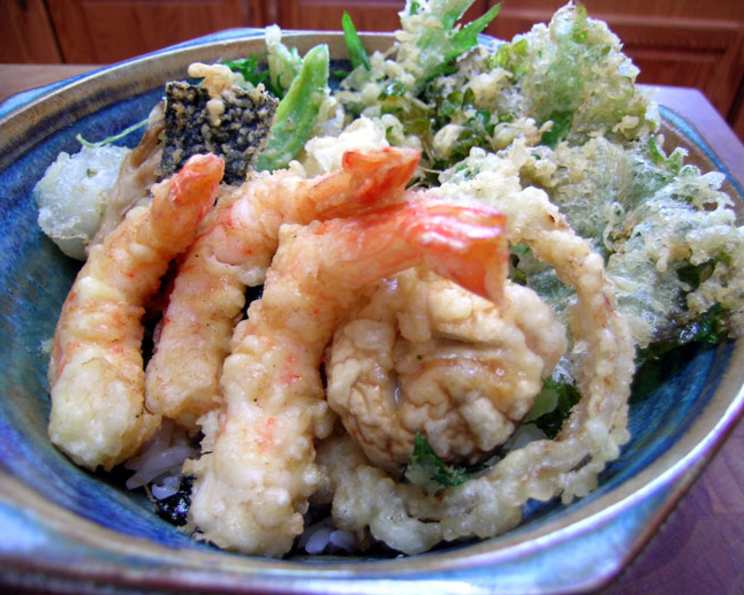
Tempura Donburi: A Symphony of Crispy Flavors
The first time I had tendon was at a tiny, bustling restaurant tucked away in a side street in Tokyo. The air was thick with the aroma of sesame oil and soy sauce, and the sound of sizzling tempura filled the space. I remember the anticipation as the steaming bowl was placed before me, the golden-brown tempura glistening under the light. The first bite – the satisfying crunch, the sweet and savory sauce, the fluffy rice – was pure culinary bliss. It was an experience I’ve been chasing ever since, and one I’m excited to share with you through this recipe.
Recipe Overview
- Prep Time: 30 minutes
- Cook Time: 15 minutes
- Total Time: 45 minutes
- Servings: 4
- Dietary Type: Varies (can be adapted to vegetarian/pescatarian)
Ingredients
- 6 cups cooked medium-grain rice (Japanese sushi-style rice)
- 8 shrimp, in shells without heads (approximately 1 ounce)
- 4 fresh shiitake mushrooms
- 1 medium yellow onion or 1 medium white onion
- 4 shiso leaves (or any other veggie of choice)
- Vegetable oil, for deep-frying
- Flour, for dusting
For Tempura Sauce:
- 1/2 cup dashi
- 3 tablespoons mirin
- 3 tablespoons soy sauce
For Batter:
- 1 egg
- 1/2 cup ice water
- 1/4 cup flour, plus 2 – 2 1/2 tablespoons flour
- 2 tablespoons cornstarch
- 2 ice cubes
Equipment Needed
- Deep fryer or large pot
- Slotted spoon or spider
- Mixing bowls
- Whisk or chopsticks
- Small saucepan
Instructions
-
Begin by preparing the shrimp. Remove the shell, leaving the tails intact. Devein the shrimp. Cut off the tip of the tails. Score the underside (stomach side) of the shrimp using a knife at several places to flatten it. Use your fingers to flatten out completely after scoring. This prevents the shrimp from curling up during frying.
-
Prepare the shiitake mushrooms. Trim the stems.
-
Prepare the onion. Remove the skin and cut into 1/4-inch rings (like onion rings).
-
Prepare the shiso leaves. Simply wash and dry them gently. If you’re using other vegetables, prepare them accordingly (e.g., slice sweet potato into thin rounds, cut eggplant into bite-sized pieces).
-
Make the tempura sauce. Place the dashi, mirin, and soy sauce in a small saucepan. Bring the mixture to a boil, then reduce the heat and simmer for 2-3 minutes. This allows the flavors to meld together. Keep the sauce warm until serving.
-
Prepare the tempura batter. In a bowl, combine the egg and ice water. In a separate bowl, whisk together the 1/4 cup flour and cornstarch. Add the flour mixture to the egg and water mixture. Mix very lightly. It’s important not to overmix the batter, as this will develop the gluten in the flour and result in a tough tempura. Place two ice cubes in the mixture to keep it cool and help improve the batter texture. The batter should be thin and slightly lumpy.
-
Preheat the vegetable oil in a deep fryer or large pot to 350 degrees F (175 degrees C). The oil should be deep enough to fully submerge the tempura pieces.
-
Before dipping, dust the shrimp and vegetable pieces lightly with extra flour for dusting. This helps the batter adhere better.
-
Dip the floured shrimp and vegetable pieces into the tempura batter, ensuring they are evenly coated.
-
Carefully place the battered pieces into the preheated oil. Fry a few pieces at a time to avoid overcrowding the fryer and dropping the oil temperature.
-
Fry the tempura until it is lightly colored and crisp-looking, about 2-3 minutes per side. Do not overcook, as this will make the tempura greasy and tough.
-
Remove the cooked tempura from the oil using a slotted spoon or spider and place it on a wire rack to drain excess oil.
-
To assemble the tendon, place approximately 1 1/2 cups of cooked rice into each of 4 bowls.
-
Arrange the fried tempura pieces evenly onto the hot rice.
-
Sprinkle some of the prepared tempura sauce generously over the rice and tempura.
-
Serve immediately and enjoy the crispy, flavorful tempura donburi!
Expert Tips & Tricks
-
Keep the batter cold: The colder the batter, the crispier the tempura. This is why ice water and ice cubes are crucial. You can even place the bowl of batter in a larger bowl filled with ice water.
-
Don’t overmix the batter: Overmixing develops gluten, leading to a tough tempura. Aim for a slightly lumpy batter.
-
Maintain the oil temperature: A consistent oil temperature is key to achieving perfectly crispy tempura. Use a thermometer to monitor the temperature and adjust the heat as needed.
-
Fry in small batches: Overcrowding the fryer will lower the oil temperature and result in soggy tempura.
-
Use a wire rack: Placing the fried tempura on a wire rack allows excess oil to drain, preventing it from becoming soggy.
-
Make the sauce ahead of time: The tempura sauce can be made a day or two in advance and stored in the refrigerator.
-
Experiment with vegetables: Don’t be afraid to try different vegetables. Japanese eggplant, sweet green Japanese pepper (shishito), kabocha pumpkin, sweet potato, and green beans are all excellent choices.
Serving & Storage Suggestions
Tempura donburi is best served immediately while the tempura is hot and crispy. The contrast between the warm rice, crispy tempura, and flavorful sauce is what makes this dish so enjoyable.
Leftover tempura can be stored in an airtight container in the refrigerator for up to 24 hours. However, it will lose its crispness. To reheat, you can bake the tempura in a preheated oven at 350 degrees F (175 degrees C) for a few minutes, or briefly refry it in hot oil. The rice should also be refrigerated and reheated separately. Reheat in the microwave with a splash of water to retain moisture.
I don’t recommend freezing tempura, as it will become very soggy upon thawing.
Nutritional Information
| Nutrient | Amount per Serving | % Daily Value (Approximate) |
|---|---|---|
| Calories | 600 kcal | 30% |
| Total Fat | 25g | 38% |
| Saturated Fat | 5g | 25% |
| Cholesterol | 150mg | 50% |
| Sodium | 1200mg | 50% |
| Total Carbohydrate | 80g | 27% |
| Dietary Fiber | 5g | 20% |
| Sugars | 5g | N/A |
| Protein | 25g | 50% |
Note: Nutritional information is an estimate and may vary based on specific ingredients and cooking methods.
Variations & Substitutions
-
Vegetarian Tendon: Omit the shrimp and use a variety of vegetables such as eggplant, sweet potato, mushrooms, and shiso leaves.
-
Gluten-Free Tendon: Use gluten-free flour and cornstarch for the batter. Ensure the soy sauce is also gluten-free (tamari).
-
Spicy Tendon: Add a pinch of cayenne pepper or a dash of chili oil to the tempura sauce.
-
Seafood Tendon: Use other types of seafood such as squid, scallops, or white fish in addition to or instead of the shrimp.
-
Seasonal Tendon: Adapt the vegetables to the season. In the fall, use kabocha pumpkin and sweet potato. In the spring, use asparagus and green beans.
FAQs (Frequently Asked Questions)
Q: Why is my tempura not crispy?
A: The most common reasons for soggy tempura are a batter that is too warm, overmixed, or too thick; oil that is not hot enough; or overcrowding the fryer. Make sure to follow the recipe carefully and pay attention to these details.
Q: Can I make the batter ahead of time?
A: It’s best to make the tempura batter just before frying, as it will lose its crispness if it sits for too long.
Q: What can I use if I don’t have dashi?
A: You can substitute chicken broth or vegetable broth for dashi, but the flavor will be slightly different. You can also find instant dashi granules at most Asian grocery stores.
Q: How do I know when the oil is hot enough?
A: The best way to ensure the oil is at the right temperature is to use a thermometer. If you don’t have a thermometer, you can test the oil by dropping a small piece of batter into it. If the batter sizzles and turns golden brown quickly, the oil is ready.
Q: Can I use an air fryer instead of deep frying?
A: While you can use an air fryer, the texture won’t be exactly the same as deep-fried tempura. Air-fried tempura will be less crispy and more like baked tempura. If using an air fryer, lightly spray the tempura pieces with oil before cooking.
Final Thoughts
Tempura donburi is more than just a meal; it’s an experience. It’s a celebration of textures and flavors, a comforting and satisfying dish that’s perfect for any occasion. I encourage you to try this recipe and share it with your loved ones. Don’t be afraid to experiment with different vegetables and create your own unique version of this classic Japanese dish. And most importantly, have fun in the kitchen! Bon appétit!