
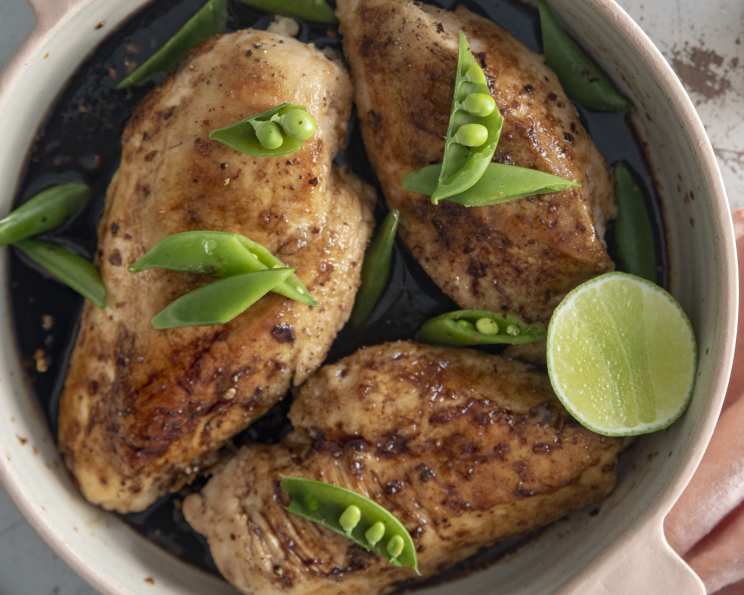
Thai Chicken Breasts: A Symphony of Sweet, Savory, and Spicy
The first time I tasted something similar to these Thai Chicken Breasts, I was backpacking through Southeast Asia. The vibrant flavors—the tang of the vinegar, the sweetness of the brown sugar, and the salty kick of fish sauce—exploded on my tongue, a dance of culinary delight that I knew I had to recreate back home. While street food is best experienced right off the wok, this recipe is a close second, allowing me to bring those cherished memories and the essence of Thailand into my kitchen.
Recipe Overview
- Prep Time: 15 minutes
- Cook Time: 20 minutes
- Total Time: 35 minutes
- Servings: 4
- Yield: 4 chicken breasts
- Dietary Type: Varies (see notes)
Ingredients
- 2 ½ tablespoons grated fresh gingerroot
- 2 tablespoons chopped garlic
- ⅛ teaspoon crushed red pepper flakes
- 4 boneless skinless chicken breasts, pounded thin
- ½ cup flour
- Salt and pepper, to season flour to taste
- 2 tablespoons olive oil
- 4 tablespoons soy sauce
- ½ cup brown sugar
- ½ cup white wine vinegar
- 1 teaspoon fish sauce or 1 teaspoon anchovy paste (optional)
- 1 cup sugar snap peas (mangetout)
Equipment Needed
- Large skillet
- Small cup or bowl
- Shallow dish or plate
- Warm serving dish
- Cutting board
Instructions
- In a small cup or bowl, combine the grated fresh gingerroot, chopped garlic, and crushed red pepper flakes. Set aside.
- In a shallow dish or plate, mix the flour with salt and pepper to taste. Dredge the chicken breasts in the seasoned flour, ensuring they are fully coated.
- Heat the olive oil in a large skillet over medium-high heat.
- Sauté the chicken in the hot skillet until browned on both sides and cooked through. This should take approximately 5-7 minutes per side, depending on the thickness of the chicken. Internal temperature should reach 165°F (74°C).
- Remove the cooked chicken from the skillet and place it in a warm serving dish. Cover the dish and set aside in a low oven (about 200°F or 95°C) to keep warm while you prepare the sauce.
- Add the ginger-garlic mixture to the skillet. Sauté until lightly browned and fragrant, about 1-2 minutes, stirring constantly to prevent burning.
- Add the soy sauce, brown sugar, white wine vinegar, and fish sauce (or anchovy paste, if using) to the skillet.
- Bring the mixture to a boil over medium-high heat, stirring constantly.
- Reduce the heat to low and simmer, stirring frequently, until the sauce reduces and thickens slightly. This should take about 5-7 minutes. The sauce should be able to coat the back of a spoon.
- Pour the sauce over the chicken breasts in the warm serving dish. Keep warm until ready to serve.
- Trim the sugar snap peas and shred them diagonally.
- Just prior to serving, sprinkle the top of the chicken with the shredded sugar snap peas.
Expert Tips & Tricks
- Pounding the chicken breasts thin ensures even cooking and faster cooking time. Place the chicken breasts between two sheets of plastic wrap or in a ziplock bag before pounding.
- For a richer, deeper flavor, try using dark brown sugar instead of light brown sugar.
- If you don’t have fresh gingerroot, you can use ground ginger, but the flavor will be less intense. Use about 1 tablespoon of ground ginger as a substitute.
- To avoid overcooking the chicken, use a meat thermometer to check the internal temperature. It should reach 165°F (74°C).
- If the sauce becomes too thick, add a splash of water or chicken broth to thin it out.
- Prepare the sauce ahead of time and store it in the refrigerator for up to 3 days. Reheat before serving.
Serving & Storage Suggestions
Serve the Thai Chicken Breasts immediately after preparing. It pairs beautifully with steamed jasmine rice or brown rice. Garnish with extra sugar snap peas, chopped cilantro, or sesame seeds for a pop of color and flavor.
Leftovers should be stored in an airtight container in the refrigerator. It will keep for up to 3 days. To reheat, gently warm in a skillet over low heat or in the microwave. Add a splash of water or chicken broth if the sauce has thickened too much. Freezing is not recommended, as the texture of the chicken and sauce may change upon thawing.
Nutritional Information
| Nutrient | Amount per Serving | % Daily Value |
|---|---|---|
| Calories | 387 kcal | N/A |
| Total Fat | 10 g | 15% |
| Saturated Fat | 1.7 g | 8% |
| Cholesterol | 76 mg | 25% |
| Sodium | 1270 mg | 52% |
| Total Carbohydrate | 45 g | 14% |
| Dietary Fiber | 1.7 g | 6% |
| Sugars | 28 g | N/A |
| Protein | 30 g | 59% |
Note: Nutritional information is an estimate and may vary based on specific ingredients and preparation methods. Percent Daily Values are based on a 2,000 calorie diet.
Variations & Substitutions
- Spicy: Increase the amount of crushed red pepper flakes to ¼ teaspoon or add a finely chopped Thai chili pepper to the ginger-garlic mixture.
- Sweeter: Add an extra tablespoon or two of brown sugar to the sauce.
- Gluten-Free: Use tamari instead of soy sauce. Tamari is a Japanese soy sauce that is typically gluten-free. Check the label to ensure it is certified gluten-free.
- Vegetarian: Substitute the chicken breasts with firm tofu, cut into ½-inch thick slices. Press the tofu to remove excess water before dredging in flour. Omit the fish sauce or anchovy paste, or substitute with a vegetarian fish sauce alternative.
- Vegetable Boost: Add other vegetables to the dish, such as sliced bell peppers, broccoli florets, or snow peas. Sauté the vegetables with the ginger-garlic mixture.
FAQs (Frequently Asked Questions)
Q: Can I use chicken thighs instead of chicken breasts?
A: Absolutely! Chicken thighs are a great alternative, as they tend to be more flavorful and stay moist. Just ensure they are boneless and skinless and adjust the cooking time as needed.
Q: I don’t have fish sauce. Can I still make this recipe?
A: Yes, you can omit the fish sauce. However, it does add a unique umami flavor. If you have anchovy paste, you can use that as a substitute. Alternatively, a small amount of Worcestershire sauce (if not concerned about gluten) can provide a similar savory note.
Q: How do I prevent the brown sugar from burning when making the sauce?
A: Keep the heat at medium-low and stir the sauce frequently, especially as it thickens.
Q: Can I make this recipe ahead of time?
A: You can prepare the sauce ahead of time and store it in the refrigerator for up to 3 days. Cook the chicken just before serving to ensure it remains juicy and tender.
Q: The sauce is too sour. How can I balance the flavors?
A: Add a little more brown sugar to balance the acidity from the vinegar. Start with a teaspoon at a time and taste until you reach your desired sweetness level.
Final Thoughts
These Thai Chicken Breasts are a delightful way to bring the vibrant flavors of Southeast Asia to your table. Don’t be afraid to adjust the sweetness, spiciness, or sourness to suit your personal preferences. Feel free to get creative with vegetables and garnishes. I hope this recipe becomes a new favorite, allowing you to create your own culinary adventures in your kitchen! Enjoy, and don’t hesitate to share your feedback and variations! Pair it with a crisp Sauvignon Blanc or a refreshing Thai iced tea for a truly memorable meal.