
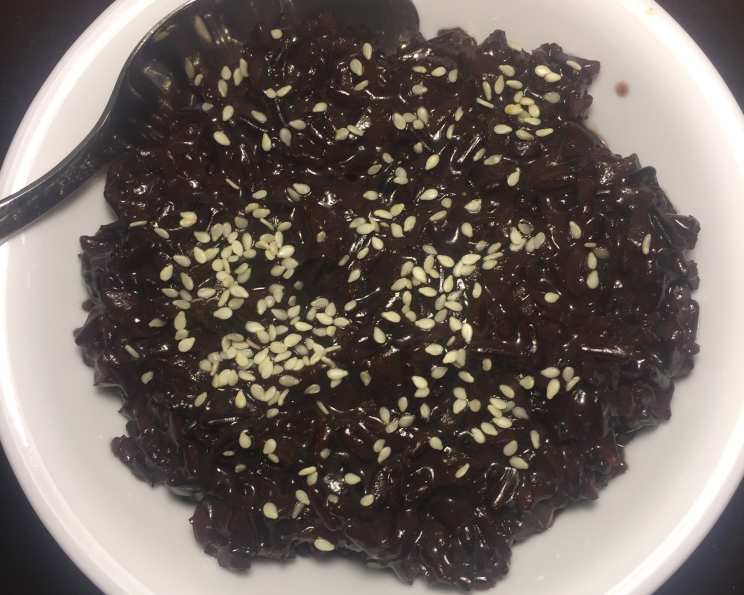
Thai Coconut Black Sticky Rice: A Sweet Symphony
The first time I tasted black sticky rice, I was wandering through a bustling night market in Chiang Mai. The air was thick with the aroma of grilled meats, exotic spices, and something subtly sweet that pulled me towards a small stall. An elderly woman with a kind smile ladled a scoop of glistening, dark purple rice into a banana leaf cup, topped it with creamy coconut milk, and handed it to me. One bite, and I was hooked. The chewy texture, the delicate sweetness, and the rich coconut flavor transported me to a world of pure culinary delight. Now, I’m so excited to share my take on this beloved Thai dessert.
Recipe Overview
- Prep Time: 10 minutes
- Cook Time: 45 minutes
- Total Time: 55 minutes
- Servings: 4
- Dietary Type: Vegan, Gluten-Free
Ingredients
- 1 cup black sticky rice
- 4-6 cups water
- 1 cup coconut milk
- ¼ – ½ cup raw sugar (turbinado), or to taste. White or brown sugar also works.
- ½ teaspoon salt, to taste
- Sweetened flaked coconut for garnish, optional
Equipment Needed
- Large saucepan
- Measuring cups and spoons
- Stirring spoon
Instructions
- Begin by thoroughly rinsing and draining the black sticky rice. Place the rinsed rice in a large saucepan. This step removes excess starch and helps to achieve the desired sticky consistency.
- Add water to the saucepan, ensuring the rice is completely covered. Use 4 cups as a starting point, but be prepared to add more as needed during cooking. Gently stir the rice and remove any grains that float to the top. These are often broken or less desirable grains.
- Bring the water to a boil over high heat. Once boiling, immediately reduce the heat to low to maintain a gentle simmer.
- Simmer the rice, uncovered, for approximately 45 minutes, stirring occasionally to prevent sticking and ensure even cooking. Keep a close eye on the water level. If the rice appears dry before it’s tender, add more water, ½ cup at a time. Conversely, if there’s excess water, you can carefully pour some off. Aim for a water level that is just below the level of the rice.
- Check for doneness after 45 minutes. The rice should be tender and slightly chewy. If it’s still too firm, continue simmering for a few more minutes, adding water as needed.
- Once the rice is cooked to your liking, add the coconut milk, raw sugar, and salt to the saucepan.
- Continue cooking over low heat, stirring frequently, until the mixture reaches a pudding-like consistency. This typically takes another 5-10 minutes. The sugar should be fully dissolved, and the coconut milk should be well incorporated into the rice. Taste and adjust the sweetness and saltiness as desired.
- If desired, sprinkle sweetened flaked coconut over the top of the pudding just before serving.
- Serve warm and enjoy the delightful flavors of Thai coconut black sticky rice.
Expert Tips & Tricks
- Soaking the Rice: For an even softer and slightly faster cooking time, soak the black sticky rice in water for at least 2 hours, or even overnight, before cooking. This rehydrates the grains and allows them to cook more evenly.
- Coconut Milk Quality: The richness of the coconut milk significantly impacts the final flavor. Use full-fat coconut milk for the most decadent and authentic taste. Light coconut milk will work, but the pudding will be less creamy.
- Sugar Adjustment: The amount of sugar is a matter of personal preference. Start with ¼ cup and add more gradually, tasting as you go, until you reach your desired level of sweetness.
- Salt is Key: Don’t skip the salt! A pinch of salt enhances the sweetness and balances the overall flavor profile.
- Preventing Sticking: Stirring frequently during the simmering process is crucial to prevent the rice from sticking to the bottom of the pan and burning.
- Consistency Control: If the pudding becomes too thick, add a splash more coconut milk to thin it out. If it’s too thin, continue simmering it uncovered for a few more minutes to allow excess moisture to evaporate.
Serving & Storage Suggestions
Thai coconut black sticky rice is best served warm, either on its own or as a dessert. Garnish it with sweetened flaked coconut, toasted sesame seeds, or fresh mango slices for added flavor and visual appeal.
Leftovers can be stored in an airtight container in the refrigerator for up to 3 days. Reheat gently in a saucepan over low heat, adding a splash of coconut milk or water if needed to loosen the consistency. You can also reheat it in the microwave, stirring occasionally.
Freezing is not recommended, as the texture of the rice can change upon thawing.
Nutritional Information
| Nutrient | Amount per Serving | % Daily Value |
|---|---|---|
| Calories | 320 kcal | 16% |
| Total Fat | 12g | 18% |
| Saturated Fat | 10g | 50% |
| Cholesterol | 0mg | 0% |
| Sodium | 250mg | 11% |
| Total Carbohydrate | 48g | 16% |
| Dietary Fiber | 2g | 8% |
| Sugars | 20g | |
| Protein | 4g | 8% |
Note: Nutritional information is an estimate and may vary based on specific ingredients and portion sizes.
Variations & Substitutions
- Sweeteners: Experiment with other sweeteners like palm sugar, maple syrup, or agave nectar for different flavor profiles.
- Flavor Extracts: Add a few drops of vanilla extract or almond extract for a more complex flavor.
- Spice Infusion: Infuse the water with a cinnamon stick, star anise, or cardamom pods while simmering the rice for a warm, aromatic twist. Remember to remove the spices before serving.
- Fruit Additions: Incorporate fresh or dried fruits like mango, bananas, pineapple, or raisins for added sweetness and texture. Add them towards the end of the cooking process to prevent them from becoming mushy.
- Nuts: Sprinkle toasted nuts like peanuts, almonds, or cashews over the top for a crunchy contrast.
- Dairy-Free Milk: While coconut milk is traditional, you can experiment with other plant-based milks like almond milk, soy milk, or oat milk for a slightly different flavor.
- Chia Seeds: Add a tablespoon of chia seeds during the last few minutes of cooking for added nutrients and a slightly thicker consistency.
- Savory Twist: Although traditionally sweet, you can create a savory version by omitting the sugar and adding ingredients like soy sauce, ginger, garlic, and scallions.
FAQs (Frequently Asked Questions)
Q: Can I use regular black rice instead of black sticky rice?
A: While you can, the texture will be different. Black sticky rice, also known as glutinous rice, has a unique sticky and chewy texture that is essential to the authentic taste of this dish. Regular black rice will be less sticky and more fluffy.
Q: How do I know when the rice is cooked properly?
A: The rice should be tender and slightly chewy, with a pudding-like consistency. Taste it to ensure it’s not too firm or too mushy.
Q: Can I make this dish ahead of time?
A: Yes, you can make it a day or two in advance. Store it in an airtight container in the refrigerator and reheat gently before serving.
Q: Is it necessary to rinse the rice before cooking?
A: Yes, rinsing the rice helps to remove excess starch, which can prevent the pudding from becoming too gummy.
Q: My pudding is too thick. What can I do?
A: Simply add a splash more coconut milk or water to thin it out to your desired consistency.
Final Thoughts
Thai Coconut Black Sticky Rice is more than just a dessert; it’s a culinary journey to the heart of Thailand. With its comforting sweetness, chewy texture, and fragrant aroma, this dish is sure to become a new favorite. Don’t be intimidated by the ingredients – this recipe is surprisingly simple to make, and the results are absolutely worth it. Gather your ingredients, follow the steps, and prepare to be transported to a world of pure culinary bliss. And, of course, feel free to experiment with variations and make it your own. I can’t wait to hear what you think!