
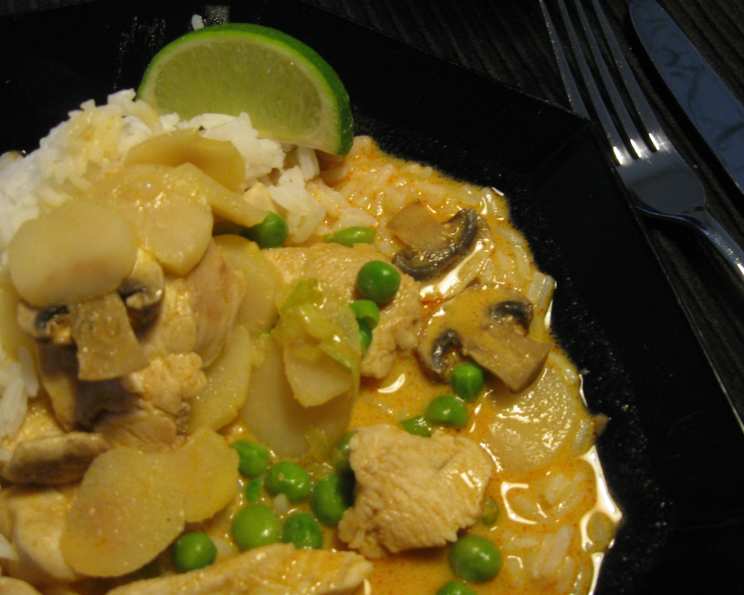
Thai Coconut Chicken and Rice: A Culinary Journey to Southeast Asia
The first time I tasted coconut chicken was at a tiny, family-run Thai restaurant tucked away on a quiet street in San Francisco. The aroma alone, a fragrant blend of coconut, lemongrass, and a hint of spice, transported me. But it was the first spoonful that truly captivated me—the creamy, comforting broth, the tender chicken, and the subtle warmth of the curry paste. From that moment on, I was determined to recreate that magic in my own kitchen.
Recipe Overview
- Prep Time: 15 minutes
- Cook Time: 15 minutes
- Total Time: 30 minutes
- Servings: 4-6
- Dietary Type: Gluten-Free (check your fish sauce)
Ingredients
- 4 boneless, skinless chicken breast halves, sliced into thin strips
- 1 (13.5 ounce) can coconut milk
- ½ cup chicken broth
- 2-3 tablespoons fish sauce
- 2 tablespoons brown sugar
- 1-2 chicken bouillon cube(s)
- ¼ cup fresh basil leaves, chiffonade
- ½ cup frozen English peas
- ½ cup canned water chestnuts, drained
- ½ – 1 tablespoon Thai red curry paste (adjust to your spice preference)
- 2 limes, quartered
Equipment Needed
- Large pot or Dutch oven
- Cutting board
- Knife
- Measuring cups and spoons
Instructions
- In the bottom of a large pot or Dutch oven, combine the red curry paste and a small amount of coconut milk. Stir until the curry paste is fully dissolved and a smooth paste forms. This helps to bloom the spices and release their full flavor.
- Add the sliced chicken to the pot and sauté over medium-high heat until cooked through. Be sure to stir frequently to prevent sticking and ensure even cooking. The chicken should be opaque and no longer pink inside.
- Pour in the remaining coconut milk, chicken broth, fish sauce, and brown sugar. Add the chicken bouillon cube(s). Stir well to combine all ingredients.
- Bring the mixture to a simmer, then reduce the heat to low and let it simmer for about 10 minutes, or until the peas are cooked through and the sauce has reduced and thickened to your desired consistency. The longer it simmers, the more the flavors will meld together.
- Stir in the water chestnuts and basil. Taste and adjust seasonings as needed. You may want to add more fish sauce for saltiness, brown sugar for sweetness, or red curry paste for heat.
- Serve hot over cooked basmati or white rice. Garnish with wedges of lime.
Expert Tips & Tricks
- Spice Level Adjustment: Red curry paste varies greatly in spice level. Start with a small amount (½ tablespoon) and gradually add more to achieve your preferred heat. Remember, you can always add more, but you can’t take it away!
- Coconut Milk Consistency: Full-fat coconut milk will provide the richest and creamiest results. If you use light coconut milk, the sauce may be thinner.
- Basil Preservation: Add the basil at the very end of cooking. This will keep it from wilting and preserve its fresh, vibrant flavor. Chiffonade is a simple method of shredding the leaves.
- Chicken Cooking Tip: Be careful not to overcook the chicken when sautéing. Overcooked chicken can become dry and tough. Cook it just until it’s no longer pink inside.
- Vegetable Variations: Feel free to add other vegetables, such as sliced bell peppers, bamboo shoots, or baby corn. Add them along with the peas to ensure they cook through.
- Making it Soup: For a soupier version, simply increase the amount of chicken broth. You can also add thinly sliced mushrooms and scallions at the end for added flavor and texture.
- Ingredient sourcing: Many Asian supermarkets carry a wider range of thai curry pastes and fish sauces. Explore the options and see which ones best suit your tastes.
Serving & Storage Suggestions
Serve this delightful Thai Coconut Chicken and Rice hot, garnished with fresh lime wedges and extra basil leaves. A sprinkle of chopped cilantro or red pepper flakes can also add a nice touch.
Leftovers can be stored in an airtight container in the refrigerator for up to 3-4 days. For longer storage, freeze in a freezer-safe container for up to 2-3 months. To reheat, thaw in the refrigerator overnight and gently warm on the stovetop or in the microwave. Add a splash of chicken broth or water if the sauce has thickened too much.
Nutritional Information
(Estimated per serving, based on 6 servings)
| Nutrient | Amount per Serving | % Daily Value |
|---|---|---|
| Calories | 320 kcal | 16% |
| Total Fat | 20g | 26% |
| Saturated Fat | 15g | 75% |
| Cholesterol | 70mg | 23% |
| Sodium | 500mg | 22% |
| Total Carbohydrate | 15g | 5% |
| Dietary Fiber | 2g | 7% |
| Sugars | 8g | N/A |
| Protein | 20g | 40% |
Variations & Substitutions
- Shrimp Variation: Replace the chicken with shrimp for a seafood twist. Add the shrimp during the last few minutes of cooking, as they cook quickly.
- Vegetarian Option: Substitute the chicken with tofu or tempeh. For a fully vegan version, use vegetable broth instead of chicken broth and omit the fish sauce. Tamari or soy sauce can be used as a substitute for the fish sauce.
- Spicier Version: Add a pinch of red pepper flakes or a chopped chili pepper for extra heat.
- Creamier Sauce: Stir in a tablespoon of peanut butter or cashew butter for a richer, creamier sauce.
- Healthier version: Try using a sugar substitute such as stevia or monk fruit. Consider adding a broader variety of vegetables to boost the nutritional value.
FAQs (Frequently Asked Questions)
Q: Can I use dried basil instead of fresh?
A: While fresh basil is preferred for its vibrant flavor, you can use dried basil in a pinch. Use about 1 teaspoon of dried basil for every tablespoon of fresh basil.
Q: What if I don’t have fish sauce?
A: Fish sauce adds a unique umami flavor, but if you don’t have it, you can substitute soy sauce or tamari. Start with a smaller amount and add more to taste.
Q: Can I make this dish ahead of time?
A: Yes, this dish can be made ahead of time. The flavors actually meld together even more when it sits. Store in the refrigerator for up to 3 days and reheat before serving.
Q: Is this recipe gluten-free?
A: Yes, this recipe is naturally gluten-free, but it is important to check the labels of your fish sauce and red curry paste to ensure they don’t contain any gluten.
Q: Can I use a different type of milk?
A: While coconut milk is essential for the authentic flavor of this dish, you could experiment with other types of milk, such as almond milk or cashew milk, for a lighter version. Keep in mind that the flavor and consistency will be different.
Final Thoughts
I hope this recipe inspires you to embark on your own culinary journey to Southeast Asia. Thai Coconut Chicken and Rice is a dish that’s both comforting and exotic, simple to make yet bursting with flavor. Don’t be afraid to experiment with the ingredients and adjust them to your own taste preferences. And please, share your creations and feedback with me—I can’t wait to hear how it turns out! Pair this delightful dish with a crisp, chilled Riesling for a truly unforgettable meal.