
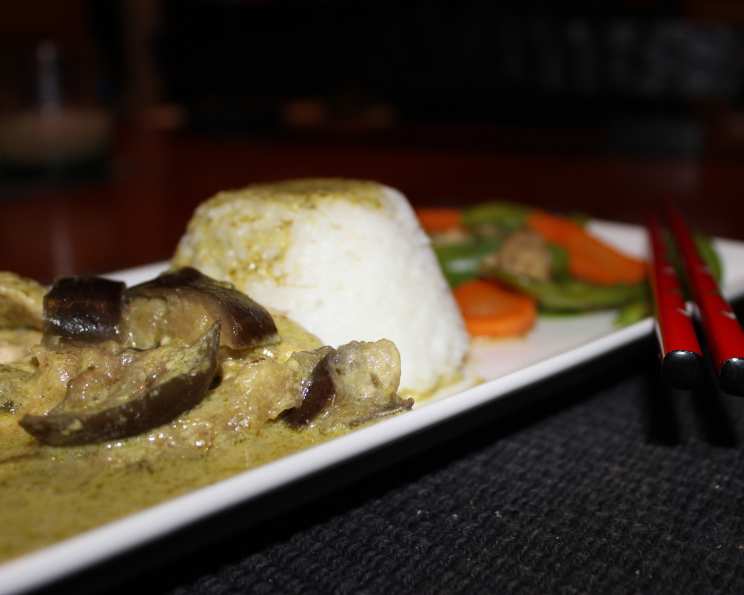
Thai Ginger Chicken: Aromatic Comfort in a Bowl
The first time I tasted Thai Ginger Chicken, I was backpacking through Southeast Asia, a wide-eyed culinary novice. The monsoon was pelting down, and I ducked into a tiny, brightly lit restaurant in Chiang Mai seeking refuge. The aroma of ginger, chili, and coconut filled the air, instantly warming me from the inside out. Served steaming hot over fragrant rice, the dish was a revelation – a perfect balance of spicy, savory, and subtly sweet flavors that I’ve been chasing ever since. This recipe is my attempt to capture that magical moment and bring a little bit of Thailand to your kitchen.
Recipe Overview
- Prep Time: 15 minutes
- Cook Time: 15 minutes
- Total Time: 30 minutes
- Servings: 4
- Dietary Type: Dairy-Free
Ingredients
- 1 bunch fresh cilantro, stems removed
- 3 jalapeños, seeded and chopped
- 1 piece fresh ginger, peeled and thinly sliced
- 3 tablespoons olive oil
- 1 medium yellow onion, sliced
- 1 small eggplant, quartered lengthwise and sliced 1/2 inch thick crosswise
- 2 (13 1/2 ounce) cans unsweetened coconut milk
- 2 tablespoons soy sauce
- 1 1⁄2 teaspoons kosher salt
- 1 lb boneless skinless chicken breast
- 2 cups cooked white rice, for serving
Ingredient Note: If eggplant isn’t your favorite, zucchini makes a wonderful and equally delicious substitute. You can also swap the chicken for shrimp for a pescatarian version.
Equipment Needed
- Food processor
- Large saucepan
- Knife
- Cutting board
Instructions
- Begin by creating the aromatic base. Place the cilantro, jalapeños, ginger, and 1 tablespoon of the olive oil in a food processor. Pulse until the mixture is finely combined, forming a vibrant green paste. This is the heart of the dish’s flavor.
- Heat the remaining 2 tablespoons of olive oil in a large saucepan over medium heat. Make sure the saucepan is large enough to hold all the ingredients comfortably.
- Add the sliced onion and eggplant to the hot oil. Cook, stirring occasionally, until the vegetables have softened, approximately 5 minutes. The onion should become translucent, and the eggplant should start to lose some of its firmness.
- Pour in the coconut milk and soy sauce. Stir well to combine, then add 1/2 teaspoon of the kosher salt. Bring the mixture to a simmer. Simmering gently allows the flavors to meld without scorching the bottom of the pan.
- Add the cilantro-jalapeño-ginger mixture to the saucepan, followed by the remaining 1 teaspoon of salt. Stir everything together thoroughly.
- Add the chicken breast to the simmering sauce. Ensure the chicken is submerged in the liquid.
- Reduce the heat to low and simmer gently until the chicken is cooked through and the sauce has thickened slightly, about 7 minutes. To check for doneness, use a meat thermometer; the internal temperature of the chicken should reach 165°F (74°C). Alternatively, you can cut into the thickest part of the chicken; it should be opaque throughout with no pink remaining.
- Serve the Thai Ginger Chicken hot over cooked white rice. Garnish with fresh cilantro, if desired, for an extra pop of color and freshness.
Expert Tips & Tricks
- Flavor Boost: For a deeper, richer flavor, consider adding a tablespoon of fish sauce along with the soy sauce. Be cautious with the amount, as fish sauce is quite potent.
- Spice Level: Adjust the amount of jalapeños based on your heat preference. Removing the seeds and membranes will reduce the spiciness.
- Chicken Prep: Cut the chicken into bite-sized pieces before adding it to the saucepan. This will speed up the cooking process and ensure that the chicken is evenly cooked.
- Coconut Milk: Use full-fat coconut milk for the richest and creamiest sauce. Light coconut milk will still work, but the sauce won’t be as decadent.
- Make Ahead: You can prepare the cilantro-jalapeño-ginger paste a day in advance and store it in an airtight container in the refrigerator. This will save you time on the day you plan to cook the dish.
- Thickening the Sauce: If the sauce isn’t thick enough after simmering, you can create a slurry by mixing a teaspoon of cornstarch with a tablespoon of cold water and adding it to the saucepan. Stir well and continue to simmer until the sauce reaches your desired consistency.
Serving & Storage Suggestions
Serve the Thai Ginger Chicken hot, ladled generously over freshly cooked white rice. A sprinkle of fresh cilantro adds a burst of freshness and visual appeal. This dish also pairs well with a side of steamed vegetables, such as broccoli or green beans.
Leftovers can be stored in an airtight container in the refrigerator for up to 3 days. To reheat, simply warm the chicken and sauce in a saucepan over medium heat until heated through. You can also microwave it, but be careful not to overheat, as this can make the chicken dry.
While freezing is possible, it might alter the texture of the coconut milk sauce slightly. If freezing, store in an airtight container for up to 2 months. Thaw completely in the refrigerator before reheating.
Nutritional Information
| Nutrient | Amount per Serving | % Daily Value |
|---|---|---|
| Calories | 770.8 kcal | N/A |
| Total Fat | 54.5 g | 83% |
| Saturated Fat | 38.4 g | 191% |
| Cholesterol | 72.6 mg | 24% |
| Sodium | 1321.1 mg | 55% |
| Total Carbohydrate | 43.8 g | 14% |
| Dietary Fiber | 6 g | 23% |
| Sugars | 5 g | N/A |
| Protein | 33.1 g | 66% |
Note: Nutritional information is an estimate and may vary depending on specific ingredients and portion sizes.
Variations & Substitutions
- Shrimp instead of Chicken: For a seafood twist, substitute the chicken with 1 pound of peeled and deveined shrimp. Add the shrimp during the last few minutes of cooking, as it cooks quickly.
- Tofu for a Vegan Option: Replace the chicken with firm or extra-firm tofu, pressed to remove excess water and cut into cubes. Add the tofu during the last 5 minutes of cooking, being careful not to overcook it.
- Different Vegetables: Feel free to experiment with other vegetables, such as bell peppers, carrots, or snap peas.
- Spice it Up: Add a pinch of red pepper flakes or a dash of sriracha sauce for an extra kick.
- Herbs: While cilantro is the traditional herb, you can also use Thai basil for a slightly different flavor profile.
FAQs (Frequently Asked Questions)
Q: Can I make this dish ahead of time?
A: Absolutely! The flavors actually meld together even more beautifully as it sits. Store it in the refrigerator for up to 3 days and reheat before serving.
Q: Is this dish very spicy?
A: It has a mild to medium spice level, depending on the jalapeños. Removing the seeds and membranes from the jalapeños will significantly reduce the heat.
Q: Can I use light coconut milk instead of full-fat?
A: Yes, you can. However, the sauce will be less rich and creamy.
Q: Can I freeze this dish?
A: Yes, but the texture of the coconut milk sauce might change slightly after thawing. Store it in an airtight container for up to 2 months.
Q: What can I serve with this dish besides rice?
A: It also pairs well with quinoa, noodles, or even cauliflower rice for a low-carb option.
Final Thoughts
I hope this recipe inspires you to create your own Thai Ginger Chicken and experience the vibrant flavors of Thailand in your home. Don’t be afraid to experiment with different ingredients and adjust the spice level to your liking. This dish is incredibly versatile and can be adapted to suit your preferences. I encourage you to share your creations and feedback; I’m always eager to hear about your culinary adventures! Pair this dish with a crisp, cold glass of Thai iced tea for a truly authentic experience. Enjoy!