
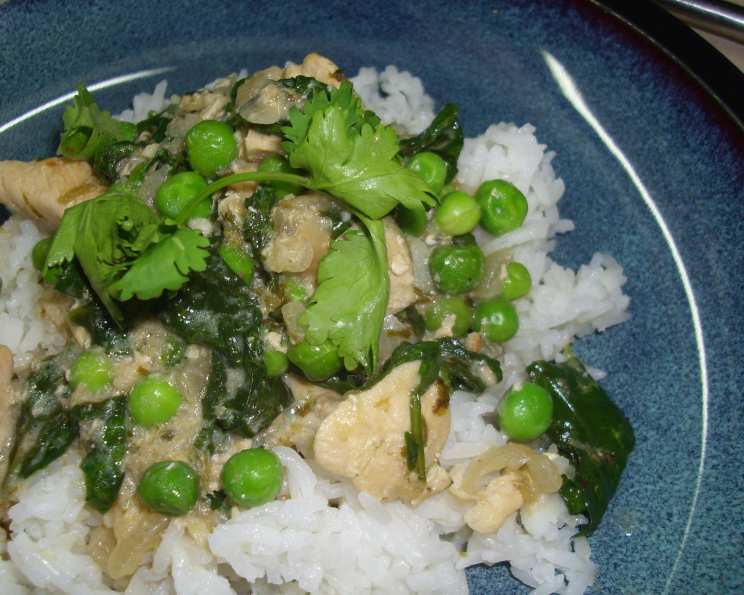
Thai Green Curry Chicken: A Culinary Journey to Southeast Asia
The first time I tasted green curry, I was backpacking through Thailand. The explosion of flavors – the heat of the chilies, the herbaceous aroma of the basil, and the creamy sweetness of the coconut milk – was unlike anything I’d ever experienced. Sitting on a tiny plastic stool in a bustling Bangkok market, slurping up every last drop of that fragrant broth, I knew I had to learn how to recreate this magic at home. This recipe is my attempt to capture that authentic Thai experience, simplified for the home cook, yet still bursting with the vibrant flavors that make green curry so unforgettable.
Recipe Overview
- Prep Time: 10 minutes
- Cook Time: 25 minutes
- Total Time: 35 minutes
- Servings: 4
- Yield: About 6 cups
- Dietary Type: Dairy-Free
Ingredients
- 2 tablespoons olive oil
- 1 lb skinless chicken breast, diced
- 4 tablespoons green curry paste
- 2 cups coconut milk (about one can, preferably light)
- 3 tablespoons fish sauce
- 1 cup frozen peas
- 1 cup baby spinach leaves
- ¼ cup cilantro, chopped
Equipment Needed
- Large saucepan
- Cutting board
- Knife
- Measuring spoons and cups
Instructions
-
Heat 1 tablespoon of olive oil in a large saucepan over medium heat. Be patient and let the oil get shimmering hot; this will ensure the chicken sears properly.
-
Add the diced chicken breast to the hot pan and sauté until lightly browned on all sides. It’s important not to overcrowd the pan; cook the chicken in batches if necessary to ensure even browning. This step helps develop flavor and prevents the chicken from steaming. Remove the chicken from the pan and set aside.
-
Add the remaining 1 tablespoon of olive oil to the pan. Stir in the green curry paste and cook for 3 minutes, stirring constantly. Cooking the curry paste in oil helps to release its fragrance and deepen its flavor. The aroma should be intense and inviting. Be careful not to burn the paste; adjust the heat if necessary.
-
Pour in the coconut milk and continue to cook for 5 minutes, stirring often. The coconut milk will create a rich and creamy base for the curry. Stir frequently to prevent it from sticking to the bottom of the pan. Simmer gently, allowing the flavors to meld together.
-
Return the browned chicken to the pan and add the fish sauce. Reduce the heat to low, cover the pan, and simmer for 15 minutes. This allows the chicken to cook through and absorb the flavors of the curry. The simmering process is crucial for developing the depth of flavor.
-
Add the frozen peas and cook for 5 more minutes, or until they are heated through. Frozen peas are a convenient and nutritious addition to this curry.
-
Remove the pan from the heat. Stir in the baby spinach leaves and chopped cilantro. The residual heat will wilt the spinach and release its nutrients. The cilantro adds a fresh, vibrant note to the curry.
-
Serve hot over rice. Jasmine rice is the traditional accompaniment, but brown rice or quinoa also work well.
Expert Tips & Tricks
- Spice Level: Adjust the amount of green curry paste to control the spiciness of the dish. Start with 2 tablespoons for a mild curry and add more to taste. Remember, you can always add more spice, but you can’t take it away!
- Coconut Milk: Full-fat coconut milk will create a richer and creamier curry, but light coconut milk works just as well for a healthier option. If using full-fat coconut milk, you can skim off the thick cream that rises to the top of the can and add it at the end for extra richness.
- Vegetable Variations: Feel free to add other vegetables to this curry, such as bell peppers, bamboo shoots, or broccoli. Just adjust the cooking time accordingly.
- Make-Ahead: This curry can be made ahead of time and stored in the refrigerator for up to 3 days. The flavors will actually improve overnight.
- Thickening: If you prefer a thicker curry, you can mix a tablespoon of cornstarch with a tablespoon of water and stir it into the curry during the last few minutes of cooking.
- Fresh Herbs: Don’t skimp on the fresh cilantro! It adds a vital element of freshness. If you don’t like cilantro, you can substitute with Thai basil.
Serving & Storage Suggestions
Serve the Thai green curry chicken hot over steamed rice, garnished with a sprig of fresh cilantro. A wedge of lime adds a bright, citrusy finish.
Leftovers should be stored in an airtight container in the refrigerator for up to 3 days. To reheat, gently warm the curry in a saucepan over low heat or in the microwave. You may need to add a splash of water or coconut milk to loosen the sauce.
This curry is not recommended for freezing, as the coconut milk can separate and become grainy upon thawing.
Nutritional Information
| Nutrient | Amount per Serving | % Daily Value |
|---|---|---|
| Calories | 380 kcal | 19% |
| Total Fat | 22g | 34% |
| Saturated Fat | 15g | 75% |
| Cholesterol | 80mg | 27% |
| Sodium | 1100mg | 46% |
| Total Carbohydrate | 20g | 7% |
| Dietary Fiber | 3g | 12% |
| Sugars | 8g | – |
| Protein | 30g | 60% |
Note: Nutritional information is an estimate and may vary based on specific ingredients and preparation methods.
Variations & Substitutions
- Vegetarian Green Curry: Substitute the chicken with tofu, tempeh, or a variety of vegetables such as eggplant, zucchini, and mushrooms.
- Spicy Green Curry: Add a finely chopped Thai chili pepper or a pinch of red pepper flakes to the curry paste for an extra kick.
- Seafood Green Curry: Replace the chicken with shrimp, scallops, or fish. Adjust the cooking time accordingly.
- Sweet Potato Green Curry: Add diced sweet potato to the curry for a touch of sweetness and added nutrients.
- Gluten-Free: This recipe is naturally gluten-free, but always double-check the labels of your curry paste and fish sauce to ensure they are gluten-free.
FAQs (Frequently Asked Questions)
Q: Can I use a different type of curry paste?
A: While this recipe is specifically for green curry chicken, you can certainly experiment with red or yellow curry paste. Just be aware that the flavor profile will be different.
Q: I don’t have fish sauce. Can I substitute it with something else?
A: Fish sauce adds a unique umami flavor that is difficult to replicate. If you absolutely can’t use it, you can try substituting with soy sauce, but use it sparingly as it’s saltier.
Q: Can I use fresh peas instead of frozen?
A: Yes, you can use fresh peas. Add them to the curry during the last 3-5 minutes of cooking, until they are tender-crisp.
Q: How do I know when the chicken is cooked through?
A: The chicken is cooked through when it is no longer pink inside and the juices run clear when pierced with a fork. An internal temperature of 165°F (74°C) is recommended.
Q: My curry is too thin. How can I thicken it?
A: You can thicken the curry by simmering it uncovered for a longer period of time, allowing the liquid to reduce. Alternatively, you can mix a tablespoon of cornstarch with a tablespoon of water and stir it into the curry during the last few minutes of cooking.
Final Thoughts
Thai green curry chicken is a delicious and versatile dish that is sure to impress your family and friends. Don’t be afraid to experiment with different vegetables and spices to create your own unique version. I encourage you to try this recipe and experience the vibrant flavors of Thailand in your own kitchen. Share your creations and feedback – I’d love to hear how it turns out for you! Serve this curry with a crisp cucumber salad for a refreshing contrast, or pair it with a cold Thai beer for a truly authentic experience. Enjoy!