
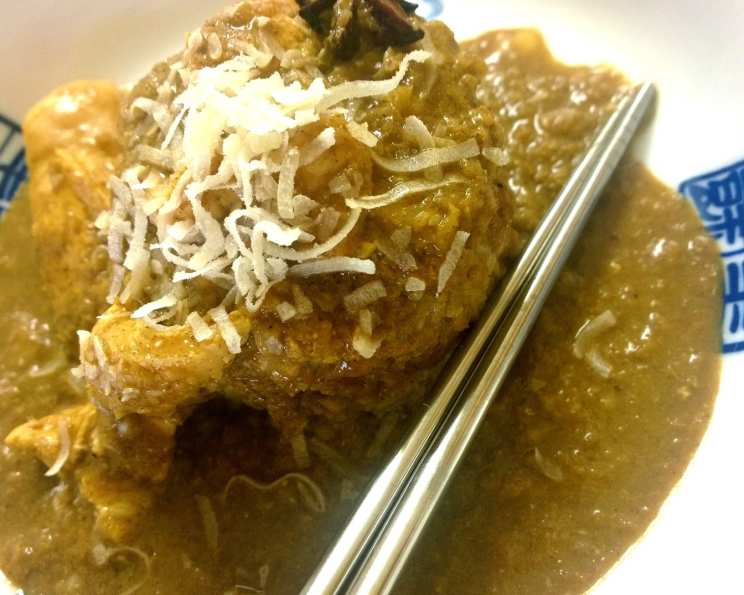
Thai-Indonesian Rendang Curry: A Symphony of Southeast Asian Flavors
The scent of lemongrass and ginger always transports me back to a tiny, bustling night market in Chiang Mai. I was barely out of culinary school, backpacking through Southeast Asia, and the sheer explosion of flavors was overwhelming – in the best way possible. One unforgettable evening, a kind vendor offered me a taste of her family’s rendang, a dish I’d only read about. That first bite – the tender chicken practically melting in my mouth, the complex dance of spices on my tongue – ignited a lifelong passion for Southeast Asian cuisine. Recreating that memory, and putting my own spin on it, is what led to this recipe.
Recipe Overview
- Prep Time: 15 minutes
- Cook Time: 25 minutes
- Total Time: 40 minutes
- Servings: 8
- Dietary Type: Dairy-Free
Ingredients
- 8 boneless and skinless chicken tenderloins
- 1/4 teaspoon nutmeg
- 1/4 teaspoon ground cloves
- 1/4 teaspoon cayenne pepper (more if you like spicy!)
- 1/2 teaspoon turmeric
- 1 1/2 teaspoons cinnamon
- 2 tablespoons ground coriander
- 1 tablespoon ground cumin
- 7 ounces good-quality coconut milk (not cream!)
- 2 tablespoons fresh finely chopped lemongrass (usually found in a tube refrigerated near the produce section)
- 1 onion, peeled and quartered
- 4 garlic cloves
- 1 thumb-size piece ginger or 1 galangal
- 2 teaspoons dark soy sauce or 2 teaspoons Braggs liquid aminos
- 2 1/4 teaspoons tamarind paste or 2 1/4 teaspoons vinegar
- 1 tablespoon agave nectar
- 2 tablespoons fish sauce
- 1 teaspoon shrimp paste or 1 teaspoon substitute 1 tbsp. fish sauce
- 2 whole star anise
Optional Garnish:
- Fresh cilantro
- Dry shredded coconut
Equipment Needed
- Food processor
- Large saucepan
- Measuring spoons and cups
- Knife
- Cutting board
Instructions
- Begin by preparing the aromatic spice paste. In a food processor, combine the onion, garlic cloves, ginger (or galangal), lemongrass, ground coriander, ground cumin, cinnamon, turmeric, cayenne pepper, ground cloves, and nutmeg. Process until a smooth paste forms.
- Add the remaining ingredients for the sauce: coconut milk, dark soy sauce (or Braggs liquid aminos), tamarind paste (or vinegar), agave nectar, fish sauce, and shrimp paste (or additional fish sauce). Blend again until everything is thoroughly combined. At this point, taste the sauce and adjust the seasoning as needed. If it needs more saltiness, add more fish sauce. If it’s too sour, add more agave nectar to balance the flavors.
- In a large saucepan, arrange the chicken tenderloins in a single layer. Pour the prepared spice and sauce mixture over the chicken, ensuring that each piece is well coated. Add the whole star anise.
- Cook the chicken and sauce uncovered over medium heat. If using boneless chicken tenderloins, simmer until the chicken is cooked through and the sauce has reduced by about half, approximately 15-20 minutes. Ensure the internal temperature of the chicken reaches 165°F (74°C).
- Once the chicken is cooked, remove it from the pan. Continue to simmer the sauce until it thickens to your desired consistency, stirring occasionally to prevent sticking. This should take about 5-10 minutes.
- Return the cooked chicken tenderloins to the pan with the reduced sauce and toss to coat. Heat through.
- Serve hot over fragrant rice, garnished with fresh cilantro and dry shredded coconut (optional).
Expert Tips & Tricks
- For an even more intense flavor, toast the dry spices (coriander, cumin, cinnamon, turmeric, cloves, nutmeg) in a dry pan over medium heat for a few minutes before grinding them. Be careful not to burn them.
- If you prefer a spicier curry, increase the amount of cayenne pepper to your liking. A finely chopped Thai chili pepper can also be added to the spice paste for extra heat.
- The quality of the coconut milk significantly impacts the richness of the curry. Use full-fat coconut milk for the best results.
- To prevent the sauce from sticking to the pan, stir it frequently, especially during the reduction process.
- Marinating the chicken in the spice paste for at least 30 minutes, or even overnight, will allow the flavors to penetrate the chicken more deeply.
- Galangal, also known as Thai ginger, has a more citrusy and earthy flavor than regular ginger. If you can find it, it will add a unique depth of flavor to the rendang.
Serving & Storage Suggestions
Serve this Thai-Indonesian Rendang Curry hot over a bed of fragrant jasmine rice. Garnish with fresh cilantro leaves and a sprinkle of dry shredded coconut for added texture and visual appeal. It also pairs well with a side of steamed vegetables, such as broccoli or green beans, to balance the richness of the curry.
Leftovers can be stored in an airtight container in the refrigerator for up to 3 days. To reheat, gently warm the curry in a saucepan over low heat, stirring occasionally, until heated through. You may need to add a splash of coconut milk or water to prevent it from drying out. The curry can also be frozen for longer storage, up to 2 months. Thaw it in the refrigerator overnight before reheating.
Nutritional Information
| Nutrient | Amount per Serving | % Daily Value |
|---|---|---|
| Calories | 229.7 kcal | N/A |
| Calories from Fat | 85 g | 37% |
| Total Fat | 9.5 g | 14% |
| Saturated Fat | 8.2 g | 40% |
| Cholesterol | 0 mg | 0% |
| Sodium | 899.9 mg | 37% |
| Total Carbohydrate | 36.4 g | 12% |
| Dietary Fiber | 2.7 g | 10% |
| Sugars | 29.2 g | N/A |
| Protein | 2.6 g | 5% |
Variations & Substitutions
- Vegetarian Rendang: Substitute the chicken with firm tofu, tempeh, or a mix of vegetables like potatoes, carrots, and mushrooms.
- Spicier Rendang: Add more cayenne pepper, Thai chilies, or a dash of chili oil to the spice paste.
- Sweeter Rendang: Increase the amount of agave nectar or add a touch of brown sugar to balance the flavors.
- Creamier Rendang: Use full-fat coconut cream instead of coconut milk for a richer and creamier sauce.
- Gluten-Free Rendang: Ensure that the soy sauce or Braggs liquid aminos used is gluten-free.
- Vegan Rendang: Ensure that the shrimp paste and fish sauce is replaced with a vegan substitute.
FAQs (Frequently Asked Questions)
Q: Can I use bone-in chicken for this recipe?
A: Yes, you can use bone-in chicken pieces. However, you will need to simmer the curry for a longer time until the chicken is cooked through and the sauce has reduced.
Q: Can I make this rendang ahead of time?
A: Absolutely! In fact, the flavors often develop and deepen when the rendang sits overnight in the refrigerator. It’s a great dish to prepare a day in advance.
Q: I don’t have tamarind paste. What can I use instead?
A: Vinegar is a suitable substitute for tamarind paste. The recipe calls for 2 1/4 teaspoons.
Q: Where can I find lemongrass?
A: Lemongrass is usually found in the refrigerated produce section of most supermarkets, often in a tube or as fresh stalks. If you can’t find fresh lemongrass, you can use lemongrass paste as a substitute.
Q: How do I know when the chicken is cooked through?
A: The internal temperature of the chicken should reach 165°F (74°C). You can use a meat thermometer to check the temperature.
Final Thoughts
This Thai-Indonesian Rendang Curry is more than just a recipe; it’s an invitation to embark on a culinary adventure. With its complex blend of spices and tender chicken, it’s a dish that will tantalize your taste buds and transport you to the vibrant streets of Southeast Asia. Don’t be intimidated by the ingredient list; the process is surprisingly simple, and the result is well worth the effort. I encourage you to try this recipe, experiment with the flavors, and make it your own. Share your creations and feedback, and perhaps even pair it with a crisp, refreshing lager to complete the experience. Happy cooking!