
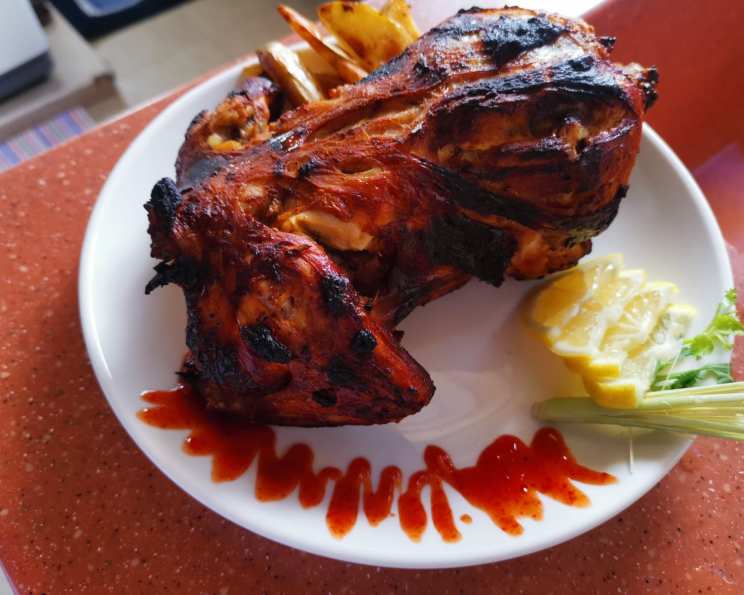
Thai Lemongrass Roast Chicken: Aromatic Flavors from My Kitchen to Yours
The scent of lemongrass always transports me back to my tiny apartment kitchen in Bangkok. I’d spend hours recreating the vibrant street food I’d devoured, the air thick with fragrant spices and the promise of something extraordinary. One of my earliest experiments was a roast chicken infused with lemongrass, a humble dish elevated by the bright, citrusy notes that danced on the tongue. This recipe is a refined version of that experiment, a taste of Thailand from my kitchen to yours, and it’s guaranteed to become a family favorite.
Recipe Overview
- Prep Time: 4 hours 25 minutes (includes marinating time)
- Cook Time: 1 hour
- Total Time: 5 hours 25 minutes
- Servings: 4
- Yield: 1 whole chicken
- Dietary Type: Dairy-Free
Ingredients
- 1/2 cup finely chopped lemongrass (3 or 4 stalks)
- 2 tablespoons finely chopped shallots
- 1 tablespoon finely chopped garlic
- 4 1/2 teaspoons fish sauce
- 1 tablespoon soy sauce
- 1 tablespoon crushed red pepper flakes
- 1 1/2 teaspoons kosher salt
- 2 tablespoons granulated sugar
- 1 (3 – 4 lb) whole chicken, rinsed and patted dry
- 2 tablespoons finely chopped fresh cilantro
- 1 tablespoon vegetable oil
Equipment Needed
- Nonreactive dish (large enough to hold the chicken)
- Roasting pan
- Roasting rack
- Spoon
Instructions
- In a nonreactive dish large enough to hold the chicken, combine all but 2 tablespoons of the finely chopped lemongrass with all of the finely chopped shallots, finely chopped garlic, fish sauce, soy sauce, crushed red pepper flakes, kosher salt, and granulated sugar. This is your aromatic marinade. Make sure to chop the lemongrass very finely – you want to release as much of its fragrant oil as possible.
- Add the whole chicken to the marinade and turn it to coat thoroughly. Be sure to tuck some of the marinade underneath the chicken’s skin, especially over the breast meat, to infuse it with maximum flavor.
- Pour any excess marinade into the bird’s cavity. This will help to season the chicken from the inside out.
- Marinate the chicken in the refrigerator for at least 3 hours, preferably overnight. The longer the chicken marinates, the more intense the flavor will be. This step is crucial for achieving that authentic Thai taste.
- Before cooking, bring the chicken to room temperature. This will ensure that it cooks evenly. Allow about 30-60 minutes outside of the fridge for this process.
- Preheat the oven to 350°F (175°C).
- Put the chicken, breast side down, on a rack in a roasting pan. Using a rack elevates the chicken, allowing for better air circulation and crispier skin.
- Cook for 40 minutes. This initial cooking breast-side down helps to keep the breast meat moist.
- Turn the bird over (breast side up) and roast until the chicken is cooked through and nicely browned, approximately 20 to 30 minutes more. Use a meat thermometer to ensure the chicken reaches an internal temperature of 165°F (74°C) in the thickest part of the thigh. The sugar in the marinade may cause the pan juices to burn slightly, but this won’t affect the chicken’s flavor – it’s just the sugars caramelizing.
- About 10 minutes before the chicken is done, combine the remaining 2 tablespoons of finely chopped lemongrass with the finely chopped fresh cilantro and vegetable oil in a small bowl.
- Using a spoon, rub this mixture evenly on the bird. This final coating adds a burst of fresh, vibrant flavor and helps to crisp up the skin beautifully.
- Continue roasting until the chicken is done. To check for doneness, pierce the thigh with a fork; the juices should run clear, not pink.
- Let the chicken sit for 10 minutes out of the oven before carving. This allows the juices to redistribute, resulting in a more tender and flavorful bird.
Expert Tips & Tricks
- For extra crispy skin: Pat the chicken very dry with paper towels before applying the marinade. This removes excess moisture and promotes browning.
- Don’t skip the marinating time: The longer the chicken marinates, the more flavorful it will be. Overnight marinating is ideal.
- To prevent burning: If the pan juices are browning too quickly, add a little water to the bottom of the roasting pan. This will create steam and slow down the caramelization process.
- Use a meat thermometer: This is the most accurate way to ensure that your chicken is cooked to a safe internal temperature. Insert the thermometer into the thickest part of the thigh, avoiding the bone.
- If the chicken is browning too quickly: Tent the chicken loosely with foil to prevent it from burning before it’s fully cooked.
Serving & Storage Suggestions
Serve the Thai Lemongrass Roast Chicken hot, carved, and drizzled with any pan juices. It pairs beautifully with steamed jasmine rice, stir-fried vegetables, or a refreshing cucumber salad.
Leftover chicken should be stored in an airtight container in the refrigerator. It will keep for up to 3-4 days. To reheat, you can either microwave it or bake it in the oven at 350°F (175°C) until heated through. You can also shred the leftover chicken and use it in salads, sandwiches, or wraps. The leftover chicken is not recommended to be stored at room temperature for more than 2 hours. For longer storage, the cooked chicken can be frozen for up to 2-3 months. Thaw completely in the refrigerator before reheating.
Nutritional Information
| Nutrient | Amount per Serving | % Daily Value |
|---|---|---|
| Calories | 552.4 kcal | N/A |
| Calories from Fat | 344 g | 62% |
| Total Fat | 38.3 g | 58% |
| Saturated Fat | 10.4 g | 52% |
| Cholesterol | 160.4 mg | 53% |
| Sodium | 1586.6 mg | 66% |
| Total Carbohydrate | 11.2 g | 3% |
| Dietary Fiber | 0.3 g | 1% |
| Sugars | 6.9 g | N/A |
| Protein | 39 g | 77% |
Note: Nutritional information is an estimate and may vary based on specific ingredients and preparation methods.
Variations & Substitutions
- Spicy Kick: For an extra spicy kick, add more crushed red pepper flakes to the marinade, or a finely chopped chili.
- Herbal Infusion: Experiment with different fresh herbs. Thai basil or mint would be delicious additions.
- Gluten-Free: To ensure this recipe is gluten-free, use tamari instead of soy sauce.
- Sweet & Tangy: Add a tablespoon of lime juice to the marinade for a touch of acidity.
- Coconut Milk Glaze: Mix 1/4 cup of coconut milk with 1 tablespoon of honey and brush it over the chicken during the last 15 minutes of roasting for a sweet and creamy glaze.
FAQs (Frequently Asked Questions)
Q: Can I use dried lemongrass instead of fresh?
A: While fresh lemongrass is preferred for its superior flavor, you can use dried lemongrass in a pinch. Use about 1 tablespoon of dried lemongrass for every 1/4 cup of fresh lemongrass. Be sure to rehydrate the dried lemongrass in a little warm water before adding it to the marinade.
Q: What is fish sauce and can I substitute it?
A: Fish sauce is a fermented fish sauce that adds a salty, umami flavor to Southeast Asian cuisine. If you don’t have fish sauce, you can substitute it with soy sauce, but the flavor will be slightly different.
Q: Can I marinate the chicken for longer than overnight?
A: While overnight marinating is ideal, marinating for longer than 24 hours is not recommended as the acid in the marinade can start to break down the chicken’s texture.
Q: How do I know when the chicken is cooked through?
A: The best way to ensure the chicken is cooked through is to use a meat thermometer. Insert the thermometer into the thickest part of the thigh, avoiding the bone. The chicken should reach an internal temperature of 165°F (74°C).
Q: Can I use chicken pieces instead of a whole chicken?
A: Yes, you can use chicken pieces like thighs or drumsticks. Adjust the cooking time accordingly, as the pieces will cook faster than a whole chicken.
Final Thoughts
This Thai Lemongrass Roast Chicken is more than just a recipe; it’s a journey to a place where flavors burst and memories are made. I encourage you to try this recipe, experiment with the variations, and make it your own. Share your feedback and let me know how it turns out! Pair this dish with a crisp, dry Riesling for a truly unforgettable culinary experience. Happy cooking!