
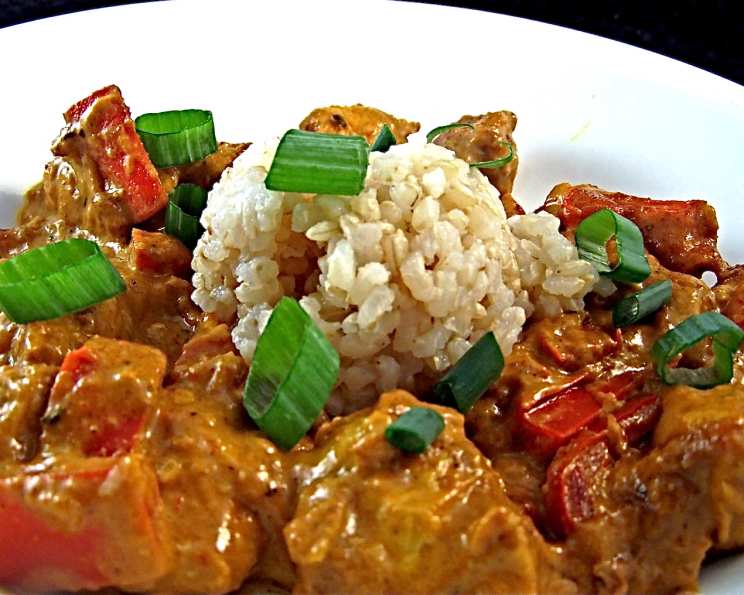
Thai “Orange” Curry Chicken: A Flavor Explosion
The first time I tasted something resembling this curry, I was backpacking through Southeast Asia. It wasn’t in a fancy restaurant, or even a street food stall, but in a tiny guesthouse kitchen in Chiang Mai. The owner, a sweet Thai grandmother, threw together whatever she had on hand, and the result was an incredibly flavorful, spicy, and comforting chicken curry that warmed me from the inside out. It was an explosion of taste that I’ve been trying to recreate ever since – and this recipe, while not strictly authentic, comes remarkably close to capturing that magic.
Recipe Overview
- Prep Time: 15 minutes
- Cook Time: 35 minutes
- Total Time: 50 minutes
- Servings: 2-3
- Dietary Type: Can be adapted to be Dairy-Free and Gluten-Free
Ingredients
- 2-3 boneless, skinless chicken breasts, cut into bite-sized pieces
- 1 (14 ounce) can coconut milk
- 2 tablespoons red curry paste
- 2 tablespoons fish sauce
- 1 tablespoon brown sugar
- 1 ½ red bell peppers, chopped
- 1 tablespoon yellow curry powder
- 1 tablespoon chili paste
- 1 ½ teaspoons lime juice
- ½ teaspoon sweet basil
- 1 garlic clove, minced
- 1 tablespoon fresh ginger, grated or minced
- ½ onion, chopped finely
- 1 tablespoon sweet chili sauce
- 2 tablespoons olive oil
Ingredient Notes: For a vegetarian option, substitute the chicken breasts with firm tofu or mixed vegetables such as broccoli, cauliflower and carrots. If you’re sensitive to spice, start with less chili paste and add more to taste. For gluten-free, ensure your fish sauce and red curry paste are certified gluten-free.
Equipment Needed
- Large Skillet or Wok
- Knife
- Cutting Board
- Measuring Spoons and Cups
- Mixing Spoon
Instructions
-
Begin by heating the olive oil in a large skillet or wok over medium heat.
-
Add the chicken pieces to the skillet and cook just until they are white on all sides. Be careful not to overcook the chicken at this stage, as it will continue to cook in the sauce. Remove the chicken from the skillet and set aside to drain any excess liquid.
-
In the same skillet, add the finely chopped onion, minced garlic, and grated or minced ginger. Cook until the onion becomes transparent and softened, releasing its aromatic flavors into the oil.
-
Pour in the coconut milk, then add the red curry paste, fish sauce, brown sugar, chopped red bell peppers, yellow curry powder, chili paste, lime juice, and sweet basil. Mix all the ingredients well to combine, ensuring the curry paste is fully incorporated into the coconut milk.
-
Bring the mixture to a boil, then immediately reduce the heat to a simmer.
-
Return the partially cooked chicken back into the skillet.
-
Cover the skillet and simmer for approximately 30 minutes, stirring occasionally – about every 10 minutes – to prevent sticking and ensure even cooking.
-
After 30 minutes, remove the cover from the skillet and continue to simmer for the last 10 minutes. This will allow the sauce to thicken slightly, intensifying the flavors.
-
Once the sauce reaches desired consistency, remove from the heat and serve.
Expert Tips & Tricks
-
To achieve a richer flavor, try using full-fat coconut milk instead of the reduced-fat variety. The extra fat adds a creamy texture and enhances the overall taste.
-
If you prefer a smoother sauce, you can use an immersion blender to partially blend the sauce after simmering. This will create a velvety texture while still retaining some of the vegetable pieces.
-
For a deeper depth of flavor, consider toasting the yellow curry powder in a dry pan for a minute or two before adding it to the curry. Be careful not to burn it.
-
If the curry becomes too thick during simmering, add a splash of water or chicken broth to adjust the consistency.
-
Make-ahead tip: You can prepare the curry base (without the chicken) up to 2 days in advance. Store it in an airtight container in the refrigerator. When ready to serve, simply reheat the sauce and add the cooked chicken.
Serving & Storage Suggestions
Serve the Thai “Orange” Curry Chicken hot over a bed of steamed rice, quinoa, or noodles. Garnish with fresh cilantro or a sprinkle of chopped peanuts for added flavor and texture. A side of steamed vegetables, such as broccoli or green beans, complements the richness of the curry.
Leftovers can be stored in an airtight container in the refrigerator for up to 3-4 days. To reheat, gently warm the curry in a saucepan over medium heat, stirring occasionally, or microwave until heated through. For longer storage, you can freeze the curry in a freezer-safe container for up to 2-3 months. Thaw overnight in the refrigerator before reheating.
Nutritional Information
| Nutrient | Amount per Serving | % Daily Value |
|---|---|---|
| Calories | 738.6 kcal | N/A |
| Calories from Fat | 474 g | 64% |
| Total Fat | 52.7 g | 81% |
| Saturated Fat | 35.1 g | 175% |
| Cholesterol | 69 mg | 22% |
| Sodium | 1627.7 mg | 67% |
| Total Carbohydrate | 37.2 g | 12% |
| Dietary Fiber | 8.1 g | 32% |
| Sugars | 25.3 g | N/A |
| Protein | 35.8 g | 71% |
Note: Nutritional information is an estimate and may vary based on specific ingredients and portion sizes.
Variations & Substitutions
-
Vegetarian Version: Replace the chicken with firm tofu, tempeh, or a medley of vegetables like broccoli, cauliflower, carrots, and bell peppers.
-
Spicy Level: Adjust the amount of chili paste to control the spiciness. For a milder curry, reduce the amount of chili paste or omit it altogether. For a spicier version, add a pinch of red pepper flakes or a finely chopped chili pepper.
-
Coconut Milk Alternative: If you don’t have coconut milk on hand, you can substitute it with cashew cream or a mixture of heavy cream and chicken broth, although the flavor profile will be slightly different.
-
Added Vegetables: Feel free to add other vegetables to the curry, such as bamboo shoots, water chestnuts, snap peas, or eggplant.
FAQs (Frequently Asked Questions)
Q: Can I use a different type of curry paste?
A: Yes, you can experiment with different types of curry paste, such as green curry paste or Panang curry paste, to create variations of this dish. Keep in mind that the flavor profile will change depending on the curry paste used.
Q: How do I know when the chicken is fully cooked?
A: The chicken is fully cooked when it reaches an internal temperature of 165°F (74°C). You can use a meat thermometer to check the temperature.
Q: Can I make this curry in a slow cooker?
A: Yes, you can adapt this recipe for a slow cooker. Sear the chicken and sauté the vegetables as instructed, then transfer everything to the slow cooker. Cook on low for 6-8 hours or on high for 3-4 hours.
Q: Is this curry gluten-free?
A: This curry can be gluten-free if you use gluten-free fish sauce and red curry paste. Check the labels of these ingredients to ensure they are certified gluten-free.
Q: Can I add lime zest for extra flavor?
A: Absolutely! Adding lime zest along with the lime juice will enhance the citrusy aroma and flavor of the curry.
Final Thoughts
This Thai “Orange” Curry Chicken is a flavor-packed dish that’s sure to impress. While it may not be strictly authentic, its vibrant flavors and comforting warmth make it a winner. Don’t be afraid to experiment with different ingredients and spice levels to create your own signature version. I encourage you to try this recipe and share your feedback – and maybe even pair it with a refreshing Thai iced tea! Enjoy the culinary adventure!