
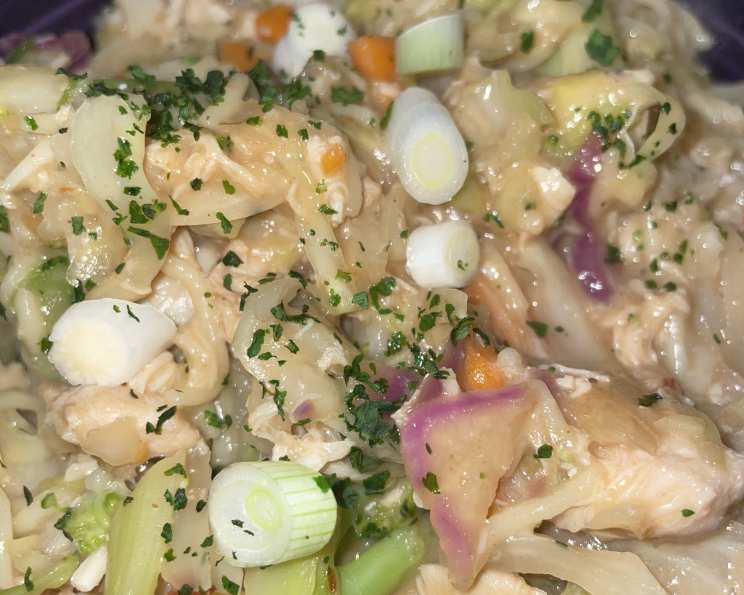
Thai Peanut Chicken Pasta: A Symphony of Flavors
The first time I tasted something remotely similar to this Thai Peanut Chicken Pasta was at a bustling street food market in Bangkok. The air, thick with humidity and the aroma of a thousand spices, buzzed with energy. A vendor, her wok blazing, tossed noodles with vibrant vegetables, succulent chicken, and a sauce that was sweet, savory, and utterly addictive. It was a flavor explosion, a culinary memory that has stayed with me ever since, inspiring countless renditions and, ultimately, this recipe that I’m excited to share with you. It’s a dish that’s both comforting and exciting, perfect for a weeknight dinner or a casual gathering with friends.
Recipe Overview
- Prep Time: 15 minutes
- Cook Time: 15 minutes
- Total Time: 30 minutes
- Servings: 6
- Dietary Type: Adaptable (see variations)
Ingredients
- 1 lb thin spaghetti
- 3 tablespoons toasted sesame oil, divided use
- 1 cup carrot, julienned
- 2 cups Napa cabbage, sliced
- ½ cup purple cabbage, very thinly sliced
- 2 cups cooked chicken breasts, chopped (or boneless thighs, or rotisserie chicken)
- 8 green onions, chopped
- 5 garlic cloves, minced
- 1 tablespoon fresh ginger, peeled and minced
- ¼ cup honey
- ¼ cup creamy peanut butter
- ¼ cup soy sauce
- 3 tablespoons rice vinegar, unseasoned
- 1 ½ tablespoons sambal oelek (or sriracha sauce)
Equipment Needed
- Large pot
- Large skillet or wok
- Colander
Instructions
- Bring a large pot of water to a rolling boil. Make sure you use enough water to allow the pasta to move freely.
- Add 1-2 tablespoons of salt to the boiling water. Salting the pasta water is essential; it’s your only chance to season the pasta itself from the inside out. Don’t be shy with the salt!
- Add the thin spaghetti to the boiling, salted water and cook it al dente, which means cooking it a minute less than the package instructions recommend. This ensures the pasta retains a slight firmness to the bite, preventing it from becoming mushy when combined with the sauce.
- Once the pasta is cooked to al dente, immediately drain it using a colander. Be quick to stop the cooking process.
- Return the drained pasta to the pot and toss it with 2 tablespoons of toasted sesame oil. This prevents the pasta from sticking together and adds a lovely nutty aroma.
- Pat the inside of the skillet or wok dry with a paper towel and add the remaining 1 tablespoon of toasted sesame oil. Heat the oil over medium-high heat.
- Before adding any vegetables, if you plan on using some of the green onions as a garnish at the end, set aside about ¼ cup of the chopped green onions.
- Add the remaining chopped green onions, julienned carrots, sliced Napa cabbage, thinly sliced purple cabbage, chopped cooked chicken, minced garlic, and minced ginger to the hot skillet or wok.
- Sauté the mixture for 1-2 minutes, until the vegetables have softened slightly and just begin to turn color. Be careful not to overcook them; you want them to retain a little bit of crunch.
- In a small bowl, whisk together the honey, creamy peanut butter, soy sauce, rice vinegar, and sambal oelek (or sriracha sauce). This is your Thai peanut sauce.
- Pour the Thai peanut sauce into the skillet or wok with the vegetables and chicken.
- Stir all the ingredients together to ensure everything is evenly coated with the sauce.
- Add the cooked thin spaghetti back into the skillet or wok.
- Gently toss the pasta with the rest of the ingredients until it is well combined and heated through.
- Serve the Thai Peanut Chicken Pasta immediately, garnishing with the reserved green onions (if desired) and a sprinkle of chopped peanuts, if desired.
Expert Tips & Tricks
- Don’t Overcook the Pasta: Al dente is key for this dish. Overcooked pasta will become mushy in the sauce.
- Prep Your Vegetables: Having all your vegetables prepped and ready to go before you start cooking will make the whole process much smoother.
- Adjust the Spice Level: The amount of sambal oelek or sriracha sauce can be adjusted to suit your personal preference. Start with a smaller amount and add more to taste.
- Toast Your Peanuts: Toasting the peanuts before chopping them will enhance their flavor and add a nice crunch. Simply spread them on a baking sheet and bake at 350°F (175°C) for 5-7 minutes, or until lightly golden.
- Peanut Butter Consistency: If your peanut butter is very thick, you can microwave it for a few seconds to soften it up, making it easier to whisk into the sauce.
Serving & Storage Suggestions
This Thai Peanut Chicken Pasta is delicious served warm, but it’s also surprisingly good at room temperature, making it a great option for picnics or potlucks.
Storage: Leftovers can be stored in an airtight container in the refrigerator for up to 3 days.
Reheating: To reheat, you can microwave the pasta for a minute or two, or gently warm it in a skillet over medium heat. Add a splash of water or chicken broth if the pasta seems dry. It’s not recommended to freeze this dish as the pasta can become mushy upon thawing.
Nutritional Information
| Nutrient | Amount per Serving | % Daily Value |
|---|---|---|
| Calories | 576 kcal | N/A |
| Calories from Fat | 159 kcal | N/A |
| Total Fat | 17.7 g | 27% |
| Saturated Fat | 3.4 g | 17% |
| Cholesterol | 39.2 mg | 13% |
| Sodium | 782.2 mg | 32% |
| Total Carbohydrate | 71.6 g | 23% |
| Dietary Fiber | 2.4 g | 9% |
| Sugars | 15 g | N/A |
| Protein | 34.1 g | N/A |
Note: Nutritional information is an estimate and may vary based on specific ingredients and portion sizes.
Variations & Substitutions
- Gluten-Free: Use gluten-free spaghetti in place of regular spaghetti.
- Vegetarian/Vegan: Omit the chicken or substitute it with tofu or tempeh. Ensure the honey is replaced with agave or maple syrup to make it completely vegan.
- Spicier: Add more sambal oelek or sriracha, or include a pinch of red pepper flakes.
- Nut-Free: Substitute sunflower seed butter for the peanut butter.
- Different Vegetables: Feel free to add other vegetables like bell peppers, snow peas, or bean sprouts.
- Herbs: Add some chopped cilantro or Thai basil for a fresher flavor.
FAQs (Frequently Asked Questions)
Q: Can I make this ahead of time?
A: Yes, you can cook the pasta and make the sauce ahead of time. Store them separately in the refrigerator, then combine and heat through when you’re ready to serve.
Q: How long will this last in the fridge?
A: Properly stored in an airtight container, the Thai Peanut Chicken Pasta will last for up to 3 days in the refrigerator.
Q: Can I use a different type of noodle?
A: Absolutely! While thin spaghetti works well, you can also use other types of noodles like linguine, fettuccine, or even rice noodles.
Q: Can I use rotisserie chicken?
A: Yes, rotisserie chicken is a great shortcut! Just shred it and add it to the dish.
Q: Can I freeze this dish?
A: Freezing is not recommended as the pasta can become mushy when thawed.
Final Thoughts
This Thai Peanut Chicken Pasta is more than just a recipe; it’s an invitation to explore a world of vibrant flavors and create a dish that’s uniquely your own. Don’t be afraid to experiment with different ingredients and spice levels to find your perfect balance. I encourage you to try this recipe, share it with your loved ones, and let me know what you think! Consider serving it alongside a refreshing cucumber salad or pairing it with a crisp, dry white wine for a truly delightful culinary experience. Enjoy!