
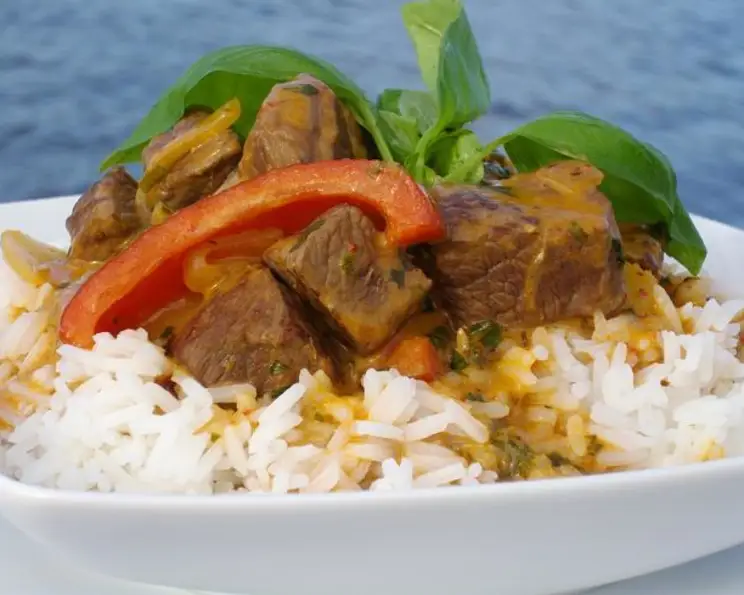
Thai Red Curried Lamb: A Culinary Journey to Southeast Asia
The first time I tasted red curry was in a tiny, bustling street market in Bangkok. The air hung thick with the scent of spices, lemongrass, and grilling meats. I remember being captivated by the vibrant colors swirling in the vendor’s wok – fiery red chilies, bright green basil, and glistening chunks of tender meat. The explosion of flavors – spicy, sweet, savory, and slightly tangy – was an awakening for my taste buds. That single bite ignited a lifelong love affair with Thai cuisine, and this Thai Red Curried Lamb is my humble attempt to recreate that magic in my own kitchen.
Recipe Overview
- Prep Time: 20 minutes
- Cook Time: 30 minutes
- Total Time: 50 minutes
- Servings: 4
- Yield: Variable, depending on rice serving size
- Dietary Type: Gluten-Free (check fish sauce for gluten), Dairy-Free
Ingredients
- 1 lb leg of lamb, lean, boneless, cut into 1 1/2 inch cubes
- 2 tablespoons peanut oil
- 1 onion, sweet, sliced
- 2 garlic cloves, crushed
- 2-3 tablespoons red Thai curry paste (adjust to your spice preference)
- ⅔ cup canned coconut milk
- 1 tablespoon brown sugar
- 1 red bell pepper, thickly sliced
- ½ cup beef stock (or lamb stock)
- 1 tablespoon Thai fish sauce
- 2 tablespoons fresh lime juice
- 1 cup canned water chestnuts, drained
- 2 tablespoons fresh cilantro, chopped
- 2 tablespoons fresh basil, chopped
- 4 sprigs fresh basil, to garnish
- 4 cups cooked jasmine rice, for serving
Equipment Needed
- Wok or large skillet
- Measuring spoons and cups
- Cutting board
- Knife
Instructions
-
Heat the peanut oil in a wok or large skillet over high heat. Make sure the pan is nice and hot before adding the ingredients – this will help sear the lamb and develop deeper flavors.
-
Add the sliced onion and crushed garlic to the hot oil and fry for about 3 minutes, or until the onion is softened and translucent and the garlic is fragrant. Be careful not to burn the garlic, as it can become bitter.
-
Add the cubed lamb to the wok and quickly stir-fry until browned on all sides. This step is crucial for developing a rich, savory crust on the lamb. Don’t overcrowd the pan; if necessary, brown the lamb in batches.
-
Stir in the red Thai curry paste and cook for 2 minutes, allowing the paste to bloom and release its aromatic oils. The fragrance should be intoxicating! If you’re sensitive to heat, start with 2 tablespoons of curry paste and add more to taste later.
-
Add the coconut milk and brown sugar to the wok, stirring well to combine. Bring the mixture to a boil, then reduce the heat to a simmer.
-
Simmer the curry for 15 minutes, stirring occasionally to prevent sticking and ensure even cooking. The coconut milk will thicken slightly, and the flavors will meld together beautifully.
-
Add the sweet red pepper, beef stock (or lamb stock), fish sauce, and lime juice to the wok. Cover the pan and continue to simmer for another 15 minutes, or until the lamb is tender. The cooking time may vary depending on the size of the lamb cubes and the heat of your stove, so check for tenderness periodically.
-
Stir in the drained water chestnuts, chopped cilantro, and chopped basil. Season with salt and pepper to taste. Simmer for an additional 5 minutes, allowing the flavors to meld and the herbs to infuse the curry.
-
Garnish with fresh basil sprigs and serve hot with steamed jasmine rice. The fragrant jasmine rice is the perfect accompaniment to soak up all that delicious curry sauce.
Expert Tips & Tricks
- Marinate the lamb: For extra tenderness and flavor, marinate the lamb in a mixture of soy sauce, ginger, garlic, and a touch of sesame oil for at least 30 minutes (or even overnight) before cooking.
- Toast the curry paste: Before adding the coconut milk, try toasting the red curry paste in the hot oil for a minute or two to enhance its flavor.
- Adjust the spice level: Red curry paste can vary in heat level. Start with a smaller amount and add more to taste. You can also temper the spice with a dollop of plain yogurt or sour cream when serving.
- Make it ahead: This curry can be made a day or two in advance. The flavors will actually deepen and improve over time.
- Lamb cut selection: Leg of lamb is a leaner choice, but lamb shoulder will also work well in this recipe. Shoulder meat needs a longer cooking time to become tender.
Serving & Storage Suggestions
Serve the Thai Red Curried Lamb hot, garnished with fresh basil sprigs, alongside fluffy jasmine rice. A side of steamed greens, like bok choy or spinach, can add a healthy and refreshing element to the meal.
Leftovers can be stored in an airtight container in the refrigerator for up to 3 days. For longer storage, freeze the curry in individual portions for up to 2 months. To reheat, thaw overnight in the refrigerator and then gently warm on the stovetop or in the microwave until heated through.
Nutritional Information
| Nutrient | Amount per Serving | % Daily Value |
|---|---|---|
| Calories | 535 kcal | 27% |
| Total Fat | 23g | 35% |
| Saturated Fat | 14g | 70% |
| Cholesterol | 90mg | 30% |
| Sodium | 650mg | 27% |
| Total Carbohydrate | 35g | 12% |
| Dietary Fiber | 4g | 16% |
| Sugars | 8g | – |
| Protein | 45g | 90% |
Note: Nutritional information is an estimate and may vary based on specific ingredients and portion sizes.
Variations & Substitutions
- Vegetarian/Vegan: Substitute the lamb with firm tofu, tempeh, or a mix of vegetables like broccoli, cauliflower, and mushrooms. Use vegetable stock instead of beef or lamb stock, and ensure the curry paste and fish sauce are vegan-friendly. Some fish sauces contain oyster extracts.
- Chicken or Beef: Replace the lamb with boneless, skinless chicken thighs or beef chuck for a different flavor profile. Adjust the cooking time accordingly.
- Spice Level: Adjust the amount of red curry paste to your preference. For a milder curry, use only 1-2 tablespoons. For a spicier curry, add a pinch of dried chili flakes or a finely chopped fresh chili.
- Coconut Milk: For a richer curry, use full-fat coconut milk. For a lighter curry, use light coconut milk.
- Vegetables: Feel free to add other vegetables, such as bamboo shoots, green beans, or eggplant.
FAQs (Frequently Asked Questions)
Q: Can I use a different type of curry paste?
A: While red curry paste is traditional for this dish, you can experiment with other Thai curry pastes, such as green or yellow, for a different flavor profile. Keep in mind that each curry paste has a unique spice level and aroma.
Q: How can I make this curry thicker?
A: If you prefer a thicker curry, you can mix a tablespoon of cornstarch with a tablespoon of cold water to create a slurry. Stir the slurry into the curry during the last few minutes of cooking.
Q: Can I freeze this curry?
A: Yes, this curry freezes well. Allow it to cool completely before transferring it to an airtight container or freezer bag. Thaw overnight in the refrigerator before reheating.
Q: What is fish sauce, and can I substitute it?
A: Fish sauce is a staple ingredient in Thai cuisine, adding a salty and umami flavor. If you don’t have fish sauce, you can substitute it with soy sauce or tamari (for a gluten-free option), but the flavor will be slightly different.
Q: Is jasmine rice the only rice that works with this dish?
A: Jasmine rice is a great choice for its fragrance and slightly sticky texture, but you can also use other types of rice, such as basmati or brown rice, depending on your preference.
Final Thoughts
This Thai Red Curried Lamb is more than just a recipe; it’s an invitation to explore the vibrant and complex flavors of Southeast Asia. Don’t be intimidated by the list of ingredients – the process is surprisingly simple, and the results are incredibly rewarding. I encourage you to try this recipe, experiment with different variations, and share your feedback. Serve it with a refreshing Thai iced tea or a crisp white wine for a truly unforgettable meal. Bon appétit!