
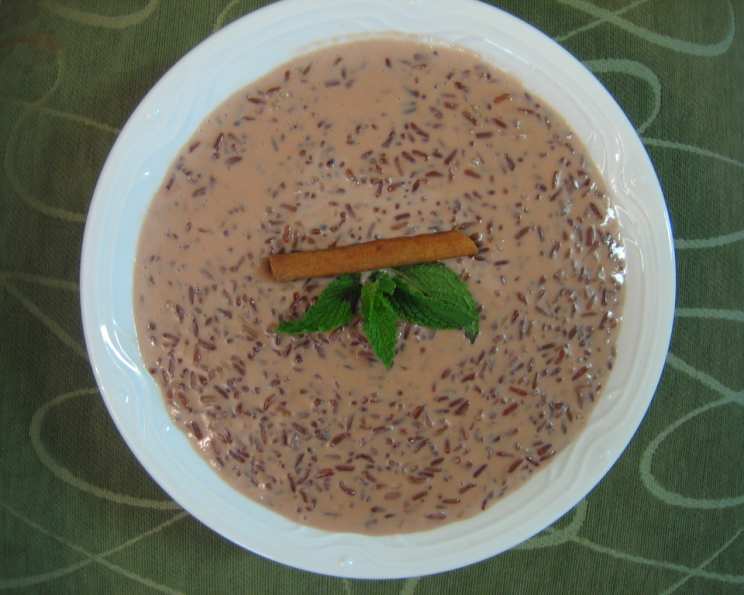
Thai Red Rice Pudding: Aromatic Comfort in Every Spoonful
The first time I tasted red rice pudding was at a bustling street market in Chiang Mai. The air was thick with the scent of grilling meats and exotic spices, but it was the subtle sweetness and creamy texture of this unique dessert that truly captured my heart. Served warm in a small banana leaf cup, the pudding was a comforting blend of nutty rice, fragrant rosewater, and rich coconut milk – a simple pleasure that transported me to a place of pure culinary bliss. It’s a memory I cherish and a flavor I’ve been chasing ever since, hoping to recreate that perfect moment with every spoonful.
Recipe Overview
- Prep Time: 15 minutes
- Cook Time: 60-80 minutes
- Total Time: 1 hour 15 minutes – 1 hour 35 minutes
- Servings: 4
- Dietary Type: Vegetarian (can be easily made vegan by using plant-based milk and half-and-half alternatives)
Ingredients
- 1⁄2 cup red rice (Thai)
- 1⁄2 cup long grain white rice
- 3⁄4 cup brown sugar
- 1⁄4 teaspoon salt
- 3 tablespoons rose water
- 1⁄4 teaspoon ground cardamom
- 3 cups water
- 3 cups milk (dairy or non-dairy)
- 1 (15 ounce) can coconut milk
- 1⁄2 cup half-and-half (dairy or non-dairy)
- 1⁄4 cup golden raisin
- 1 tablespoon lemon zest
- 2 tablespoons ground pistachio nuts (optional, for garnish)
Equipment Needed
- Large saucepan
- Measuring cups and spoons
- Wooden spoon or spatula for stirring
- Lemon zester
- Serving bowls
Instructions
-
In a large saucepan, combine the red rice, white rice, brown sugar, salt, 3 cups of water, and 3 cups of milk. Ensure all ingredients are well-mixed before proceeding.
-
Bring the mixture to a boil over medium-high heat. Once boiling, immediately reduce the heat to low and let it simmer gently.
-
Continue to simmer the mixture over low heat until approximately half of the liquid has evaporated. This process will take about 30-40 minutes. It is crucial to stir the pudding frequently during this stage to prevent it from sticking to the bottom of the pot and burning. A good rule of thumb is to stir every 5-7 minutes, or more often if you notice it beginning to stick.
-
After 30-40 minutes, add in the rose water, ground cardamom, and the entire can of coconut milk. Stir well to incorporate these fragrant additions.
-
Continue simmering the pudding for another 30-40 minutes. Again, stir frequently to ensure even cooking and prevent sticking. The mixture should gradually thicken to a desirable pudding-like consistency. You’ll know it’s ready when it coats the back of a spoon.
-
Once the pudding has reached the desired thickness, add in the lemon zest and 1/2 cup of half-and-half. Stir until everything is thoroughly combined and the mixture is creamy.
-
Taste the pudding and check for sweetness. If you prefer a sweeter pudding, add more brown sugar to your liking, a tablespoon at a time, stirring until dissolved.
-
Remove the saucepan from the heat.
-
If desired, garnish the pudding with ground pistachio nuts before serving.
-
Serve warm and enjoy!
Expert Tips & Tricks
- Rice Selection: Using good quality red rice makes a difference. Look for Thai red rice, as it has the best flavor and texture for this dessert. Don’t substitute with other types of red rice.
- Preventing Sticking: The key to a perfect rice pudding is constant attention. Stirring frequently prevents the rice from sticking and burning. If you have a heavy-bottomed saucepan, it will help distribute heat more evenly, further reducing the risk of sticking.
- Adjusting Sweetness: The amount of brown sugar can be adjusted to your personal preference. Start with the recommended amount and then add more to taste. Remember that the flavors will meld and intensify as the pudding cools.
- Rose Water Aroma: Rose water can be overpowering if you add too much. Begin with the specified amount and add a little more if you want a stronger floral flavor, but be careful not to overdo it.
- Creamy Texture: The half-and-half adds a wonderful creaminess. For a vegan option, use full-fat coconut cream or a high-quality plant-based half-and-half alternative.
- Make-Ahead Tip: You can prepare the pudding ahead of time and store it in the refrigerator. The flavors will meld even more overnight. When ready to serve, gently reheat it on the stovetop over low heat, adding a splash of milk if needed to restore the creamy consistency.
Serving & Storage Suggestions
Serve the Thai Red Rice Pudding warm in individual bowls. A sprinkle of ground pistachio nuts adds a lovely visual appeal and nutty flavor. It also pairs well with a dollop of coconut cream or a drizzle of honey.
Leftovers can be stored in an airtight container in the refrigerator for up to 3 days. To reheat, gently warm on the stovetop over low heat, stirring frequently, or microwave in short intervals. If the pudding becomes too thick during storage, add a splash of milk or water while reheating to restore the desired consistency. Freezing is not recommended, as it can alter the texture of the pudding.
Nutritional Information
| Nutrient | Amount per Serving | % Daily Value |
|---|---|---|
| Calories | 450 kcal | 23% |
| Total Fat | 20g | 31% |
| Saturated Fat | 15g | 75% |
| Cholesterol | 25mg | 8% |
| Sodium | 200mg | 9% |
| Total Carbohydrate | 60g | 20% |
| Dietary Fiber | 3g | 12% |
| Sugars | 40g | – |
| Protein | 8g | 16% |
Note: Nutritional information is an estimate and may vary based on specific ingredients used.
Variations & Substitutions
- Vegan Option: Use plant-based milk (almond, soy, or oat milk work well) and a vegan half-and-half alternative or full-fat coconut cream to make this recipe completely vegan.
- Spice Variations: Experiment with different spices. A pinch of ground ginger or a dash of cinnamon can add warmth and complexity to the flavor profile.
- Nut Alternatives: If you have a nut allergy, omit the pistachio nuts or substitute with toasted coconut flakes.
- Fruit Additions: Add other dried fruits like chopped dates, apricots, or cranberries for added texture and flavor.
- Sweetener Alternatives: You can substitute brown sugar with coconut sugar, maple syrup, or honey, adjusting the amount to your preferred level of sweetness.
FAQs (Frequently Asked Questions)
Q: Can I use regular white rice instead of long grain?
A: While you can, long grain rice holds its shape better and provides a slightly chewier texture, which is preferred in this pudding. Using regular white rice will result in a softer, potentially mushier pudding.
Q: Why is it important to stir the pudding so often?
A: Stirring prevents the rice from sticking to the bottom of the pot and burning. It also ensures even cooking and helps to release starches, contributing to the pudding’s creamy texture.
Q: Can I reduce the amount of sugar in the recipe?
A: Yes, you can certainly reduce the amount of sugar to your liking. Start with a smaller amount and add more to taste until you achieve the desired sweetness.
Q: How do I know when the pudding is done?
A: The pudding is done when it has thickened to a desirable consistency and coats the back of a spoon. The rice should be tender but still have a slight chewiness.
Q: Can I add other toppings besides pistachio nuts?
A: Absolutely! Toasted coconut flakes, a dollop of coconut cream, a drizzle of honey, or a sprinkle of cinnamon are all delicious topping options.
Final Thoughts
Thai Red Rice Pudding is more than just a dessert; it’s an experience – a journey of flavors and textures that evoke the warmth and vibrancy of Southeast Asia. I encourage you to try this recipe and experience the comforting magic for yourself. Don’t be afraid to experiment with variations and make it your own. Share your creations and feedback – I’d love to hear how you’ve put your personal spin on this delightful dish. Serve it as a sweet ending to a spicy Thai meal, or simply enjoy it as a comforting treat on a cozy evening. Happy cooking!