
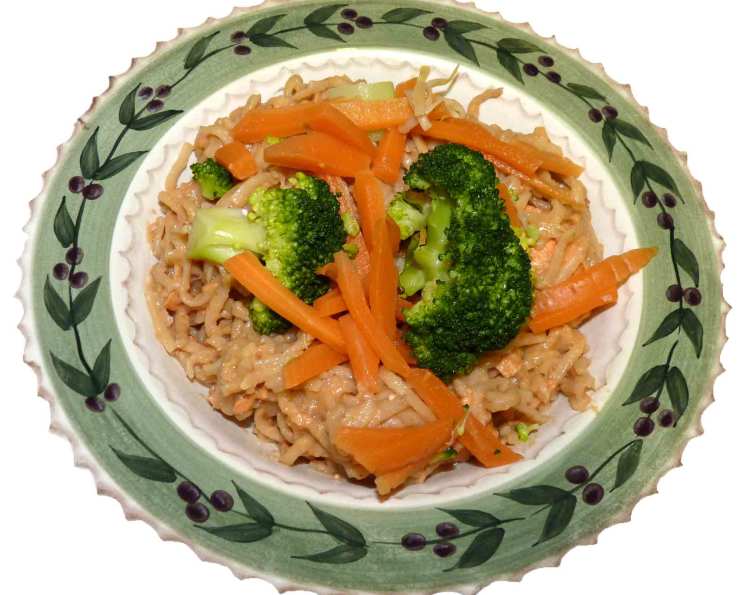
Thai Salmon Noodles: A Flavorful Fusion
I remember the first time I tasted anything remotely like these Thai Salmon Noodles. It was at a tiny, unassuming food stall in Bangkok. The air was thick with humidity and the intoxicating aroma of spices. I ordered something completely at random, trusting the vendor’s expertise. What arrived was a bowl of vibrant noodles, subtly sweet, a little bit spicy, and bursting with the freshness of Southeast Asia. This recipe is my attempt to capture that memory and bring it into my own kitchen, with a delicious and affordable twist using salmon.
Recipe Overview
- Prep Time: 15 minutes
- Cook Time: 20 minutes
- Total Time: 35 minutes
- Servings: 8
- Dietary Type: Dairy-Free
Ingredients
- 1 head broccoli (seperate the florets and blanch)
- 2 carrots (julienne and blanch)
- 375 g egg noodles (dry weight)
- 1 (418 g) can salmon (reserve the brine)
- 4 tablespoons smooth peanut butter
- 50 g creamed coconut (one sachet)
- 1 tablespoon hot water
- 1 tablespoon fish sauce
- 1 tablespoon dark soy sauce
- 4 garlic cloves, minced
- ½ tablespoon red curry paste
- 1 teaspoon fresh gingerroot, minced
- ½ lemon, juice of
- ½ cup Thai basil (optional) or ½ cup cilantro, chopped (optional)
Equipment Needed
- Large pot
- Small saucepan
- Colander
- Knife
- Cutting board
- Mixing spoon
Instructions
- Begin by preparing the vegetables. Blanch the broccoli florets and julienned carrots in a pot of boiling water for 2-3 minutes, until slightly tender-crisp. Immediately remove them from the boiling water and plunge them into an ice bath to stop the cooking process and preserve their vibrant color. This is a crucial step for maintaining the vegetables’ appealing texture and color. Drain well and set aside to keep warm.
- Now, it’s time to create the flavorful sauce. In a small saucepan over medium heat, combine the peanut butter, the reserved salmon brine, fish sauce, dark soy sauce, minced garlic cloves, red curry paste, minced fresh gingerroot, and the juice of half a lemon. Add the creamed coconut and hot water to the pan.
- Stir the mixture continuously until the peanut butter and creamed coconut have completely melted and the sauce is smooth and well combined. Adjust the heat to low to prevent burning and keep the sauce warm.
- While the sauce is simmering, prepare the dried egg noodles according to the package instructions. A chef’s tip: I often use the leftover water from blanching the vegetables to cook the egg noodles. It’s already hot and contains valuable vitamins extracted from the vegetables, adding a subtle boost to the noodles’ flavor and nutritional value.
- Once the egg noodles are cooked al dente (firm to the bite), drain them thoroughly in a colander.
- Transfer the drained noodles to a large bowl. Pour the prepared sauce over the noodles and gently stir to coat them evenly. Make sure every strand is covered in that delicious, savory sauce!
- Next, gently flake the canned salmon into bite-sized pieces. Fold the flaked salmon into the noodles, distributing it evenly throughout the mixture. Be gentle to avoid breaking the salmon into tiny pieces.
- Finally, gently fold in the blanched broccoli florets and julienned carrots. Alternatively, you can serve the vegetables on the side for a more visually appealing presentation.
- Before serving, ensure that the entire dish is warm throughout. You can gently heat it in a pan over low heat, stirring frequently, or microwave it in short bursts. Be careful not to overcook the salmon, as it can become dry.
- Serve immediately and enjoy the vibrant flavors of this Thai-inspired dish! Garnish with fresh Thai basil or cilantro for an extra burst of freshness and aroma, if desired.
Expert Tips & Tricks
- Enhance the Peanut Butter: For an even more intense peanut flavor, lightly toast the peanut butter in a dry pan for a few minutes before adding it to the sauce. Be careful not to burn it!
- Adjust the Spice Level: If you prefer a spicier dish, add a pinch of cayenne pepper or a finely chopped chili to the sauce.
- Make it Ahead: The sauce can be prepared ahead of time and stored in the refrigerator for up to 3 days. Reheat gently before using.
- Creamed Coconut Tip: If you can’t find creamed coconut in a sachet, use regular coconut cream, but reduce the amount slightly to avoid making the sauce too thin.
- Fixing a Thin Sauce: If the sauce becomes too thin, whisk in a cornstarch slurry (1 tablespoon cornstarch mixed with 2 tablespoons cold water) and simmer until thickened.
Serving & Storage Suggestions
Serve the Thai Salmon Noodles immediately while warm. Garnish with a sprinkle of chopped peanuts, fresh cilantro, or a wedge of lime for an extra zing. Leftovers can be stored in an airtight container in the refrigerator for up to 3 days. To reheat, microwave in short bursts or gently warm in a pan over low heat, adding a splash of water or broth if needed to prevent drying out. Freezing is not recommended as the noodles may become mushy upon thawing.
Nutritional Information
| Nutrient | Amount per Serving | % Daily Value |
|---|---|---|
| Calories | 373.9 kcal | N/A |
| Calories from Fat | 117 g | 31% |
| Total Fat | 13.1 g | 20% |
| Saturated Fat | 5.7 g | 28% |
| Cholesterol | 63.4 mg | 21% |
| Sodium | 426.4 mg | 17% |
| Total Carbohydrate | 43.9 g | 14% |
| Dietary Fiber | 4.6 g | 18% |
| Sugars | 3.9 g | N/A |
| Protein | 22.5 g | 44% |
Variations & Substitutions
- Vegetarian Option: Substitute the salmon with firm tofu, tempeh, or additional vegetables like mushrooms or bell peppers.
- Gluten-Free: Use gluten-free noodles, such as rice noodles or soba noodles. Ensure that the soy sauce is also gluten-free (tamari).
- Spicy Tuna Noodles: Instead of salmon, try using a can of tuna in oil, drained and flaked. Add a dash of sriracha to the sauce for extra heat.
- Seasonal Vegetables: Feel free to swap out the broccoli and carrots with other seasonal vegetables like snap peas, zucchini, or bok choy.
- Nut-Free: Replace the peanut butter with sunflower seed butter or tahini.
FAQs (Frequently Asked Questions)
Q: Can I use fresh salmon instead of canned?
A: Absolutely! If using fresh salmon, cook it separately until flaky and then add it to the noodles.
Q: Can I make this ahead of time?
A: Yes, you can prepare the sauce and blanch the vegetables ahead of time. Store them separately in the refrigerator and combine just before serving.
Q: What if I don’t have fish sauce?
A: If you don’t have fish sauce, you can substitute it with soy sauce, but add a little lemon juice to replicate the tangy flavor.
Q: How do I prevent the noodles from sticking together?
A: To prevent the noodles from sticking, toss them with a little oil after draining.
Q: Can I use different types of noodles?
A: Yes, you can use different types of noodles, such as rice noodles or udon noodles, depending on your preference. Just adjust the cooking time accordingly.
Final Thoughts
This Thai Salmon Noodle recipe is more than just a quick and easy meal; it’s an invitation to explore the vibrant flavors of Southeast Asia from the comfort of your own kitchen. Don’t be afraid to experiment with different vegetables, spice levels, or protein sources to create a dish that perfectly suits your taste. I encourage you to give this recipe a try and share your feedback. Pair it with a refreshing cucumber salad and a chilled glass of white wine for a truly memorable culinary experience. Happy cooking!