
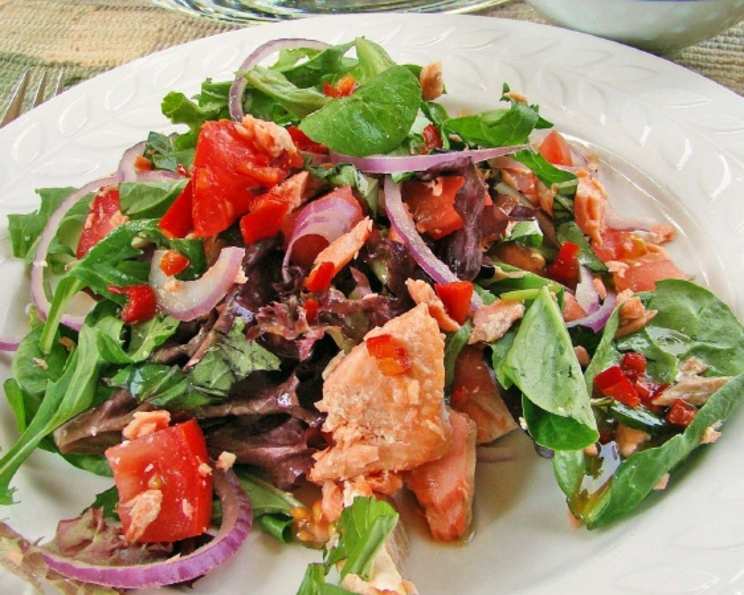
Thai Salmon Salad: A Culinary Journey to Southeast Asia
I remember the first time I tasted a truly authentic Thai salad. It wasn’t in a restaurant, but at a bustling street market in Bangkok, the air thick with the scent of lemongrass and chilies. A kind woman, her smile as warm as the tropical sun, handed me a small bowl. The explosion of flavors – the tangy lime, the fiery chili, the umami of fish sauce, and the fresh herbs – was an epiphany. It was a symphony in my mouth, a perfect balance of sweet, sour, salty, and spicy. This Thai Salmon Salad captures the essence of that experience, bringing the vibrant tastes of Thailand to your table.
Recipe Overview
- Prep Time: 20 minutes
- Cook Time: 20 minutes
- Total Time: 40 minutes
- Servings: 6
- Dietary Type: Dairy-Free, Gluten-Free (check fish sauce for gluten)
Ingredients
- 4 tablespoons fish sauce
- 4 tablespoons lime juice
- 2 teaspoons brown sugar
- 4 Thai chiles, chopped
- 1 1/2 lbs salmon fillets
- 1 teaspoon olive oil
- 1 onion, thinly sliced
- 1 large tomatoes, chopped
- 1 cup chopped fresh basil
- Mixed greens
Equipment Needed
- Baking tray
- Small bowl
- Large bowl
Instructions
-
Preheat your oven to 400 degrees F (200 degrees C). Ensure the oven is fully preheated for even cooking of the salmon.
-
Prepare the dressing by combining the fish sauce, lime juice, brown sugar, and chopped chiles in a small bowl. Whisk well until the brown sugar is dissolved. Set the dressing aside. Taste and adjust the sweetness or spiciness to your preference.
-
Place the salmon fillets on a baking tray. Pat the salmon dry with paper towels for better browning.
-
Rub olive oil evenly over the top of the salmon fillets. Season lightly with salt and pepper, if desired.
-
Bake for 20 minutes in the preheated oven, or until the salmon is easily flaked with a fork. The internal temperature of the salmon should reach 145°F (63°C). Avoid overcooking the salmon, as it will become dry.
-
Let the baked salmon cool for at least 15 minutes. This allows the salmon to retain its moisture and makes it easier to handle.
-
Place the cooled salmon fillets into a big bowl. Use a fork to break the salmon meat into big chunks. Be gentle to avoid turning it into a paste; you want to retain the texture of the salmon.
-
Add the thinly sliced onion, chopped tomato, and chopped fresh basil to the bowl with the salmon.
-
Pour the prepared dressing over the salmon mixture.
-
Toss lightly until well mixed. Be careful not to overmix, as this can break down the salmon.
-
Place the mixture on a bed of mixed greens, and serve immediately. The salad is best enjoyed fresh to preserve the bright flavors and crispness of the vegetables.
Expert Tips & Tricks
- Spice Level: Adjust the amount of Thai chiles to control the spiciness. For a milder salad, remove the seeds from the chiles before chopping. You can also use a milder chili variety like Serrano.
- Herb Infusion: For an extra layer of flavor, try adding other fresh herbs like mint or cilantro to the salad.
- Dressing Balance: The key to a perfect Thai dressing is the balance of sweet, sour, salty, and spicy. Taste the dressing and adjust the ingredients as needed to achieve your desired flavor profile.
- Salmon Quality: Use high-quality, fresh salmon for the best flavor and texture. Look for salmon fillets that are firm, moist, and have a vibrant color.
- Make-Ahead Tip: You can prepare the dressing and chop the vegetables ahead of time. Store them separately in the refrigerator and combine them with the salmon just before serving. However, do not dress the salad ahead of time, as the acid in the lime juice will break down the salmon and vegetables.
Serving & Storage Suggestions
Serve the Thai Salmon Salad immediately on a bed of fresh mixed greens. You can also serve it with steamed rice or sticky rice for a more substantial meal. Garnish with extra fresh basil leaves and a sprinkle of chopped peanuts for added texture and flavor.
Leftovers can be stored in an airtight container in the refrigerator for up to 2 days. The salad is best enjoyed cold or at room temperature. Reheating is not recommended, as it can dry out the salmon and affect the texture of the vegetables.
Nutritional Information
| Nutrient | Amount per Serving | % Daily Value |
|---|---|---|
| Calories | 190 kcal | N/A |
| Calories from Fat | 54 kcal | N/A |
| Total Fat | 6 g | 9% |
| Saturated Fat | 1.1 g | 5% |
| Cholesterol | 52.3 mg | 17% |
| Sodium | 1033.3 mg | 43% |
| Total Carbohydrate | 8.5 g | 2% |
| Dietary Fiber | 1.3 g | 5% |
| Sugars | 5.3 g | N/A |
| Protein | 25.2 g | 50% |
Note: Nutritional information is an estimate and may vary based on specific ingredients and preparation methods.
Variations & Substitutions
- Protein Swap: If you don’t have salmon, you can substitute it with grilled shrimp, chicken, or tofu. Adjust the cooking time accordingly.
- Vegetarian Option: Replace the salmon with baked or pan-fried tofu for a vegetarian version. Marinate the tofu in a mixture of soy sauce, ginger, and garlic for added flavor.
- Sweetener Alternative: You can use honey or maple syrup instead of brown sugar in the dressing.
- Herb Variations: Experiment with different herbs like cilantro, mint, or Thai basil.
- Nut Addition: Add some toasted peanuts or cashews for a nutty crunch.
- Spice Customization: Use other types of chilies, such as jalapeños or serranos, depending on your heat preference.
FAQs (Frequently Asked Questions)
Q: Can I use pre-cooked salmon for this recipe?
A: Yes, you can use pre-cooked salmon, but make sure it’s not overly dry. Flake it gently and add it to the salad as directed.
Q: What if I don’t have Thai chiles?
A: You can substitute with other hot peppers like serrano or jalapeño, or use a pinch of red pepper flakes. Adjust the amount to your spice preference.
Q: Can I make this salad ahead of time?
A: You can prepare the components separately (dressing, salmon, vegetables) ahead of time and combine them just before serving to prevent the salad from becoming soggy.
Q: What if my dressing is too sour?
A: Add a little more brown sugar to balance the acidity. Taste and adjust until you achieve the desired sweetness.
Q: Is fish sauce essential for this recipe?
A: Fish sauce is a key ingredient that provides umami flavor, but you can substitute it with soy sauce or tamari for a vegetarian option, though the flavor profile will be different.
Final Thoughts
This Thai Salmon Salad is a celebration of vibrant flavors and fresh ingredients. It’s a dish that’s perfect for a light lunch, a summer dinner, or any occasion where you want to impress your guests with a taste of Southeast Asia. Don’t be afraid to experiment with the ingredients and adjust the flavors to your liking. This recipe is a starting point, a guide to help you create your own culinary masterpiece. I encourage you to try this recipe, share your feedback, and perhaps pair it with a refreshing glass of iced green tea or a crisp white wine. Bon appétit!