
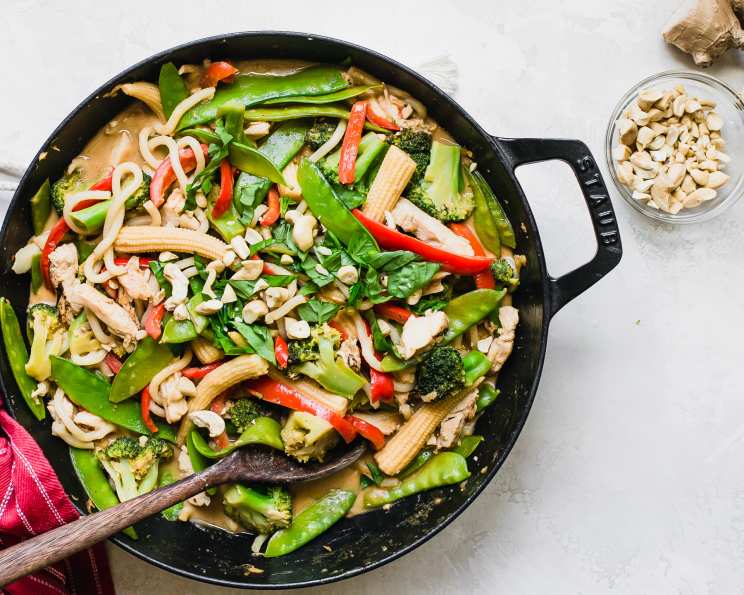
Thai Satay Noodles: Aromatic, Quick & Delicious
The scent of peanut and ginger always takes me back to the bustling street food stalls of Bangkok. I remember wandering through the vibrant markets, mesmerized by the sizzling woks and the symphony of exotic aromas. It was there, amidst the fragrant chaos, that I first tasted satay noodles – a dish that perfectly encapsulates the sweet, savory, and spicy flavors of Thailand. The creamy peanut sauce clinging to perfectly cooked noodles, studded with crisp vegetables, was an instant revelation. I knew then that I had to recreate this magic at home, and after countless iterations, I’m thrilled to share my version with you.
Recipe Overview
- Prep Time: 10 minutes
- Cook Time: 15 minutes
- Total Time: 25 minutes
- Servings: 4
- Yield: About 6 cups
- Dietary Type: Vegetarian (easily adaptable to Vegan)
Ingredients
- 3 tablespoons crunchy peanut butter
- 3 tablespoons sweet chili sauce
- 100 ml thick coconut milk
- 100 ml vegetable stock
- 2 tablespoons soy sauce
- 300 g pre-cooked noodles (udon or egg noodles work well)
- 2 tablespoons sesame oil
- 5 cm piece of fresh ginger, grated
- 150 g broccoli florets
- 1 red pepper, deseeded and sliced
- 75 g baby corn, halved lengthways
- 50 g mange-tout peas, trimmed
- 3 garlic cloves, crushed
- ¼ cup fresh basil
- 25 g roasted peanuts, chopped
Equipment Needed
- Large bowl
- Wok or large frying pan
- Measuring spoons and cups
- Grater
Instructions
-
Prepare the Satay Sauce: In a large bowl, combine the peanut butter, sweet chili sauce, coconut milk, vegetable stock, and soy sauce. Whisk until smooth and well combined. This sauce can be made ahead of time and stored in an airtight container in the refrigerator for up to 3 days.
-
Stir-Fry the Vegetables: Heat the sesame oil in a wok or large frying pan over medium-high heat. Add the broccoli florets, red pepper slices, baby corn halves, and grated ginger. Stir-fry for about 3 minutes, or until the vegetables are slightly softened but still crisp-tender.
-
Add the Remaining Vegetables and Garlic: Add the mange-tout peas and crushed garlic to the wok. Continue to stir-fry for another 2 minutes, until the mange-tout are bright green and slightly tender. Be careful not to burn the garlic; reduce the heat slightly if needed.
-
Combine Sauce and Vegetables: Pour the prepared satay sauce over the stir-fried vegetables in the wok. Bring the sauce to a simmer, stirring constantly to prevent sticking.
-
Add the Noodles: Drain the pre-cooked noodles (if necessary) and add them to the wok with the satay sauce and vegetables.
-
Stir-Fry the Noodles: Increase the heat to high and stir-fry the noodles, vegetables, and sauce together for 2-3 minutes, until the noodles are heated through and evenly coated with the sauce. Toss and turn the noodles frequently to prevent sticking and ensure even cooking.
-
Garnish and Serve: Remove the wok from the heat. Roughly chop the fresh basil and stir most of it into the noodles. Serve immediately, garnished with the remaining fresh basil leaves and chopped roasted peanuts.
Expert Tips & Tricks
- Spice it Up: If you like a bit more heat, add a pinch of red pepper flakes or a dash of sriracha to the satay sauce.
- Noodle Choice: While the recipe calls for pre-cooked udon or egg noodles, you can use any type of noodle you prefer. Rice noodles, spaghetti, or even soba noodles would work well. Just make sure to cook them according to the package instructions before adding them to the wok.
- Vegetable Variations: Feel free to swap out the vegetables in the recipe for your favorites. Carrots, mushrooms, snap peas, or zucchini would all be delicious additions.
- Peanut Butter Perfection: Use a good quality crunchy peanut butter for the best flavor and texture. If you only have smooth peanut butter on hand, you can add a handful of chopped peanuts to the sauce for extra crunch.
- Adjust the Sauce: If the sauce is too thick, add a splash of vegetable stock or water to thin it out. If it’s too thin, simmer it for a few minutes longer to allow it to thicken slightly.
- Make Ahead: The satay sauce can be made up to 3 days in advance. Store it in an airtight container in the refrigerator. The vegetables can also be prepped ahead of time and stored in a zip-top bag in the refrigerator for up to 24 hours.
- Vegan Variation: Substitute the honey in the sweet chili sauce for agave or maple syrup to make this recipe vegan.
Serving & Storage Suggestions
Serve the Thai Satay Noodles immediately after cooking for the best flavor and texture. Garnish with fresh basil and chopped roasted peanuts for added flavor and visual appeal. This dish pairs well with a crisp green salad or some steamed edamame.
Leftovers can be stored in an airtight container in the refrigerator for up to 2 days. To reheat, microwave until heated through, or stir-fry in a pan with a little oil or water until heated through. The noodles may become slightly softer upon reheating, but the flavor will still be delicious. Freezing is not recommended as the noodles and vegetables may become mushy upon thawing.
Nutritional Information
| Nutrient | Amount per Serving | % Daily Value* |
|---|---|---|
| Calories | 359 kcal | 18% |
| Total Fat | 23 g | 35% |
| Saturated Fat | 8 g | 37% |
| Cholesterol | 22 mg | 7% |
| Sodium | 630 mg | 26% |
| Total Carbohydrate | 31 g | 10% |
| Dietary Fiber | 3 g | 13% |
| Sugars | 4 g | — |
| Protein | 11 g | 22% |
*Percent Daily Values are based on a 2,000 calorie diet. Your daily values may be higher or lower depending on your calorie needs.
Variations & Substitutions
- Gluten-Free: Use gluten-free noodles and tamari instead of soy sauce. Be sure to check the label on your sweet chili sauce, as some brands contain gluten.
- Protein Boost: Add grilled chicken, shrimp, or tofu to the stir-fry for a more substantial meal.
- Creamier Sauce: For a richer, creamier sauce, use full-fat coconut milk and add a tablespoon of tahini.
- Spicier Sauce: Add a chopped chili pepper or a few drops of chili oil to the sauce for extra heat.
- Seasonal Vegetables: Use seasonal vegetables for a fresh and flavorful twist. In the spring, try adding asparagus or sugar snap peas. In the fall, butternut squash or Brussels sprouts would be delicious.
- Nut-Free: Substitute sunflower seed butter or tahini for the peanut butter.
FAQs (Frequently Asked Questions)
Q: Can I use regular chili sauce instead of sweet chili sauce?
A: While you can, the sweetness of sweet chili sauce is a key component of the satay flavor profile. If you use regular chili sauce, you may want to add a touch of honey or sugar to balance the flavors.
Q: Can I use frozen vegetables?
A: Yes, you can use frozen vegetables. Just make sure to thaw them completely before adding them to the wok. Keep in mind that frozen vegetables may release more water than fresh vegetables, so you may need to cook them for a slightly longer time.
Q: How do I prevent the noodles from sticking to the wok?
A: Make sure the wok is hot before adding the noodles, and stir them frequently to prevent sticking. Adding a little extra oil to the wok can also help.
Q: Can I make this dish vegetarian?
A: Absolutely! This recipe is naturally vegetarian. Just be sure to use vegetable stock instead of chicken stock.
Q: Is there a substitute for coconut milk?
A: If you don’t have coconut milk on hand, you can use cashew cream or even plain yogurt (although the flavor will be different).
Final Thoughts
Thai Satay Noodles are more than just a quick and easy meal; they’re a flavorful journey to the heart of Thailand. This dish is a perfect weeknight dinner, a crowd-pleasing party dish, or a satisfying lunch. Don’t be afraid to experiment with different vegetables, noodles, and spice levels to create your own signature version. I encourage you to gather your ingredients, fire up your wok, and let the aromas transport you to the bustling streets of Bangkok. I can’t wait to hear what you think and encourage you to experiment with it to make it your own! Enjoy!