
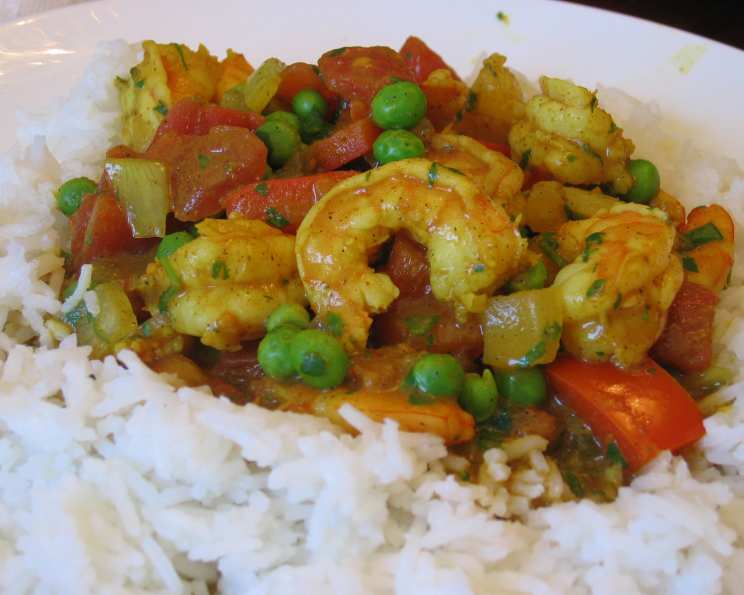
Thai Shrimp Curry: A Symphony of Flavors
The aroma alone is enough to transport me back to a small beachside restaurant in Thailand. Picture this: the sun setting over the Andaman Sea, the gentle lapping of waves, and the intoxicating scent of lemongrass, ginger, and chilies wafting from the kitchen. It was there, amidst the vibrant chaos of a local market, that I first tasted Thai Shrimp Curry. The memory of that first bite – the perfect balance of sweet coconut milk, spicy curry, and succulent shrimp – is etched in my mind, a culinary moment I’ve been chasing ever since. This recipe is my attempt to recreate that magic, bringing a taste of Thailand to your kitchen.
Recipe Overview
- Prep Time: 15 minutes
- Cook Time: 20 minutes
- Total Time: 35 minutes
- Servings: 4
- Dietary Type: Dairy-Free
Ingredients
- 1 tablespoon canola oil
- 1 onion, chopped
- 1 red bell pepper, cut into 1/4-inch pieces
- 3 tablespoons curry powder
- 1 teaspoon ground ginger
- 1 (14 1/2 ounce) can diced tomatoes, drained
- 1 (13 1/2 ounce) can coconut milk (unsweetened)
- 1 lb large shrimp, peeled and deveined
- 1⁄2 cup chopped fresh cilantro
- 1 cup frozen peas, thawed
- Couscous or rice, for serving
Equipment Needed
- Nonstick skillet
- Cutting board
- Knife
Instructions
-
Begin by heating the canola oil in a nonstick skillet over medium heat. Ensure the skillet is hot enough to prevent sticking, but not so hot that the oil smokes.
-
Add the chopped onion and diced red bell pepper to the skillet. Cook for approximately 5 minutes, stirring occasionally, until the onions become translucent and the peppers soften slightly. This process is crucial for developing the foundational flavors of the curry.
-
Incorporate the curry powder and ground ginger into the onion and pepper mixture. Continue to cook for another 5 minutes, stirring constantly. This step is essential to “bloom” the spices, releasing their aromatic oils and intensifying their flavor. Be careful not to burn the spices; reduce the heat if necessary.
-
Pour in the drained diced tomatoes and coconut milk. Stir well to combine all the ingredients, scraping any browned bits from the bottom of the skillet for added flavor.
-
Bring the mixture to a gentle boil, then immediately reduce the heat to low. Allow the curry to simmer for about 5 minutes, allowing the flavors to meld and deepen. This simmering process is key to achieving a rich and harmonious curry sauce.
-
Add the shrimp and chopped fresh cilantro to the simmering curry. Cook, stirring gently, until the shrimp turn pink and opaque, which should take approximately 5 minutes. Overcooked shrimp will become rubbery, so watch them closely.
-
Finally, stir in the thawed peas. Cook for just a minute or two, until the peas are heated through. Overcooking the peas can make them mushy, so add them right at the end.
-
Serve hot over couscous or rice. Garnish with extra cilantro, if desired.
Expert Tips & Tricks
- For a richer flavor, consider toasting the curry powder in a dry pan for a minute or two before adding it to the oil. Be careful not to burn it.
- If you prefer a spicier curry, add a pinch of red pepper flakes or a finely chopped chili pepper along with the curry powder.
- For a creamier curry, use full-fat coconut milk instead of light coconut milk.
- If you want to add more vegetables, consider incorporating sliced mushrooms, zucchini, or broccoli.
- Make-ahead tip: You can prepare the curry sauce (without the shrimp and peas) up to 2 days in advance. Store it in an airtight container in the refrigerator. When ready to serve, reheat the sauce and then add the shrimp and peas.
Serving & Storage Suggestions
Serve your Thai Shrimp Curry hot, ladled generously over a bed of fluffy couscous or fragrant jasmine rice. A sprinkle of fresh cilantro and a wedge of lime can add a final touch of freshness. Leftovers should be stored in an airtight container in the refrigerator and will last for up to 3 days. Reheat gently on the stovetop or in the microwave, adding a splash of water or coconut milk if needed to prevent drying out. While freezing is possible, the texture of the shrimp may change slightly upon thawing. It’s best enjoyed fresh or within a few days. Do not leave the curry at room temperature for more than 2 hours.
Nutritional Information
| Nutrient | Amount per Serving | % Daily Value |
|---|---|---|
| Calories | 434 kcal | – |
| Calories from Fat | 218 g | 50% |
| Total Fat | 24.3 g | 37% |
| Saturated Fat | 16.5 g | 82% |
| Cholesterol | 172.8 mg | 57% |
| Sodium | 486.5 mg | 20% |
| Total Carbohydrate | 28.5 g | 9% |
| Dietary Fiber | 7.8 g | 31% |
| Sugars | 14.5 g | – |
| Protein | 29.7 g | 59% |
Variations & Substitutions
- Vegan Curry: Substitute the shrimp with firm tofu or chickpeas.
- Gluten-Free: Ensure your curry powder is gluten-free. Serve over rice instead of couscous.
- Spice Level: Adjust the amount of curry powder or add chili flakes to control the heat.
- Seasonal Vegetables: Incorporate seasonal vegetables like butternut squash in the fall or asparagus in the spring.
- Protein Options: Chicken, fish, or even beef can be substituted for the shrimp. Adjust cooking times accordingly.
FAQs (Frequently Asked Questions)
Q: Can I use pre-cooked shrimp?
A: Yes, but add them at the very end just to heat through, as they will become rubbery if overcooked.
Q: What if I don’t have curry powder?
A: You can create your own blend using a combination of turmeric, coriander, cumin, and chili powder.
Q: Can I use sweetened coconut milk?
A: It is recommended to use unsweetened coconut milk to control the sweetness of the curry and avoid an overly sweet dish.
Q: How can I thicken the curry sauce?
A: Simmer the sauce for a longer period to reduce the liquid or add a slurry of cornstarch and water.
Q: Is it necessary to drain the diced tomatoes?
A: Draining the diced tomatoes prevents the curry from becoming too watery.
Final Thoughts
I hope this recipe inspires you to embark on your own culinary journey to Thailand, right from the comfort of your kitchen. Don’t be afraid to experiment with the ingredients and adjust the flavors to your liking. Cooking should be an enjoyable and creative process, so have fun, embrace the aromas, and savor the delicious result. Please share your feedback and any modifications you make – I’d love to hear about your experience! Consider pairing this Thai Shrimp Curry with a crisp, chilled Sauvignon Blanc or a refreshing Thai iced tea for the ultimate culinary experience.