
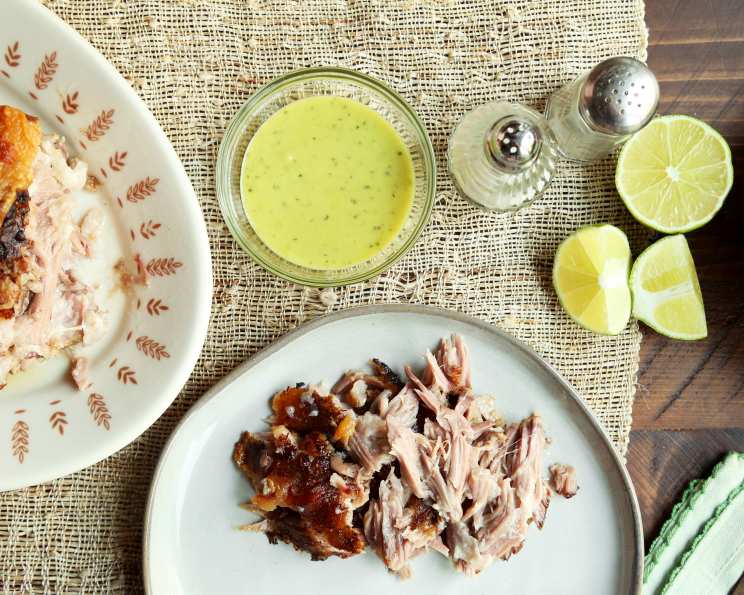
The Best Puerto Rican Pernil (Pork Shoulder)
The first time I tasted truly exceptional pernil, it was at a neighborhood block party in Spanish Harlem. The air, thick with the aroma of roasted pork, spices, and sizzling fat, drew me in like a siren’s call. Tio Miguel, the undisputed king of the grill, carved off a generous slab of the golden-brown shoulder, the meat practically falling apart at the touch. That first bite – the crispy skin crackling in my mouth, the tender, juicy pork infused with a garlicky, tangy marinade – transported me. It wasn’t just a meal; it was an experience, a taste of culture and tradition, and a moment I’ve been trying to recreate ever since.
Recipe Overview
- Prep Time: 30 minutes (plus 24-48 hours marinating)
- Cook Time: 9 hours
- Total Time: 9 hours 30 minutes (plus marinating time)
- Servings: 6-8
- Yield: One large pork shoulder
- Dietary Type: Gluten-Free, Dairy-Free
Ingredients
- 6-7 lbs pork shoulder (bone-in pernil)
- 4 limes, juiced
- 15 garlic cloves, mashed in a mortar and pestle (add a tsp. salt to help mash garlic)
- 2 tablespoons dried oregano
- Salt & fresh ground black pepper
- ¼ cup soy sauce
- 2 tablespoons olive oil
- 1 cup vinegar
- Water
Equipment Needed
- Mortar and pestle
- Large cutting board
- Sharp knife
- Large roasting pan
- Aluminum foil
- Medium-sized bowl
Instructions
-
In a medium bowl, combine the mashed garlic, lime juice, dried oregano, soy sauce, olive oil, salt, and black pepper. Mix thoroughly to create the marinade. Set aside.
-
Wash the pork shoulder in vinegar and water. Pat it completely dry with paper towels. This step is crucial for achieving crispy skin.
-
Place the pork shoulder on a cutting board, fat side up.
-
This is a critical step: Leaving the fat in a single piece and attached at one end, use a sharp knife to carefully remove the layer of fat from the shoulder, opening it like a book to reveal the meat. Essentially, you are butterflying the fat cap. This allows the marinade to penetrate the meat thoroughly.
-
Use the knife to poke 1-inch deep holes into the meat on all sides (about 20 holes). These holes will act as flavor pockets, ensuring every bite is bursting with marinade.
-
Place the pork shoulder in the roasting pan, skin side up.
-
Generously rub the marinade all over the pork shoulder, making sure you work it into the holes. Don’t be shy; the more marinade, the better!
-
Return the skin back to its original position, covering the meat.
-
Score the skin with diagonal cuts, about 1 inch apart and ¼ inch deep. This will help render the fat and create that irresistible crispy chicharrón.
-
Sprinkle salt generously over the skin. This helps to draw out moisture and promote crispiness.
-
Cover the roasting pan tightly with aluminum foil. Refrigerate for 24 to 48 hours. The longer the marinade time, the more flavorful the pernil will be. This allows the flavors to fully penetrate the meat.
-
Remove the pork shoulder from the refrigerator 45 minutes before roasting. This allows the meat to come closer to room temperature, promoting more even cooking.
-
Preheat the oven to 475 degrees F. This initial high heat blast is key to getting the skin started on its journey to crispy perfection.
-
Add a little water to the roasting pan so that it comes up about 1/2 inch up the sides. This creates steam, which helps to keep the meat moist during the long cooking process. Be sure to monitor the water level throughout cooking, and add more as needed to prevent the pan from drying out.
-
Cook the pork shoulder uncovered for 1 hour. This initial blast of heat helps to render the fat and begin the browning process.
-
Turn the oven temperature down to 225 degrees F, tent the pork shoulder loosely with aluminum foil, and cook for 8 hours. The low and slow roasting is what transforms the pork into incredibly tender and juicy perfection. The foil helps to prevent the pork from drying out during this extended cooking time.
-
Remove the foil and cook for 1 hour longer. This final hour allows the skin to crisp up and become beautifully golden brown. If the skin isn’t as crispy as you’d like at this point, you can increase the oven temperature slightly (to 300 degrees F) for the last 15-20 minutes, but watch it carefully to prevent burning.
-
Let the pernil rest for 10 minutes before slicing or shredding. This allows the juices to redistribute throughout the meat, resulting in a more flavorful and tender final product.
Expert Tips & Tricks
- The Marinade is Key: Don’t skimp on the marinade time. The longer the pork sits in the marinade, the more flavorful it will become. I recommend at least 24 hours, but 48 hours is even better.
- Crispy Skin Secrets: The key to crispy skin is a combination of scoring, salting, high initial heat, and a final blast of heat at the end. Don’t be afraid to crank up the oven temperature for the last few minutes if needed, but keep a close eye on it to prevent burning.
- Don’t Overcrowd the Pan: Make sure the pork shoulder fits comfortably in the roasting pan without being crammed. Overcrowding can prevent the skin from crisping properly.
- Internal Temperature: While the long cooking time usually ensures doneness, you can double-check with a meat thermometer. The internal temperature of the pork should reach at least 195-205 degrees F for optimal tenderness. The meat will be very easily shredded at this temperature.
- Salt Content: Soy sauce adds a fair amount of salt. Taste the marinade before adding additional salt, so the pernil doesn’t become too salty.
- Garlic Paste Shortcut: If you don’t have the time or energy to mash all those garlic cloves by hand, you can use pre-minced garlic from a jar. However, fresh garlic will always provide better flavor, so using the mortar and pestle method is highly recommended.
Serving & Storage Suggestions
Pernil is traditionally served with arroz con gandules (rice with pigeon peas), tostones (fried plantains), and ensalada de aguacate (avocado salad). It’s also fantastic in sandwiches, tacos, or as a filling for empanadas.
To store leftovers, let the pernil cool completely before transferring it to an airtight container. It will keep in the refrigerator for up to 3-4 days. You can also freeze it for up to 2-3 months. To reheat, bake in a moderate oven (325 degrees F) until heated through, or microwave in short bursts. The skin may lose some of its crispness when reheated, but the flavor will still be fantastic.
Nutritional Information
Note: Nutritional information is an estimate and may vary based on specific ingredients and portion sizes.
| Nutrient | Amount per Serving | % Daily Value |
|---|---|---|
| Calories | 850 kcal | 43% |
| Total Fat | 65g | 83% |
| Saturated Fat | 25g | 125% |
| Cholesterol | 250mg | 83% |
| Sodium | 800mg | 33% |
| Total Carbohydrate | 5g | 2% |
| Dietary Fiber | 1g | 4% |
| Sugars | 2g | N/A |
| Protein | 60g | 120% |
Variations & Substitutions
- Spicy Pernil: Add a chopped habanero pepper (with seeds removed for less heat) to the marinade for a spicy kick.
- Citrus Burst: Experiment with different citrus juices in the marinade. Orange juice or grapefruit juice can add a unique flavor dimension.
- Smoked Paprika: Add 1-2 tablespoons of smoked paprika to the marinade for a smoky flavor.
- Herbs: Experiment with other herbs like cilantro or culantro (recao) in the marinade.
- Soy Sauce Alternative: For a soy-free version, use coconut aminos or tamari (wheat-free soy sauce).
FAQs (Frequently Asked Questions)
Q: Can I make pernil without a bone-in pork shoulder?
A: Yes, you can use a boneless pork shoulder, but be aware that it may cook faster and the texture may be slightly different. Adjust cooking time accordingly, and monitor the internal temperature closely.
Q: How do I prevent the skin from burning?
A: If the skin starts to get too dark during cooking, tent it loosely with aluminum foil.
Q: Can I use a slow cooker for pernil?
A: While it’s not traditional, you can adapt this recipe for a slow cooker. Sear the pork shoulder on all sides before placing it in the slow cooker. Cook on low for 8-10 hours, or until the meat is very tender. Finish by broiling the skin in the oven for a few minutes to crisp it up.
Q: What if I don’t have a mortar and pestle?
A: You can finely mince the garlic with a knife or use a garlic press.
Q: Can I make this recipe ahead of time?
A: Yes, pernil is even better the next day! Cook it a day ahead of time and reheat it before serving.
Final Thoughts
Now it’s your turn to experience the magic of authentic Puerto Rican pernil. Don’t be intimidated by the long cooking time; the results are well worth the effort. Gather your ingredients, follow these steps, and prepare to be transported to a place where flavors are bold, traditions are cherished, and every bite is a celebration. And when you create this masterpiece, please share your pictures and comments! Nothing makes a chef happier than seeing their creations enjoyed by others. Pair your pernil with a refreshing Coquito (Puerto Rican Coconut Nog) for the ultimate festive experience!