
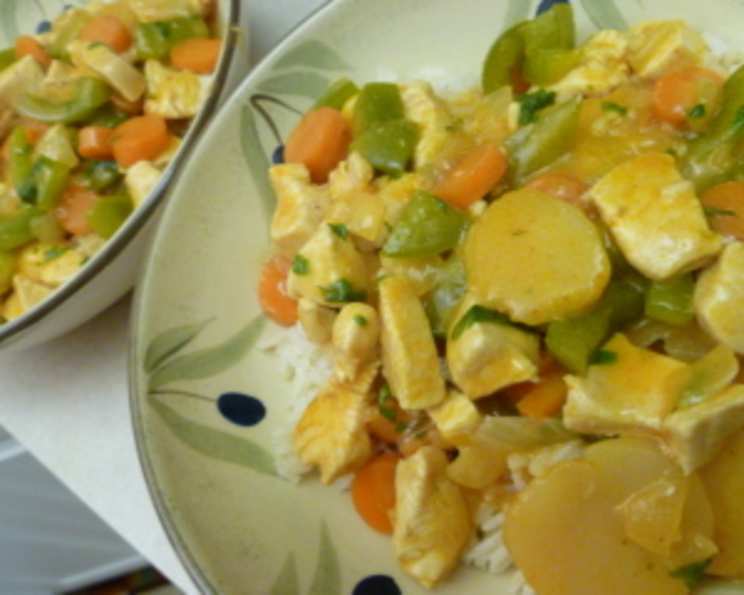
The Best Thai Red Chicken Curry Recipe
The first time I tasted authentic Thai red curry, I was backpacking through Southeast Asia, utterly lost in the vibrant chaos of a Bangkok night market. The air hung thick with the scent of lemongrass, chilies, and something wonderfully unfamiliar. A tiny street vendor, her face etched with decades of culinary wisdom, ladled a steaming bowl of crimson curry over a bed of jasmine rice. One bite, and I was transported. The creamy coconut milk, the fiery spice, the tender chicken, all danced on my tongue in perfect harmony. I’ve been chasing that flavor ever since, and this recipe is my attempt to bring that Bangkok magic home.
Recipe Overview
- Prep Time: 15 minutes
- Cook Time: 35 minutes
- Total Time: 50 minutes
- Servings: 2-4
- Yield: Varies based on vegetable quantity
- Dietary Type: Can be dairy-free, gluten-free
Ingredients
- 2 tablespoons oil
- 1 small onion, finely chopped
- 1 tablespoon Thai red curry paste
- 2 garlic cloves, finely chopped
- 1 cup coconut milk
- 1 cup chicken broth
- 2 tablespoons fish sauce
- 1 tablespoon brown sugar
- 1/2 teaspoon salt
- 1/2 cup zucchini, cubed
- 2 carrots, peeled and chopped
- 1 red pepper, seeded and cut into small strips
- 1/2 cup broccoli florets, cut into small pieces
- 1/2 teaspoon red pepper flakes
- 8 ounces boneless skinless chicken breasts, cut into thin strips
- 1/2 lime, juice of
- 4 fresh Thai basil leaves (or 1/2 tsp dried)
Equipment Needed
- Large saucepan or Dutch oven
- Cutting board
- Knife
- Measuring cups and spoons
Instructions
- Begin by heating the oil in a large saucepan or Dutch oven over medium heat. Once the oil is shimmering, add the finely chopped onion and cook for about 5 minutes, or until the onion becomes translucent and softened, stirring occasionally to prevent burning.
- Add the Thai red curry paste and chopped garlic to the saucepan. Cook, stirring constantly, for approximately 1 minute, allowing the aromatics to bloom and release their fragrant oils. Be careful not to burn the curry paste, as this will impart a bitter flavor to the finished dish.
- Pour in the coconut milk, chicken broth, fish sauce, brown sugar, red pepper flakes, and salt. Stir well to combine all the ingredients, ensuring that the brown sugar and salt are fully dissolved.
- Bring the mixture to a boil over medium-high heat. Once boiling, reduce the heat to low and add the zucchini, carrots, red pepper, and broccoli florets.
- Simmer gently, allowing the vegetables to cook until they are tender-crisp. This should take approximately 10-15 minutes, depending on the size and density of the vegetable pieces. Stir occasionally to ensure even cooking.
- While the vegetables are simmering, prepare the chicken. Squeeze the juice of half a lime over the chicken strips, ensuring that each piece is evenly coated. This will help to tenderize the chicken and add a bright, citrusy flavor.
- Add the lime-marinated chicken and fresh Thai basil leaves (or dried basil) to the pot with the simmering vegetables.
- Increase the heat slightly to ensure the chicken cooks through. Cook until the chicken is fully cooked and no longer pink inside, about 5-7 minutes. Stir frequently to prevent the chicken from sticking to the bottom of the pot and to ensure even cooking. The internal temperature of the chicken should reach 165°F (74°C).
- Taste and adjust seasoning as needed. You may want to add more fish sauce for saltiness, brown sugar for sweetness, or red pepper flakes for more heat, depending on your personal preference.
- Serve the Thai red chicken curry hot over a bed of fluffy jasmine rice. Garnish with extra fresh Thai basil leaves and a wedge of lime, if desired.
Expert Tips & Tricks
- For a richer flavor, use full-fat coconut milk. The higher fat content will create a creamier and more decadent curry.
- Don’t be afraid to adjust the amount of curry paste and red pepper flakes to suit your spice tolerance. Start with less and add more to taste.
- If you don’t have fresh Thai basil, regular basil can be used as a substitute, although it will have a slightly different flavor profile.
- To thicken the curry sauce, you can mix 1 tablespoon of cornstarch with 2 tablespoons of cold water to create a slurry. Add the slurry to the simmering curry and stir until thickened.
- If you are short on time, use pre-cut vegetables to save on prep time. Frozen vegetables can also be used, but add them towards the end of the cooking time to prevent them from becoming mushy.
Serving & Storage Suggestions
Serve the Thai red chicken curry hot, ladled generously over jasmine rice. A sprinkle of fresh cilantro and a wedge of lime will enhance the presentation and add a burst of freshness.
Leftovers can be stored in an airtight container in the refrigerator for up to 3-4 days. To reheat, simply microwave until heated through, or warm gently in a saucepan over medium heat, stirring occasionally. If the curry becomes too thick during reheating, add a splash of chicken broth or water to thin it out.
The curry can also be frozen for longer storage. Store in freezer-safe containers for up to 2-3 months. Thaw overnight in the refrigerator before reheating.
Nutritional Information
| Nutrient | Amount per Serving | % Daily Value |
|---|---|---|
| Calories | 906.3 kcal | N/A |
| Calories from Fat | 377 g | 42% |
| Total Fat | 42 g | 64% |
| Saturated Fat | 25.6 g | 128% |
| Cholesterol | 72.6 mg | 24% |
| Sodium | 2608.6 mg | 108% |
| Total Carbohydrate | 103.4 g | 34% |
| Dietary Fiber | 4.4 g | 17% |
| Sugars | 91.8 g | 367% |
| Protein | 31.9 g | 63% |
Variations & Substitutions
- Vegan Red Curry: Substitute tofu or tempeh for the chicken and use vegetable broth instead of chicken broth. Ensure the curry paste is vegan-friendly, as some brands may contain fish sauce.
- Seafood Red Curry: Replace the chicken with shrimp, scallops, or white fish for a delicious seafood variation. Add the seafood towards the end of the cooking time, as it cooks quickly.
- Spicy Red Curry: Add more red pepper flakes or a chopped Thai chili pepper for extra heat.
- Creamy Red Curry: Stir in a tablespoon of peanut butter or cashew butter for a richer, creamier flavor.
- Vegetable Medley: Feel free to experiment with different vegetables, such as bell peppers (different colors), snap peas, bamboo shoots, or water chestnuts.
FAQs (Frequently Asked Questions)
Q: Can I make this curry ahead of time?
A: Yes, Thai red chicken curry can be made a day or two in advance. The flavors will actually meld and deepen as it sits in the refrigerator.
Q: How do I adjust the spice level?
A: You can control the spice level by adjusting the amount of Thai red curry paste and red pepper flakes. Start with a smaller amount and add more to taste.
Q: Can I use a different type of milk?
A: While coconut milk is traditional, you can use other types of milk, such as almond milk or cashew milk. However, the flavor and texture will be slightly different.
Q: Is this recipe gluten-free?
A: This recipe can be gluten-free if you use gluten-free fish sauce and chicken broth. Many brands of fish sauce contain gluten, so be sure to check the label.
Q: What can I serve with this curry besides rice?
A: Thai red chicken curry is also delicious served with noodles, quinoa, or even roasted vegetables.
Final Thoughts
I hope this recipe inspires you to create your own delicious Thai red chicken curry at home. Don’t be afraid to experiment with different vegetables and adjust the spice level to your liking. Cooking should be a joyful exploration of flavors, so have fun and enjoy the process. Once you’ve mastered this recipe, why not try pairing it with a refreshing Thai iced tea or a light and crispy spring roll? I’d love to hear your thoughts and experiences with this recipe, so please share your feedback! Happy cooking!