
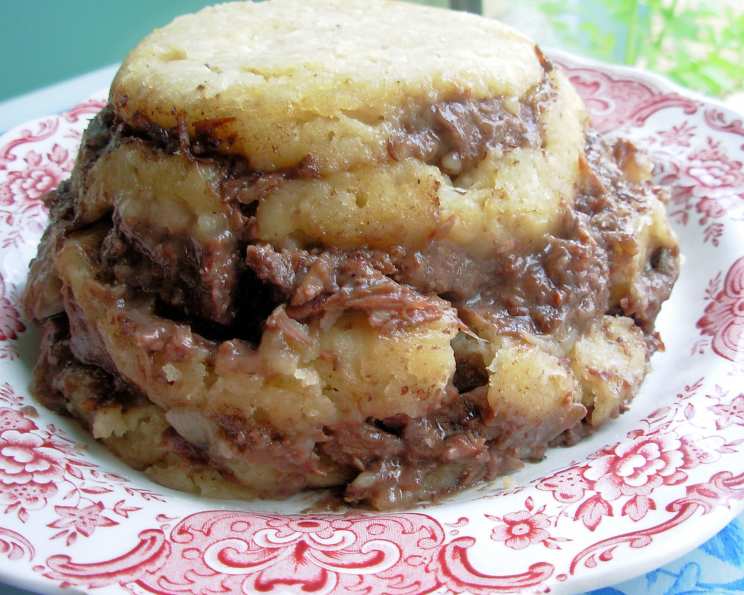
The British Bulldog: A Traditional Layered Beef Steak Suet Pudding
My grandmother, bless her heart, was a culinary magician. Her kitchen, always filled with the comforting aroma of slow-cooked wonders, was my sanctuary. One dish, in particular, etched itself into my childhood memories: her famous Suet Pudding. It wasn’t just food; it was a hug on a plate, a taste of home, and a testament to her enduring love. The richness of the beef, the soft, yielding suet pastry, and the savory gravy—it was pure perfection, a dish I’m thrilled to share with you today.
Recipe Overview
- Prep Time: 45 minutes
- Cook Time: 2 hours + 2 hours steaming
- Total Time: 4 hours 45 minutes
- Servings: 4
- Yield: 1 Pudding
- Dietary Type: Not suitable for Vegans or Vegetarians
Ingredients
For the Suet Pastry:
- 12 ounces self-rising flour
- 6 ounces grated beef suet (or 6 ounces vegetable suet)
- 1/2 teaspoon salt
- Cold water, to mix
For the Filling:
- 1 1/2 lbs braising steak, trimmed of fat
- 2 tablespoons flour
- 1 tablespoon tomato puree
- 1 large onion, peeled and chopped
- 1/2 teaspoon dried herbs (or 1 tablespoon chopped fresh mixed herbs)
- 1 pint beef stock
- Salt
- Pepper
Equipment Needed
- Large casserole dish
- Large mixing bowl
- Rolling pin
- Various sized saucers
- Large pudding basin
- Greaseproof paper
- Aluminum foil
- Steamer
Instructions
- (Prepare the meat 2 hours prior to steaming the assembled pudding.) Begin by preparing the braising steak. Trim any excess fat from the braising steak.
- In a bowl, season the flour with salt and pepper. Dip the trimmed beef pieces into the seasoned flour, ensuring they are well coated.
- Heat a little oil in a large pan or skillet. Fry the floured meat lightly until browned on all sides. Remove the beef from the pan and set aside.
- Add the chopped onion to the same pan and fry until golden brown and softened.
- Transfer the browned beef and onions to a large casserole dish.
- Add the beef stock, tomato puree, and herbs to the casserole dish. Stir to combine all ingredients.
- Cover the casserole dish and cook in a preheated oven at 300°F (150°C) for approximately 2 hours, or until the beef is tender. Alternatively, you can simmer it gently on the stovetop.
- Once the beef is cooked, remove it from the oven (or stovetop) and allow it to cool completely.
- Now, prepare the suet pastry. In a large mixing bowl, combine the self-rising flour, grated beef suet (or vegetable suet), and salt.
- Gradually add cold water to the dry ingredients, mixing until a firm but soft dough forms. Be careful not to overwork the dough.
- On a lightly floured surface, roll out the suet pastry. Using assorted sizes of saucers as guides, cut out rounds of pastry to fit the diameter of your pudding basin. Start with smaller rounds for the base and gradually increase the size.
- Generously butter the pudding basin.
- To assemble the pudding, begin by placing a small round of suet pastry at the bottom of the buttered pudding basin.
- Add a layer of the cooled stewed beef on top of the pastry.
- Cover the beef with another round of suet pastry, followed by another layer of stewed beef.
- Continue layering the pastry and beef until all the pastry and beef are used up, ensuring the last layer is suet pastry.
- Cover the top of the pudding basin with buttered greaseproof paper, followed by a layer of aluminum foil. Secure the foil tightly around the rim of the basin to create a tight seal.
- Place the assembled pudding in a steamer. Ensure there is enough water in the steamer, and that the water level remains consistent throughout the steaming process.
- Steam the pudding for 2 hours, making sure there is always plenty of water in the steamer. Always top up the steamer with boiling water – adding cold water can make the pudding heavy.
- After 2 hours of steaming, carefully remove the pudding basin from the steamer.
- To serve, invert the pudding onto a serving plate.
Expert Tips & Tricks
- Suet Choice: While traditional recipes call for beef suet, vegetable suet is a perfectly acceptable and readily available substitute. The key is to use cold suet for the best pastry texture.
- Pastry Perfection: Don’t overwork the suet pastry! Overmixing will develop the gluten, resulting in a tough rather than fluffy pudding.
- Meat Tenderness: Ensure the beef is truly tender before assembling the pudding. The long, slow braise is crucial for achieving that melt-in-your-mouth texture.
- Steaming Success: Maintaining a consistent water level in the steamer is paramount. Check it regularly and top up with boiling water as needed. Adding cold water will drop the temperature and potentially result in a soggy pudding.
- Make-Ahead Option: The stewed beef can be made a day or two in advance and stored in the refrigerator. This simplifies the final assembly process.
Serving & Storage Suggestions
Serve the British Bulldog immediately after steaming. Garnish with fresh seasonal greens and vegetables, such as steamed broccoli, green beans, or peas, alongside mounds of fluffy mashed or steamed potatoes. A generous ladle of beef gravy is essential for completing this comforting dish.
Leftover suet pudding can be stored in an airtight container in the refrigerator for up to 3 days. To reheat, either steam it gently for about 30 minutes, or microwave individual portions until heated through. Freezing is not recommended as it can affect the texture of the pastry.
Nutritional Information
| Nutrient | Amount per Serving | % Daily Value |
|---|---|---|
| Calories | 1153.5 kcal | N/A |
| Calories from Fat | 683 kcal | 59% |
| Total Fat | 76g | 116% |
| Saturated Fat | 36.7g | 183% |
| Cholesterol | 146.3mg | 48% |
| Sodium | 1866.1mg | 77% |
| Total Carbohydrate | 70.8g | 23% |
| Dietary Fiber | 3g | 12% |
| Sugars | 2g | 7% |
| Protein | 42.2g | 84% |
Note: Nutritional information is an estimate and may vary based on specific ingredients and portion sizes.
Variations & Substitutions
- Lamb Bulldog: Substitute the braising steak with lamb shoulder for a richer, gamier flavor.
- Venison Bulldog: For a truly decadent experience, use venison in place of the beef. Reduce the braising time slightly, as venison tends to cook faster.
- Ale Infusion: Add a splash of dark ale to the beef stock for a deeper, more complex flavor in the gravy.
- Herb Variations: Experiment with different herbs in the stew. Thyme, rosemary, and bay leaf all complement the beef beautifully.
- Vegetable Boost: Add chopped root vegetables like carrots, parsnips, or swede to the stew for added nutrition and flavor.
FAQs (Frequently Asked Questions)
Q: Can I use ready-made suet pastry to save time?
A: Yes, you can certainly use store-bought suet pastry. However, homemade pastry will always offer a superior flavor and texture.
Q: What if I don’t have a steamer?
A: You can improvise a steamer by placing a heatproof bowl upside down in a large pot. Add water to the pot, ensuring it doesn’t reach the bottom of the bowl. Place the pudding basin on top of the upturned bowl, cover the pot tightly, and steam as directed.
Q: How do I know when the pudding is cooked through?
A: The pudding is cooked through when the pastry is firm to the touch and a skewer inserted into the center comes out clean.
Q: My pudding turned out heavy and dense. What went wrong?
A: This is usually caused by overworking the suet pastry or adding cold water to the steamer. Follow the instructions carefully and ensure the water in the steamer is always boiling.
Q: Can I freeze the leftover beef stew filling on its own for future use?
A: Absolutely, the beef stew filling freezes very well. Allow it to cool completely before transferring it to a freezer-safe container. It can be stored in the freezer for up to 3 months.
Final Thoughts
This British Bulldog Suet Pudding is more than just a recipe; it’s a culinary tradition passed down through generations, a symbol of comfort and home. While it requires a bit of time and effort, the resulting flavors and textures are truly rewarding. So, gather your ingredients, embrace the process, and prepare to be transported to a cozy British kitchen. I encourage you to try this recipe and share your creations and feedback. Serve it with a robust red wine or a classic British ale for the perfect pairing! Happy cooking!