
The Classic Rubber Egg: A Kitchen Chemistry Experiment
I’ll never forget the look on my little brother’s face when he first felt one of these. It was Halloween night, and our house was transformed into a spooky wonderland. I’d prepared a “bowl of eyeballs,” and he reached in, expecting something candy-coated. His surprise at the squishy, unnervingly smooth texture of the “eyeball” (our rubber egg) was priceless—a mix of disgust and utter fascination. He insisted everyone in the family take a turn feeling it, and then spent the next hour bouncing it around the living room. Even now, years later, the “eyeball” still comes up in family stories. It’s a testament to the simple joy (and mild horror) a little kitchen science can bring.
Recipe Overview
- Prep Time: 5 minutes
- Soak Time: 48 hours 5 minutes
- Total Time: 48 hours 10 minutes
- Servings: 1
- Yield: 1 rubber egg
- Dietary Type: Fun
Ingredients
- 1 egg
- 1 cup vinegar (you may need more or less to fully submerge the egg)
Equipment Needed
- Glass jar or container
- Lid or plastic wrap (optional, to cover the jar)
Instructions
-
Carefully place the uncooked egg (still in its shell) into a clean glass jar. A mason jar or any glass container with a wide enough mouth to easily insert and remove the egg will work well.
-
Pour vinegar into the jar, ensuring the egg is completely covered. If necessary, use a larger jar or add more vinegar until the entire egg is submerged. The amount of vinegar needed will vary depending on the size of your egg and the container used.
-
Cover the jar loosely with a lid or plastic wrap. This step is optional but can help to minimize the vinegar odor in your kitchen.
-
Let the egg sit undisturbed in the vinegar for at least two full days (48 hours). During this time, the vinegar will work its magic, dissolving the calcium carbonate shell. You might observe bubbles forming on the egg’s surface – this is a sign that the chemical reaction is taking place.
-
After two days, carefully pour off the vinegar. You’ll notice the egg has become translucent and significantly larger. The shell should be completely dissolved, leaving behind a thin membrane.
-
Gently rinse the rubber egg with water to remove any remaining vinegar residue. At this point, it is ready for play or display! Be careful, it’s fragile.
Expert Tips & Tricks
- Patience is Key: The longer you let the egg soak in the vinegar, the more completely the shell will dissolve. If you notice any shell fragments remaining after 48 hours, simply replace the vinegar and let it sit for another day or two.
- Gentle Handling: The rubber egg is delicate. Handle it with care to avoid breaking the membrane.
- The Bouncing Factor: While the name “rubber egg” implies bounciness, its ability to bounce depends on how thoroughly the shell has dissolved and how carefully you handle it. It will bounce from low heights, but don’t expect superball performance.
- Clear Vinegar Preferred: While you can use any type of vinegar, clear white vinegar will give you the best visibility as the shell dissolves.
- Cold Temperatures Slow the Process: Store at room temperature for best results.
Serving & Storage Suggestions
The “rubber egg” is not meant to be eaten! This is a science experiment or novelty item.
- Serving: Place the rubber egg in a bowl of water to enhance its “eyeball” appearance. It can also be used as a prop in a haunted house or science demonstration.
- Storage: The rubber egg can be stored in the refrigerator in a container of water for several days. However, it will eventually deteriorate and shrink as the water inside evaporates. It is not suitable for long-term storage. It will eventually become fragile and rupture.
Nutritional Information
| Nutrient | Amount per Serving | % Daily Value |
|---|---|---|
| Calories | 116 kcal | 6% |
| Total Fat | 5g | 6% |
| Saturated Fat | 2g | 10% |
| Cholesterol | 212mg | 71% |
| Sodium | 75mg | 3% |
| Total Carbohydrate | 1g | 0% |
| Dietary Fiber | 0g | 0% |
| Sugars | 1g | 2% |
| Protein | 6g | 12% |
Note: Nutritional information is estimated and based on the nutritional content of a single egg. The vinegar contributes negligible calories and nutrients.
Variations & Substitutions
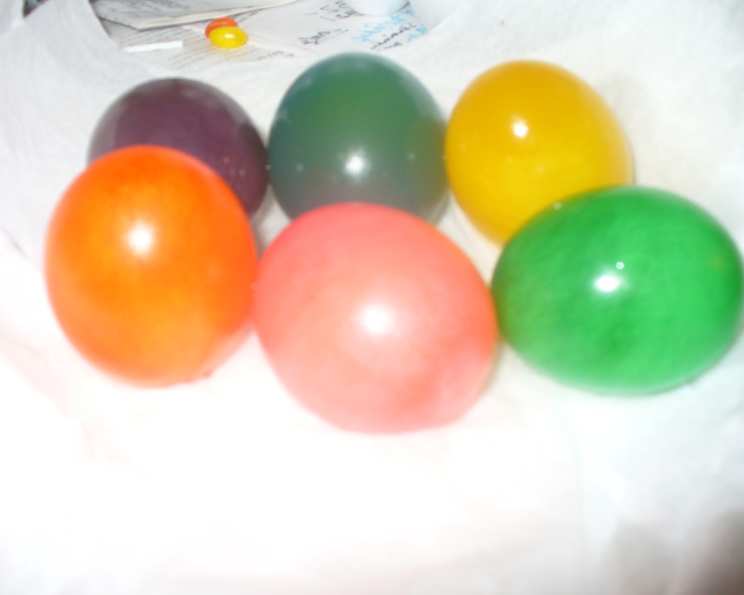
- Colored Vinegar: Use colored vinegar (by adding food coloring) to create a vibrantly hued rubber egg.
- Different Eggs: Try experimenting with different sizes of eggs (e.g., quail eggs) to see how the size affects the final result.
- Alternative Acids: While vinegar (acetic acid) is most commonly used, you could experiment with other mild acids like lemon juice, but the results may vary.
- Glow in the Dark: Use a highlighter marker to color the egg after it is made and it will glow under blacklight.
FAQs (Frequently Asked Questions)
Q: What happens to the eggshell in the vinegar?
A: The vinegar, which is a dilute acid, reacts with the calcium carbonate in the eggshell, causing it to dissolve. This process releases carbon dioxide, which you might see as bubbles on the egg’s surface.
Q: Can I eat the rubber egg?
A: No, the rubber egg is not intended to be eaten. While the inside of the egg remains edible, the vinegar soaking process will alter its flavor and texture, making it unpalatable. This is more of a science experiment.
Q: How long does the rubber egg last?
A: The rubber egg will last for several days if stored in the refrigerator in a container of water. However, it will eventually start to deteriorate and shrink as the water inside evaporates.
Q: Why does the egg get bigger?
A: The egg expands because the vinegar is able to pass through the egg’s semipermeable membrane via osmosis. The vinegar essentially fills the egg, causing it to swell.
Q: What if the eggshell doesn’t completely dissolve?
A: If you notice any shell fragments remaining after 48 hours, simply replace the vinegar and let the egg sit for another day or two. The time required for complete dissolution can vary depending on the egg and vinegar.
Final Thoughts
So, there you have it – the classic rubber egg! It’s more than just a novelty item; it’s a fun and educational way to explore the wonders of kitchen chemistry. Gather your ingredients, embrace the scientific spirit, and prepare to be amazed by the transformation of an ordinary egg into a bouncy, squishy marvel. Whether you use it for a Halloween prank, a science project, or simply to spark curiosity, the rubber egg is sure to bring a bit of unexpected fun to your day. I encourage you to experiment, observe, and most importantly, share your results! After all, the best part of any experiment is sharing the experience.