
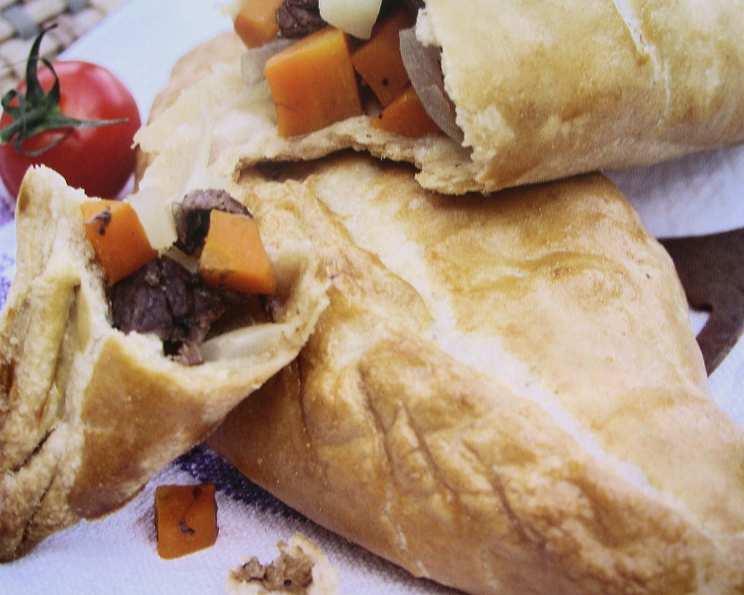
The Coal Miner’s Fast Food: Mastering the Cornish Pasty
My grandmother, a woman who could coax flavor out of thin air, always had a batch of Cornish pasties ready when we visited. The aroma alone, a comforting blend of baked pastry, savory meat, and earthy vegetables, transported me to her cozy kitchen, where stories unfolded as readily as the perfectly crimped crusts. She said her own grandmother brought the recipe from Cornwall, and that each pasty held a piece of her heritage. These weren’t just meals; they were edible heirlooms.
Recipe Overview
- Prep Time: 30 minutes
- Cook Time: 45 minutes
- Total Time: 1 hour 15 minutes
- Servings: 4
- Yield: 4 pasties
- Dietary Type: Not specified
Ingredients
For the Pastry:
- 1 lb (450 g) flour
- 5 ounces (140g) lard or 5 ounces (140g) shortening
- 1 pinch salt
- Water, to mix
For the Filling:
- 1 lb (450g) lean beef
- 1 lb (450g) potato
- 1 lb (450g) swede (rutabaga)
- 1 small onion
- 1 ounce (30 g OR 2 tablespoons) butter
- Pepper, to taste
- Salt, to taste
Equipment Needed
- Large mixing bowl
- Rolling pin
- Baking tray
- Sharp knife
- Cutting board
Instructions
-
Preheat your oven to 400°F (200°C, gas mark 6). This high temperature is crucial for achieving a golden-brown, flaky crust.
-
Prepare the pastry: In a large mixing bowl, rub the lard (or shortening) into the flour and salt using your fingertips. The mixture should resemble breadcrumbs. This step is critical for creating a tender crust. Avoid overworking the mixture, as this will develop the gluten and result in a tough pastry.
-
Gradually add just enough water to the flour mixture to bring it together into a firm, but not sticky, pastry dough. Add the water a tablespoon at a time, mixing until the dough just comes together.
-
Divide the pastry into 4 equal pieces. On a lightly floured surface, roll each piece out until it’s approximately 7 inches (18 cm) in diameter. Aim for a circular shape.
-
Prepare the filling: Using a sharp knife, cut the beef into very small cubes, removing all visible fat. The smaller the cubes, the quicker they will cook through inside the pasty.
-
Cut the potatoes, swede (rutabaga), and onion into very small pieces, about the same size as the beef cubes. Uniformity in size is key for even cooking.
-
In a large bowl, combine the cubed beef, potatoes, swede, and onion. Season generously with salt and pepper to taste.
-
Assemble the pasties: Place 1/4 of the meat and vegetable mixture into the center of each of the pastry circles. Top each portion with 1/4 of the butter, distributing it evenly over the filling. The butter adds richness and helps to keep the filling moist during baking.
-
Use a little water to dampen the edges of the pastry circles. This will act as a glue, helping the pastry to seal properly.
-
Carefully bring the sides of the pastry circle up to meet each other, so that the weight of the filling flattens out the bottom of the pasty slightly. The resulting shape should resemble a semi-circle.
-
Crimp the edges together at the top to create a strong seal. Pinch the edges firmly together to ensure the pasty doesn’t burst open during baking. The crimping also serves as a handle, traditionally used by miners to hold the pasty with their dirty hands, discarding the crust afterward.
-
Place the assembled pasties on a floured baking tray.
-
Bake in the preheated oven for 45 minutes, or until the pastry is golden brown and the filling is cooked through. Check for doneness by inserting a knife into the filling; it should be tender.
Expert Tips & Tricks
- Resting the dough: After mixing the pastry dough, wrap it in plastic wrap and refrigerate for at least 30 minutes before rolling. This allows the gluten to relax, resulting in a more tender crust.
- Glazing the pasties: For a shinier, more golden crust, brush the pasties with a beaten egg or milk before baking.
- Blind baking (optional): If you prefer a crispier bottom crust, you can blind bake the pastry for 10-15 minutes before adding the filling.
- Spice it up: Add a pinch of chili flakes or a dash of Worcestershire sauce to the filling for a bit of extra flavor.
- Preventing a soggy bottom: Ensure the filling isn’t too moist before enclosing it in the pastry. You can drain off any excess liquid from the filling before assembling the pasties.
Serving & Storage Suggestions
Cornish pasties are traditionally served hot, straight from the oven. They are a complete meal in themselves, but can also be accompanied by a side salad or a dollop of chutney.
Leftover pasties can be stored in an airtight container in the refrigerator for up to 3 days. To reheat, wrap the pasties in foil and bake in a preheated oven at 350°F (175°C) for about 20 minutes, or until heated through. You can also reheat them in a microwave, but the crust may become soggy.
Pasties can also be frozen for longer storage. Wrap them individually in plastic wrap and then in foil, and freeze for up to 2 months. Thaw in the refrigerator overnight before reheating as described above.
Nutritional Information
| Nutrient | Amount per Serving | % Daily Value* |
|---|---|---|
| Calories | 1110 kcal | 56% |
| Total Fat | 53g | 81% |
| Saturated Fat | 22g | 110% |
| Cholesterol | 119mg | 40% |
| Sodium | 183mg | 8% |
| Total Carbohydrate | 117g | 39% |
| Dietary Fiber | 9g | 36% |
| Sugars | 8g | 16% |
| Protein | 39g | 78% |
*Percent Daily Values are based on a 2,000 calorie diet. Your daily values may be higher or lower depending on your calorie needs.
Variations & Substitutions
- Vegetarian option: Substitute the beef with lentils or mushrooms for a vegetarian version.
- Gluten-free: Use a gluten-free flour blend to make the pastry. You may need to add a binder like xanthan gum to help hold the dough together.
- Different vegetables: Feel free to experiment with other root vegetables, such as carrots, parsnips, or turnips.
- Spiced pasties: Add a pinch of curry powder or smoked paprika to the filling for a different flavor profile.
FAQs (Frequently Asked Questions)
Q: What is swede, and can I substitute it?
A: Swede is the British name for rutabaga, a root vegetable similar to a turnip. If you can’t find swede, you can substitute it with turnip or parsnip.
Q: Why is it important to cut the vegetables and meat into small pieces?
A: Cutting the ingredients into small pieces ensures that they cook through evenly within the baking time. Larger pieces might remain undercooked.
Q: How do I prevent the pasty from bursting open while baking?
A: Ensure that you crimp the edges of the pastry firmly together to create a strong seal. You can also cut a small slit in the top of the pasty to allow steam to escape.
Q: Can I make the pastry ahead of time?
A: Yes, you can make the pastry dough ahead of time and store it in the refrigerator for up to 2 days, or in the freezer for up to 2 months.
Q: What’s the best way to reheat a pasty so it doesn’t get soggy?
A: Reheating in the oven is best. Wrap it in foil and bake at 350°F (175°C) until warmed through. Avoid microwaving, as this will make the crust soggy.
Final Thoughts
The Cornish pasty, a humble yet hearty creation, stands as a testament to resourcefulness and culinary tradition. More than just a meal, it’s a piece of history, a taste of Cornwall, and a reminder that the simplest ingredients, when combined with care and passion, can create something truly special. I urge you to try this recipe, experiment with the filling, and make it your own. Perhaps it will even evoke memories of your own family’s kitchen, as it does for me. Don’t hesitate to share your creations and feedback – happy baking!