
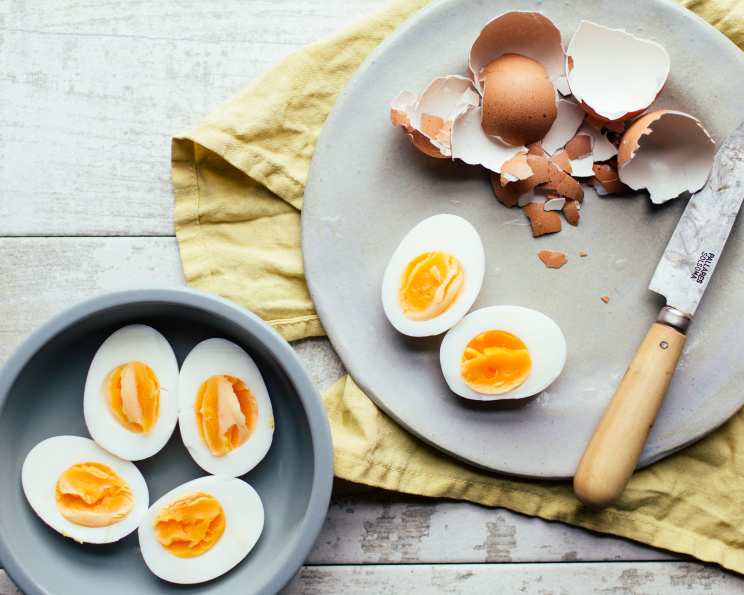
The Easiest Perfect Hard Boiled Eggs (Technique)
I remember learning this method for hard-boiled eggs from my grandmother, Nana Rose. She always had a bowl of perfectly peeled eggs in the fridge, ready for deviled eggs, potato salad, or just a quick protein boost. I can still picture her hands, weathered and wise, effortlessly cracking and peeling the shells under a stream of cold water, revealing a pristine white egg every single time. Now, decades later, I still use her no-fuss technique and think of her every time. This is the simplest, most effective method I know, and it’s about to become your go-to as well.
Recipe Overview
- Prep Time: 1 minute
- Cook Time: 20 minutes
- Total Time: 21 minutes
- Servings: 6
- Yield: 6 eggs
- Dietary Type: Gluten-Free, Dairy-Free
Ingredients
- 6 large eggs
- Water
Equipment Needed
- Medium saucepan
- Colander (optional)
Instructions
- Gently place the eggs in a medium saucepan. Make sure the eggs are in a single layer for even cooking.
- Cover the eggs with cold water, ensuring the water level is about 1 inch above the eggs. This is crucial for consistent results.
- Place the saucepan on the stovetop over high heat.
- Bring the water to a rolling boil. You should see large, active bubbles.
- As soon as the water reaches a boil, immediately remove the saucepan from the heat.
- Cover the saucepan tightly with a lid. It’s important to trap the remaining heat.
- Let the eggs sit in the hot water, covered, for 18-20 minutes. The exact time will depend on the size of your eggs and how firm you want the yolks. 18 minutes will yield a slightly softer yolk, while 20 will give you a fully set yolk.
- After the steeping time, carefully pour out the hot water, holding the pot at a slant to prevent the eggs from falling out.
- Immediately fill the pot with cold tap water. Let the eggs sit in the cold water for 1-2 minutes. This rapid cooling stops the cooking process and helps with easy peeling.
- Peel the eggs. The shells should come off easily. For the easiest peeling, try peeling the eggs under running cold water. This helps to separate the membrane from the egg.
Expert Tips & Tricks
- Egg Freshness: While this method works well with eggs of varying ages, slightly older eggs tend to peel more easily than very fresh eggs.
- Preventing Cracks: Gently lower the eggs into the saucepan to prevent them from cracking. Avoid dropping them in from a height.
- Perfect Yolks: To avoid that dreaded green ring around the yolk, make sure you cool the eggs quickly and thoroughly after cooking.
- Peeling Under Water: Peeling the eggs under running cold water makes the process even easier. The water helps to loosen the shell and membrane. If you don’t have a garbage disposal, a colander underneath is a great way to catch the shells!
- Altitude Adjustments: If you live at a high altitude, you may need to increase the steeping time by a few minutes, as water boils at a lower temperature at higher altitudes. Start with an extra 2 minutes and adjust as needed.
Serving & Storage Suggestions
Hard-boiled eggs are incredibly versatile. Serve them sliced in salads, deviled, mashed into egg salad sandwiches, or simply seasoned with salt and pepper as a quick snack.
- Room Temperature: Hard-boiled eggs should not be left at room temperature for more than 2 hours.
- Refrigeration: Peeled or unpeeled hard-boiled eggs should be stored in the refrigerator. Peeled eggs should be stored in a container of cold water to prevent them from drying out. They will keep for about 4-5 days. Unpeeled eggs will also keep for about a week in the refrigerator.
- Freezing: Freezing hard-boiled eggs is not recommended, as the texture of the egg white becomes rubbery and unpleasant.
Nutritional Information
| Nutrient | Amount per Serving | % Daily Value |
|---|---|---|
| Calories | 72 kcal | 4% |
| Total Fat | 5g | 7% |
| Saturated Fat | 2g | 7% |
| Cholesterol | 186mg | 62% |
| Sodium | 71mg | 2% |
| Total Carbohydrate | 0g | 0% |
| Dietary Fiber | 0g | 0% |
| Sugars | 0g | 0% |
| Protein | 6g | 12% |
Variations & Substitutions
- Spicy Eggs: Add a pinch of cayenne pepper to the water for a subtle kick.
- Pickled Eggs: Hard-boiled eggs can be pickled in a brine of vinegar, spices, and herbs for a flavorful and tangy snack.
- Deviled Egg Variations: Experiment with different fillings for deviled eggs, such as adding avocado, sriracha, or smoked paprika.
FAQs (Frequently Asked Questions)
Q: Why do my eggs sometimes crack while boiling?
A: Rapid temperature changes are usually the culprit. Gently lower the eggs into the saucepan and start with cold water to minimize cracking.
Q: How can I tell if my eggs are perfectly hard-boiled without cutting them open?
A: A properly cooked hard-boiled egg will have a firm yolk. If you gently tap the egg on a hard surface, it should feel solid.
Q: Why do some hard-boiled eggs have a green ring around the yolk?
A: This harmless green ring is caused by a reaction between sulfur and iron in the egg. It happens when the eggs are overcooked or cooled too slowly. Cool your eggs quickly in ice water to prevent it.
Q: Can I use this method with different sizes of eggs?
A: Yes, but you may need to adjust the steeping time. For smaller eggs, reduce the time by a minute or two. For extra-large eggs, increase the time by a minute or two.
Q: Is it necessary to peel the eggs under running water?
A: No, but it can make the process much easier. The water helps to separate the membrane from the shell.
Final Thoughts
There you have it—the simplest, most foolproof method for perfect hard-boiled eggs. This technique has served me well for years, and I’m confident it will become a staple in your kitchen too. So, go ahead, give it a try, and let me know how it turns out! And don’t hesitate to experiment with different ways to enjoy your perfectly cooked eggs. After all, the best cooking is always about creativity and enjoyment. Happy cooking!