
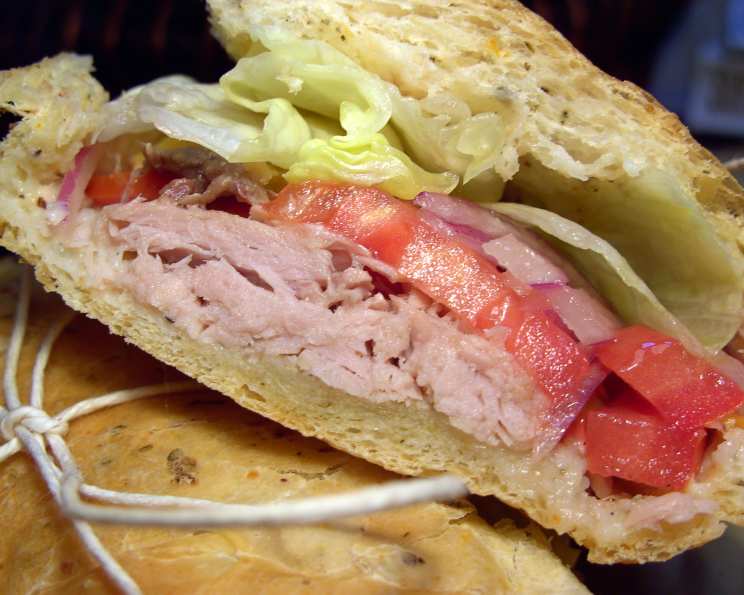
The French Picnic Baguette: Pan Bagnat
The scent of ripe tomatoes, briny olives, and good olive oil always transports me back to that little bistro in Nice. Sunlight streamed through the windows as I devoured my first Pan Bagnat, the quintessential sandwich of the Côte d’Azur. It wasn’t just the flavors; it was the whole experience – the vibrant market, the friendly chatter, and the promise of a perfect picnic on the beach. It was in that moment, amidst the joyous symphony of flavors, that I fell in love with this rustic masterpiece, a culinary emblem of the French Riviera.
Recipe Overview
- Prep Time: 20 minutes
- Cook Time: 0 minutes
- Total Time: 2 hours 20 minutes (includes pressing time)
- Servings: 4
- Yield: 4 sandwiches
- Dietary Type: Mediterranean
Ingredients
- 1 baguette, the wider type such as Pain (or 4 ciabatta rolls)
- 1 garlic clove, peeled
- Extra virgin olive oil
- Salt
- Black pepper
- 2 hard-boiled eggs, peeled and thinly sliced
- 200g good quality tuna
- 3-4 ripe tomatoes, sliced
- 6 salted anchovies
- Pitted black olives
- ½ red onion, finely sliced into rings
- ½ cos lettuce, leaves roughly torn (or something similarly crunchy)
- White wine vinegar
Equipment Needed
- Sharp knife
- Cutting board
- Tin foil
- Greaseproof or brown paper
- Kitchen string
- Heavy books (such as a cookbook)
- Covered container
Instructions
-
Begin by cutting the baguette into four even-sized portions if using a baguette, or prepare your ciabatta rolls.
-
Cut each baguette piece or bread roll in half lengthwise, then gently scoop out some of the bread filling from both halves. This creates space for the filling and prevents the sandwich from becoming too dense. Don’t discard the bread you scoop out! Save it for making breadcrumbs or adding to a gratin later in the week.
-
Rub the peeled garlic clove vigorously over the inside of both halves of each baguette or roll. This infuses the bread with a subtle garlic aroma.
-
Drizzle a generous amount of extra virgin olive oil over the inside of both halves, ensuring the bread is well-soaked. Season generously with salt and black pepper. This is where the “bathed bread” part comes in, so don’t be shy with the oil!
-
In one hollowed-out half of each baguette or roll, carefully pack in the hard-boiled egg slices, tuna, tomato slices, anchovies, olives, red onion rings, and torn lettuce leaves. Distribute the ingredients evenly to ensure a balanced flavor in every bite.
-
Drizzle with more olive oil and a small amount of white wine vinegar. The vinegar adds a crucial tang that balances the richness of the other ingredients.
-
Put the other half of the baguette or bread roll on top, creating a complete sandwich.
-
Wrap each sandwich snugly in tin foil, ensuring it’s tightly sealed.
-
Place the wrapped sandwiches on a flat surface, then lay some heavy books (like a Larousse Gastronomique or a stack of cookbooks) on top to weigh them down. This compresses the sandwich, melding the flavors and softening the bread.
-
Leave the sandwiches pressed for at least one to two hours. The longer they are pressed, the better the flavors will meld.
-
After pressing, remove the tin foil. Wrap a band of greaseproof or brown paper around the middle of each portion, and tie tightly with kitchen string. This helps hold the sandwich together while eating and gives it that charming rustic French look.
-
The Pan Bagnat can then be stored overnight in a covered container in the refrigerator until the next day. This allows the flavors to develop even further, but it’s not strictly necessary.
-
Take them on your picnic with wine, fruit, and good company! Enjoy this sublime taste of the South of France.
Expert Tips & Tricks
- Don’t skimp on the olive oil! It’s essential for the flavor and texture of the Pan Bagnat. Use a good quality extra virgin olive oil for the best results.
- Pressing is key. The weight helps the flavors meld together and softens the bread. If you don’t have heavy books, use a cast-iron skillet or any other heavy object.
- For a more intense flavor, add a few capers to the filling.
- If you don’t have salted anchovies, you can use anchovy fillets packed in oil, but be sure to drain them well.
- Feel free to adjust the ingredients to your liking. Some people like to add bell peppers, cucumbers, or artichoke hearts.
- If you’re making the Pan Bagnat ahead of time, wrap it tightly in tin foil to prevent the bread from drying out.
- For a vegetarian version, substitute the tuna and anchovies with grilled eggplant or zucchini.
Serving & Storage Suggestions
Serve the Pan Bagnat chilled or at room temperature. It’s perfect for picnics, lunchboxes, or a light meal. The presentation with the brown paper and string adds a rustic touch.
Leftovers can be stored in an airtight container in the refrigerator for up to 24 hours. Keep in mind that the bread will continue to soften, so it’s best enjoyed sooner rather than later. It is not recommended to freeze the Pan Bagnat because freezing can change the texture of the bread and fillings.
Nutritional Information
| Nutrient | Amount per Serving | % Daily Value |
|---|---|---|
| Calories | 550 kcal | 28% |
| Total Fat | 30g | 46% |
| Saturated Fat | 5g | 25% |
| Cholesterol | 150mg | 50% |
| Sodium | 900mg | 38% |
| Total Carbohydrate | 50g | 17% |
| Dietary Fiber | 7g | 28% |
| Sugars | 6g | – |
| Protein | 30g | 60% |
Note: Nutritional information is an estimate and may vary based on specific ingredients and portion sizes.
Variations & Substitutions
- Spicy Pan Bagnat: Add a pinch of red pepper flakes or a drizzle of chili oil to the filling.
- Lemon Pan Bagnat: Use lemon juice instead of white wine vinegar for a brighter flavor.
- Herby Pan Bagnat: Add fresh herbs like basil, oregano, or thyme to the filling.
- Vegan Pan Bagnat: Substitute the tuna and anchovies with marinated artichoke hearts, roasted red peppers, or grilled eggplant. Use a vegan mayonnaise or a drizzle of tahini for extra creaminess.
- Gluten-Free Pan Bagnat: Use gluten-free ciabatta rolls or baguette.
FAQs (Frequently Asked Questions)
Q: Can I make Pan Bagnat the same day I want to eat it?
A: Yes, but allowing the sandwich to press for at least an hour or two is essential for the flavors to meld and the bread to soften. Ideally, making it a day ahead is best.
Q: What if I don’t have anchovies?
A: While anchovies are traditional, you can omit them if you don’t like them. Add a pinch of sea salt to enhance the salty flavor.
Q: Can I use different types of olives?
A: Absolutely! Kalamata olives or green olives would also work well. Choose your favorite variety.
Q: How do I prevent the bread from getting too soggy?
A: Be sure to scoop out some of the bread filling and don’t over-saturate it with olive oil. Pressing helps to compress the sandwich without making it overly soggy.
Q: Can I add cheese to Pan Bagnat?
A: While not traditional, some people enjoy adding a slice of feta or goat cheese for extra flavor.
Final Thoughts
The beauty of Pan Bagnat lies in its simplicity and adaptability. It’s a celebration of fresh, Mediterranean ingredients that come together to create a truly unforgettable sandwich. Don’t be afraid to experiment with different variations and make it your own. Gather your favorite ingredients, pack your Pan Bagnat, grab a bottle of chilled rosé, and find a sunny spot to enjoy this taste of the French Riviera. I encourage you to try this recipe and share your feedback! Bon appétit!