
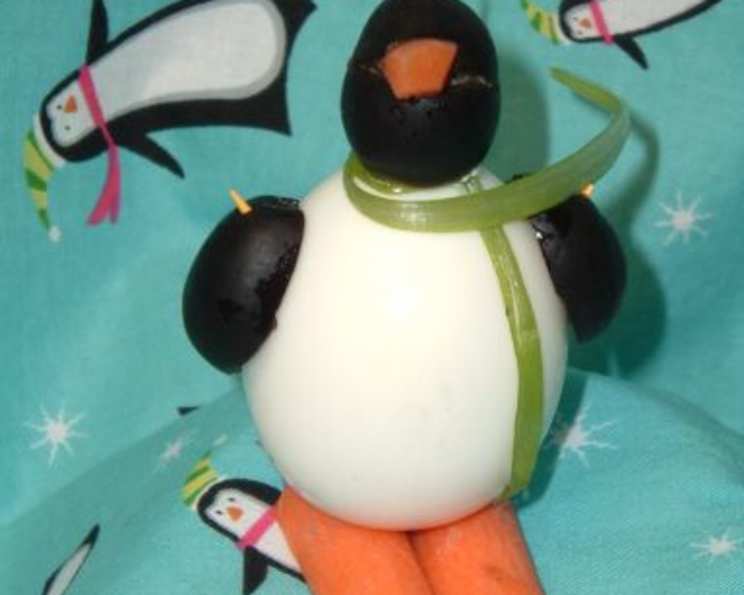
The Lilek Penguin: A Culinary Flight of Fancy
I’ll never forget the first time I saw a Lilek Penguin. It wasn’t waddling on an Antarctic ice floe, but rather perched precariously on a buffet table at a rather…unique potluck. Amidst a sea of beige casseroles and questionable dips, these adorable little egg-and-olive creations stood out like tuxedoed comedians at a clown convention. Their slightly cross-eyed expressions and precarious toothpick necks were more charming than elegant, and that’s precisely what made them so memorable. I knew then that I had to master this culinary curiosity.
Recipe Overview
- Prep Time: 32 minutes
- Cook Time: 0 minutes (excluding hard boiling eggs)
- Total Time: 32 minutes
- Servings: 6
- Yield: 6 Lilek penguins
- Dietary Type: High Protein
Ingredients
- 6 hard-boiled eggs
- 12-16 whole black olives, approximately
- 1 carrot or 1 orange bell pepper
- 6 toothpicks
Equipment Needed
- Medium saucepan (for hard boiling eggs)
- Sharp knife
- Cutting board
- Small paring knife (optional, for more precise cuts)
Instructions
-
Begin by hard boiling the eggs. Place the eggs in a medium saucepan and cover them with cold water. Bring the water to a rolling boil over medium-high heat. Once boiling, remove the pan from the heat, cover it, and let it stand for 12 minutes. This ensures perfectly cooked yolks without a green ring.
-
Drain the eggs immediately and rinse them under cold running water until they are cool enough to handle. This stops the cooking process and makes them easier to peel.
-
Carefully peel the cooled hard-boiled eggs. Ensure that you remove all pieces of the shell to maintain the penguin’s pristine appearance.
-
Now, prepare the penguin bodies. Cut a small slice off the wide end of each egg. This creates a flat surface so that the penguin can stand upright. The slice should be minimal – just enough to provide stability.
-
Next, create the penguin flippers. Slice three olives in quarters lengthwise. These will become the flippers, so aim for relatively uniform sizes.
-
Using your knife, cut a small slit down each side of the egg “body” on the opposite sides of the egg where you sliced the bottom and carefully insert one olive piece on each side. These are the flippers, so position them symmetrically.
-
To create the penguin’s chest, cut approximately a 1/2″ sliver of black olive lengthwise. A longer, thinner sliver works best for visual appeal.
-
Carefully make a tiny slit down the middle of the hard-boiled egg on the front side, then insert the olive sliver. This creates the penguin’s distinctive black chest marking.
-
Now, prepare the heads. Place one toothpick down the center of the top (narrow end) of each hard-boiled egg. This will secure the olive head.
-
Attach a whole olive with the hole in the center to the toothpick, creating the penguin’s face. Gently press the olive onto the toothpick, ensuring it’s secure.
-
Finally, craft the penguin’s beak. Cut six small triangular pieces of carrot or bell pepper, making sure they are large enough to fit snugly in the olive hole and not fall out. The size and shape of the beak will influence the penguin’s expression, so experiment with different cuts.
-
Place the carrot or bell pepper piece into the olive hole, completing the penguin’s face.
-
To serve, arrange your completed endangered penguins on an irregularly shaped piece of styrofoam or a platter to represent an iceberg or a rocky shoreline. Get creative with your presentation!
Expert Tips & Tricks
- For easier olive slicing, use a very sharp knife and chill the olives beforehand. This will prevent them from slipping and sliding.
- If the olive slivers for the chest are too thin or tear, try using a small cookie cutter to create a more uniform shape.
- To ensure the penguin heads are securely attached, consider dipping the end of the toothpick in a tiny amount of cream cheese or mayonnaise before inserting it into the olive. This acts as an edible glue.
- If you’re having trouble getting the penguins to stand up, you can use a small dab of cream cheese or mayonnaise on the base to help them adhere to the serving platter.
- For a more polished look, use a paring knife to carefully shape the edges of the olive flippers.
Serving & Storage Suggestions
Serve the Lilek Penguins chilled or at room temperature. They are best enjoyed within a few hours of assembly, as the eggs can become slightly dry if left out for too long. Leftover penguins can be stored in an airtight container in the refrigerator for up to 2 days. However, the egg texture may change slightly during refrigeration. It’s generally not recommended to freeze these, as the texture of the egg and olives will be significantly affected. When serving, consider pairing the Lilek Penguins with a variety of crackers, vegetables, and dips to create an amusing and appetizing appetizer platter.
Nutritional Information
| Nutrient | Amount per Serving | % Daily Value |
|---|---|---|
| Calories | 91.8 kcal | N/A |
| Calories from Fat | 56 g | 61% |
| Total Fat | 6.3 g | 9% |
| Saturated Fat | 1.8 g | 8% |
| Cholesterol | 212 mg | 70% |
| Sodium | 145.8 mg | 6% |
| Total Carbohydrate | 2.1 g | 0% |
| Dietary Fiber | 0.6 g | 2% |
| Sugars | 1 g | 4% |
| Protein | 6.5 g | 12% |
Note: Nutritional information is an estimate and may vary based on ingredient variations and portion sizes.
Variations & Substitutions
- Vegan Penguins: While the base recipe relies on eggs, you could experiment with firm tofu cut into egg-like shapes. Marinate the tofu in a vegan “egg yolk” mixture for a similar flavor profile.
- Spicy Penguins: Add a pinch of cayenne pepper to the carrot or bell pepper beaks for a subtle kick.
- Herbaceous Penguins: Finely chop fresh herbs like parsley or chives and sprinkle them over the penguins for added flavor and visual appeal.
- Festive Penguins: For a holiday-themed version, use red bell pepper for the beaks and add a tiny “scarf” made from a thin strip of red pepper.
- Olive Alternatives: If you’re not a fan of black olives, you could use green olives stuffed with pimentos for the heads. The pimentos would add a pop of color and eliminate the need for a separate beak.
FAQs (Frequently Asked Questions)
Q: Why are my eggs cracking when I hard boil them?
A: Cracking often happens due to rapid temperature changes. Start with cold water, bring it to a gentle boil, and don’t overcrowd the saucepan.
Q: How can I prevent the dreaded green ring around the egg yolk?
A: Overcooking is the main culprit. Follow the recommended cooking time (12 minutes off the heat) and immediately cool the eggs in cold water.
Q: Can I make these penguins ahead of time?
A: While assembling them too far in advance isn’t ideal, you can hard boil the eggs and prepare the olive and carrot pieces ahead of time. Store everything separately in the refrigerator until you’re ready to assemble.
Q: My penguins keep falling over! What am I doing wrong?
A: Make sure you’re cutting a large enough slice off the bottom of the egg to create a stable base. A small dab of cream cheese or mayonnaise on the base can also help.
Q: Can I use a different type of olive for the head?
A: Yes, you can use green olives or any other type of olive you prefer. Just make sure they are pitted.
Final Thoughts
The Lilek Penguin may not be the most sophisticated dish in the culinary world, but its undeniable charm and quirky appeal make it a delightful addition to any gathering. Don’t be afraid to embrace the imperfections – after all, it’s the slightly askew beak or the wobbly stance that truly makes these little creatures so endearing. Gather your ingredients, unleash your inner artist, and prepare for a flurry of smiles and laughter. Whether you’re a seasoned chef or a kitchen novice, the Lilek Penguin is guaranteed to bring a touch of whimsy to your table. I hope you enjoy making and sharing these delightful appetizers as much as I have.