
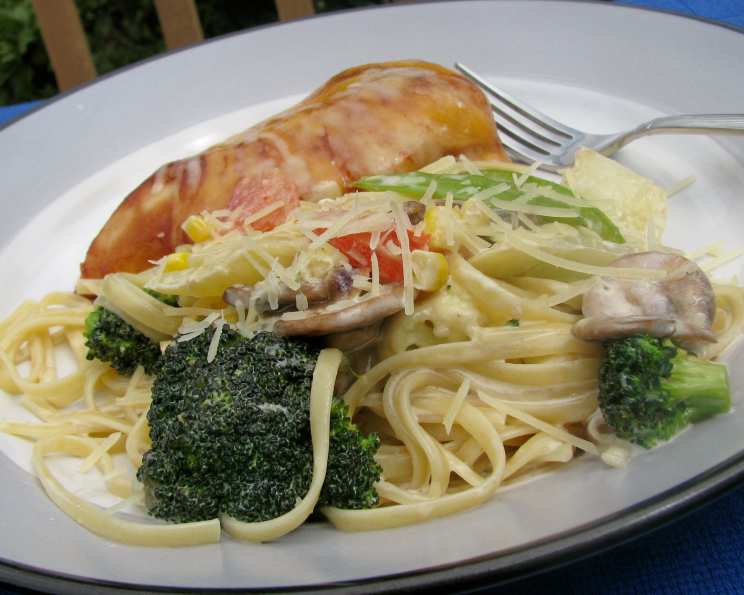
The “Perfect” Pasta Primavera
The first time I tasted Pasta Primavera, it wasn’t in a fancy restaurant, but at a bustling farmer’s market in Tuscany. I was a wide-eyed culinary student, overwhelmed by the vibrant colors and intoxicating aromas of the region’s bounty. A nonna, her apron dusted with flour, offered me a taste of her creation – a simple dish of perfectly cooked pasta tossed with the freshest vegetables I had ever seen, glistening with a light, herby sauce. The explosion of flavors—sweet peas, crisp asparagus, earthy mushrooms—was an epiphany. It wasn’t just a meal; it was a celebration of spring. From that moment on, Pasta Primavera became a personal mission: to recreate that taste of pure, unadulterated seasonal joy.
Recipe Overview
- Prep Time: 45 minutes
- Cook Time: 1 hour 15 minutes
- Total Time: 2 hours
- Servings: 4-6
- Yield: 1 large bowl
- Dietary Type: Vegetarian
Ingredients
- 1 cup broccoli florets, steamed for 5 minutes
- 1 cup asparagus, cut in 1 inch pieces, steamed for 5 minutes
- 1 cup sugar snap peas or 1 cup snow peas, blanched for one minute
- 1 medium zucchini or 1 medium summer squash, unpeeled, sliced in half lengthwise, then cut into 1 inch chunks and blanched for 1 minute
- 1 cup corn kernels (canned, or if fresh or frozen, blanched)
- 1 tablespoon finely minced garlic (about 3 large cloves)
- 1 tablespoon olive oil
- 1-2 tomatoes, diced
- 1⁄2 cup fresh mushrooms, sliced
- 1⁄2 cup shredded carrot
- 1⁄4 cup finely minced parsley
- 1⁄2 teaspoon fresh ground black pepper
- 12 ounces whole wheat spaghetti or 12 ounces linguine
For the Sauce:
- 2 teaspoons butter or 2 teaspoons margarine
- 1 tablespoon flour
- 1 cup skim milk or 1 cup 1% low-fat milk
- 1⁄2 cup chicken broth
- 1⁄2 cup grated parmesan cheese
- 1⁄4 cup finely minced fresh basil or 1 teaspoon dried basil
Equipment Needed
- Steamer basket
- Large pot
- Large skillet
- Small heavy saucepan
- Whisk
- Large bowl
Instructions
-
Begin by preparing your vegetables. Steam the broccoli florets and asparagus for 5 minutes until they are bright green and slightly tender. Set aside and keep warm.
-
Next, blanch the sugar snap peas (or snow peas) and zucchini (or summer squash) for just 1 minute. This brief dip in boiling water preserves their vibrant color and crisp texture. Add the blanched corn kernels to the already steamed vegetables. Keep all the vegetables warm.
-
In a large skillet, heat the olive oil over medium heat. Add the finely minced garlic and sauté for about 1 minute, being careful not to brown it. Burnt garlic can ruin the flavor of the entire dish, so keep a close eye on it.
-
Add the diced tomatoes, sliced mushrooms, shredded carrot, minced parsley, and fresh ground black pepper to the skillet. Cook this mixture for approximately 5 minutes, stirring occasionally, until the vegetables soften slightly and the tomatoes release their juices.
-
Gently combine the sautéed tomato mixture with the steamed and blanched vegetables in a large bowl. Be careful not to overmix, as you want the vegetables to retain their individual textures.
-
Now, prepare the sauce. In a small, heavy saucepan, melt the butter (or margarine) over medium-low heat. Once melted, add the flour and whisk vigorously to create a roux. Cook the roux for 1 minute, whisking constantly to prevent burning. This step is crucial for creating a smooth, lump-free sauce.
-
Gradually add the milk and chicken broth to the roux, whisking continuously. Continue stirring until the sauce thickens slightly. This should take about 3-5 minutes. The sauce should be thick enough to coat the back of a spoon.
-
Stir in the grated parmesan cheese and minced fresh basil (or dried basil) into the sauce. Heat the sauce over medium-low heat, stirring constantly until the cheese is completely melted and the sauce is smooth and creamy.
-
Pour the prepared sauce over the vegetable mixture and toss gently to coat. Make sure all the vegetables are evenly covered with the sauce.
-
While you’ve been prepping and cooking your vegetables and sauce, cook your pasta. Cook the spaghetti (or linguine) according to package directions until al dente – firm to the bite. Drain the pasta well, and keep warm.
-
Place the cooked pasta in a large, warmed bowl. Spread the vegetable and sauce mixture over the pasta. Toss gently once or twice to combine, being careful not to break the pasta.
-
Serve immediately with additional grated parmesan cheese, if desired.
Expert Tips & Tricks
- Vegetable Prep is Key: The success of Pasta Primavera lies in the quality and preparation of the vegetables. Don’t overcook them! The goal is to retain their bright colors and slightly crisp texture. Blanching and steaming are your best friends.
- Fresh Herbs are Best: While dried herbs can be used in a pinch, fresh herbs will elevate the flavor of your Pasta Primavera. Consider using a mix of basil, parsley, chives, and oregano for a complex herbal flavor.
- Make-Ahead Tip: The vegetable mixture can be prepared a day in advance and stored in the refrigerator. This is a great time-saver if you’re planning a dinner party. Simply reheat the vegetables before adding the sauce.
- Adjust the Sauce: If you prefer a richer sauce, you can substitute heavy cream for some of the milk. For a lighter sauce, use vegetable broth instead of chicken broth.
- Don’t Overcrowd the Pan: When sautéing the garlic and other vegetables, make sure not to overcrowd the skillet. Overcrowding will lower the temperature of the pan and cause the vegetables to steam instead of sauté, resulting in a less flavorful dish. Cook in batches if necessary.
Serving & Storage Suggestions
Serve Pasta Primavera immediately after tossing with the sauce to prevent the pasta from becoming soggy. Garnish with extra parmesan cheese, fresh basil leaves, and a drizzle of olive oil for an elegant presentation. This dish pairs well with a crisp white wine, such as Sauvignon Blanc or Pinot Grigio.
Leftovers can be stored in an airtight container in the refrigerator for up to 3 days. To reheat, gently warm the pasta in a skillet over low heat, adding a splash of milk or broth if needed to prevent it from drying out. While freezing is not recommended due to the delicate nature of the vegetables and sauce, you can freeze the vegetable mixture separately before it’s combined with the pasta. Be sure to thaw it completely before reheating.
Nutritional Information
| Nutrient | Amount per Serving | % Daily Value |
|---|---|---|
| Calories | 581.5 kcal | N/A |
| Calories from Fat | 105 g | 18% |
| Total Fat | 11.7 g | 18% |
| Saturated Fat | 4.4 g | 22% |
| Cholesterol | 17.3 mg | 5% |
| Sodium | 376.1 mg | 15% |
| Total Carbohydrate | 97.5 g | 32% |
| Dietary Fiber | 8.3 g | 33% |
| Sugars | 6.6 g | 26% |
| Protein | 25.6 g | 51% |
Variations & Substitutions
- Gluten-Free Primavera: Use gluten-free pasta and ensure that your chicken broth is also gluten-free.
- Vegan Primavera: Substitute the butter with olive oil, use plant-based milk, omit the parmesan cheese, and ensure your pasta is egg-free. Consider adding nutritional yeast for a cheesy flavor.
- Seasonal Variations: Adapt the vegetables to what’s in season. In the fall, try adding roasted butternut squash or Brussels sprouts. In the winter, kale and root vegetables would be delicious additions.
- Spicy Primavera: Add a pinch of red pepper flakes to the garlic sauté for a touch of heat.
- Protein Boost: Add grilled chicken, shrimp, or tofu to the pasta for a more substantial meal.
FAQs (Frequently Asked Questions)
Q: Can I use frozen vegetables instead of fresh?
A: While fresh vegetables are preferred for the best flavor and texture, frozen vegetables can be used in a pinch. Be sure to thaw them completely and pat them dry before cooking.
Q: How can I prevent the pasta from sticking together?
A: Be sure to cook the pasta al dente, and don’t overcook it. After draining, toss the pasta with a little olive oil to prevent it from sticking together.
Q: Can I make this dish ahead of time?
A: Yes, the vegetable mixture can be prepared a day in advance and stored in the refrigerator. However, it’s best to cook the pasta and sauce just before serving to prevent the pasta from becoming soggy.
Q: What kind of cheese can I use besides Parmesan?
A: Pecorino Romano, Asiago, or even a sprinkle of goat cheese would be delicious alternatives to Parmesan.
Q: My sauce is too thick. How can I thin it out?
A: Gradually add a little milk or chicken broth to the sauce, stirring constantly, until it reaches your desired consistency.
Final Thoughts
Pasta Primavera, at its heart, is more than just a recipe; it’s an ode to spring, a celebration of fresh, seasonal ingredients, and a testament to the simple pleasures of cooking. Don’t be intimidated by the number of steps – each one is a small act of love that culminates in a vibrant, flavorful dish. I encourage you to gather your favorite spring vegetables, embrace the process, and create your own version of the “Perfect” Pasta Primavera. And when you do, please share your creations and experiences. Buon appetito!