
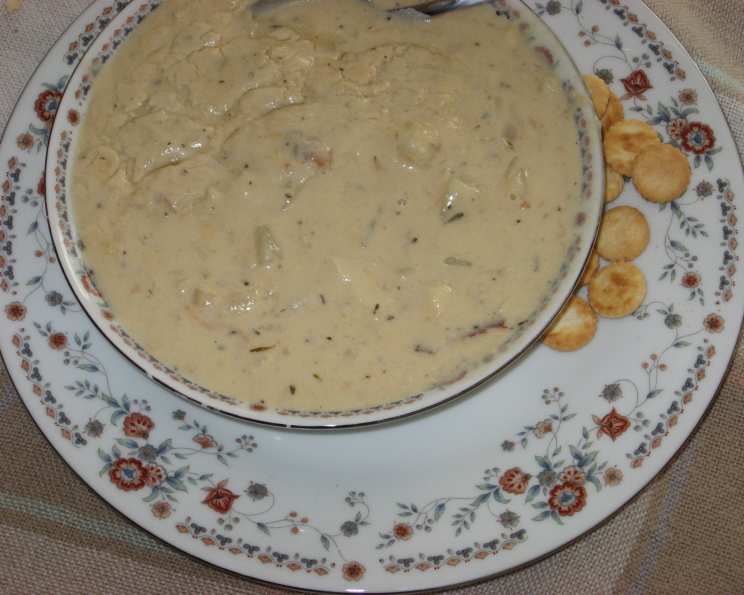
The Real Deal New England Fish Chowder
My grandmother, a true daughter of Maine, could whip up a fish chowder that would warm you from the inside out on even the chilliest New England day. I remember standing by her side in her tiny kitchen, the aroma of simmering fish and thyme filling the air, as she told stories of her own childhood spent along the rocky coastline. This chowder isn’t just a soup; it’s a taste of history, a comforting hug, and a reminder of family all in one bowl. It’s a simple recipe, truly, but the key is in the quality of the ingredients and the time you allow the flavors to meld together.
Recipe Overview
- Prep Time: 30 minutes
- Cook Time: 1 hour 40 minutes
- Total Time: 2 hours 10 minutes
- Servings: 10
- Yield: About 12 cups
- Dietary Type: Varies (can be gluten-free, dairy-free adaptable)
Ingredients
- 1 lb haddock fillets or 1 lb pollock fillet
- 4-5 potatoes, cut in 1-inch cubes
- 3 onions, sliced into half moons
- 1 – 1 ½ teaspoons ground thyme
- 3 (12 ounce) cans evaporated milk (2-3 cans, depending on desired consistency)
- 4 ounces butter
- 4 ounces flour
- Salt, to taste
- Pepper, to taste
- Water
Equipment Needed
- Large pot
- Small frying pan
- Whisk
- Measuring cups and spoons
- Cutting board
- Knife
Instructions
-
In a large pot, combine the onions, potatoes, thyme, salt, and pepper. Cover with water. If you prefer a thinner chowder and are not planning to thicken it with a roux, add the butter now.
-
Bring the mixture to a boil over high heat, then reduce the heat and cook until the potatoes begin to soften. This should take approximately 15-20 minutes.
-
While the potatoes are cooking, prepare the roux. In a small frying pan, melt the butter over medium heat. Once melted, add the flour and whisk constantly to create a smooth paste.
-
Continue to cook the roux, whisking continuously, for about 1 minute. This step helps to cook out the raw flour taste.
-
Once the potatoes are almost tender but still slightly firm, reduce the heat to a simmer.
-
Add the prepared roux to the pot with the potatoes and onions. Simmer over medium-high heat, stirring frequently until the chowder thickens. This will take approximately 5-10 minutes. Ensure the roux is fully incorporated to avoid lumps.
-
Add the haddock or pollock fillets to the pot. Gently stir to submerge the fish in the liquid.
-
Reduce the heat to low and gently simmer for about 5 minutes, or until the fish is cooked through and flakes easily with a fork. Be careful not to overcook the fish, as it will become tough.
-
Stir in the evaporated milk. Start with two cans, and add the third if you prefer a creamier consistency.
-
Lower the heat to the lowest setting and allow the chowder to cook gently until the potatoes are completely tender and the flavors have melded. This should take about 30 minutes. Be careful not to let the chowder boil after adding the evaporated milk, as it may curdle.
-
Bring the chowder to just below a boil, then turn off the heat. Cover the pot and allow the chowder to stand for several hours or, ideally, overnight. This resting period allows the flavors to fully develop and intensifies the overall taste.
-
Adjust the seasoning with salt and pepper to your liking before serving.
-
To serve, gently reheat the chowder over low heat, stirring occasionally. Avoid boiling.
Expert Tips & Tricks
- Fish Selection: While this recipe calls for haddock or pollock, you can also use cod, which is a classic choice. The key is to use a firm, white-fleshed fish that holds its shape well during cooking.
- Thickening Consistency: The amount of evaporated milk you use will depend on your desired consistency. Start with two cans and add more if you prefer a creamier chowder. You can also adjust the amount of roux for a thicker or thinner consistency.
- Don’t Rush the Roux: Cooking the roux properly is essential for a smooth, non-grainy chowder. Be sure to whisk the butter and flour together until fully combined, and cook for at least a minute to remove the raw flour taste.
- Flavor Enhancement: A bay leaf added during the simmering process can also enhance the flavor. Remember to remove it before serving!
- Making it Gluten-Free: To make this chowder gluten-free, substitute the flour in the roux with a gluten-free all-purpose flour blend or cornstarch.
Serving & Storage Suggestions
Serve the New England Fish Chowder hot with oyster crackers or crusty bread for dipping. A side of sour pickles adds a traditional New England touch.
Leftover chowder can be stored in an airtight container in the refrigerator for up to 3 days. While the recipe states it doesn’t freeze well, some find success freezing it in individual portions. Be aware that the texture may change slightly upon thawing, and the potatoes might become a bit mealy.
To reheat, gently warm the chowder over low heat, stirring occasionally. Avoid boiling, as this can cause the milk to curdle. You can also reheat it in the microwave, but be sure to stir it frequently to ensure even heating.
Nutritional Information
(Estimated per serving)
| Nutrient | Amount per Serving | % Daily Value |
|---|---|---|
| Calories | 375 kcal | 19% |
| Total Fat | 18g | 28% |
| Saturated Fat | 11g | 55% |
| Cholesterol | 75mg | 25% |
| Sodium | 210mg | 9% |
| Total Carbohydrate | 38g | 13% |
| Dietary Fiber | 3g | 12% |
| Sugars | 3g | – |
| Protein | 19g | 38% |
Variations & Substitutions
- Clam Chowder: Substitute the haddock or pollock with 1 pint of chopped fresh clams or 3-4 small cans of minced clams. Use the clam juice as part of the water for added flavor.
- Corn Chowder: Add 2 cans of cream-style corn, 1 can of whole kernel corn, and 1 small jar of baby food corn to the pot along with the potatoes and onions.
- Dairy-Free: Substitute the butter with olive oil or a dairy-free butter alternative. Replace the evaporated milk with coconut milk or another plant-based milk alternative.
- Spicy Chowder: Add a pinch of red pepper flakes or a dash of hot sauce to the pot along with the thyme for a spicy kick.
- Smoked Fish Chowder: Use smoked haddock or pollock for a deeper, smokier flavor. Reduce the amount of salt added to the pot, as smoked fish is often quite salty.
FAQs (Frequently Asked Questions)
Q: Can I use frozen fish for this chowder?
A: Yes, you can use frozen fish, but be sure to thaw it completely before adding it to the pot. Pat it dry with paper towels to remove excess moisture.
Q: How do I prevent the milk from curdling?
A: Avoid boiling the chowder after adding the evaporated milk. Keep the heat on the lowest setting and stir gently.
Q: Can I make this chowder in a slow cooker?
A: Yes, you can make this chowder in a slow cooker. Add all the ingredients except the fish and evaporated milk to the slow cooker and cook on low for 6-8 hours. Then, add the fish and evaporated milk and cook for another 30 minutes, or until the fish is cooked through.
Q: Can I add other vegetables to this chowder?
A: Yes, you can add other vegetables, such as celery, carrots, or leeks. Add them to the pot along with the onions and potatoes.
Q: What is the best way to thicken the chowder without using flour?
A: You can use cornstarch as an alternative thickener. Mix 1 tablespoon of cornstarch with 2 tablespoons of cold water to create a slurry. Add the slurry to the pot during the last 15 minutes of cooking, stirring constantly until the chowder thickens.
Final Thoughts
This New England Fish Chowder is more than just a meal; it’s a taste of tradition, a comforting embrace, and a connection to generations past. I encourage you to try this recipe and experience the simple joy of a truly authentic chowder. Feel free to experiment with variations and substitutions to create your own signature version. Don’t hesitate to share your feedback and experiences, and consider pairing this delightful chowder with a crisp, dry white wine or a refreshing local craft beer. Enjoy!