
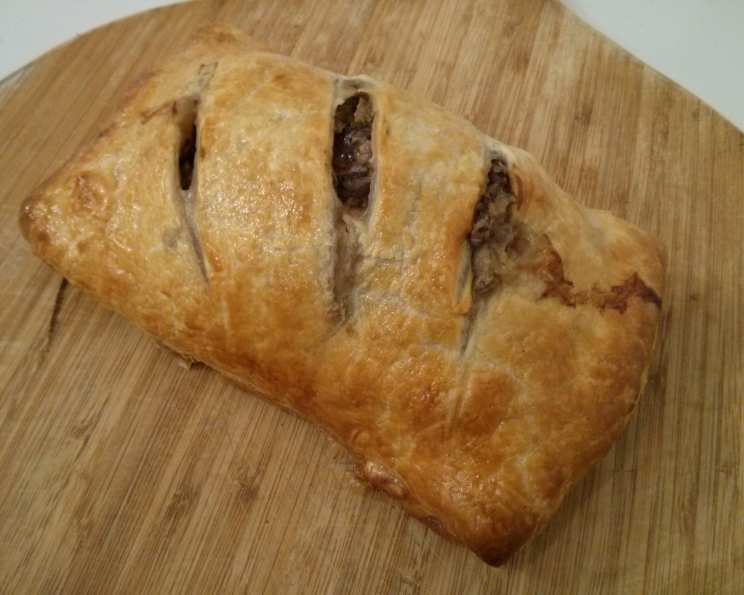
The South Pole’s Favorite Beef Wellington
I remember one particularly brutal winter in culinary school. The grey skies seemed to seep into everything, even the food. Desperate for a bit of cheer, our chef instructor, a gruff but secretly kind soul, decided to tackle Beef Wellington. The richness of the beef, the earthy mushrooms, and the flaky, golden crust filled the kitchen with warmth. It wasn’t just a meal; it was an event, a shared experience that temporarily chased away the winter blues. And now, years later, I’ve discovered this recipe is served every Christmas at McMurdo Station in Antarctica, the largest community on the continent! It’s a warming comfort meal that I am so pleased to share.
Recipe Overview
- Prep Time: 30 minutes
- Cook Time: 1 hour
- Total Time: 1 hour 30 minutes
- Servings: 16
- Yield: 1 Wellington
- Dietary Type: Not specified, contains meat, gluten, and dairy.
Ingredients
- 1 whole beef tenderloin, trimmed of fat and silver skin
- 4 tablespoons butter
- 1 lb mushrooms, sliced
- 2 garlic cloves, minced
- 1 cup red wine
- 1 teaspoon fresh thyme leaves, chopped
- 6 frozen puff pastry sheets, thawed (or equivalent)
- 1 lb pork liver pate (optional)
- 2 tablespoons prepared Dijon mustard
- 1 egg, beaten with 1 tablespoon water
- Salt and pepper
Equipment Needed
- Large skillet
- Food processor
- Baking sheet
- Meat thermometer
Instructions
- Begin by preparing the beef tenderloin. Carefully trim away all the excess fat and silver skin. Generously rub the entire surface of the tenderloin with salt and pepper.
- Melt about half of the butter in a large skillet over medium heat. Allow the butter to foam slightly, then carefully add the tenderloin to the hot pan.
- Sear the beef on all sides until it develops a rich, brown color. This step is crucial for developing flavor and creating a beautiful crust.
- Remove the tenderloin from the pan and set it aside to cool completely. It’s important to let the meat rest before wrapping it in the pastry.
- In the same skillet, add the remaining butter and melt over high heat. Add the sliced mushrooms and sauté them until they have reduced in size and released their moisture. Be careful not to let them brown too much.
- Just before the mushrooms are done, add the minced garlic. Cook for another minute until the garlic is fragrant, but not burnt.
- Pour in the red wine and cook over medium-high heat until the liquid has reduced significantly and the mixture is almost dry. This concentrates the flavors of the wine and mushrooms.
- Stir in the chopped fresh thyme leaves, salt, and pepper. Remove the mushroom mixture from the heat and spread it out in a shallow pan to cool completely.
- Once the mushroom mixture has cooled, transfer it to a food processor and chop it until it forms a rough paste, sometimes referred to as a duxelles. Set aside.
- Lay the puff pastry sheets out on a clean work surface. You may need to lightly flour the surface to prevent the pastry from sticking. If necessary, gently roll out the pastry to achieve the desired size.
- Spread the mushroom mixture in a wide strip down the center of the pastry, leaving about an inch and a half of bare pastry at each end.
- If using pork liver pate, slice it thinly and lay the slices down the center of the mushroom strip.
- Brush the entire surface of the cooled tenderloin with Dijon mustard. This adds a tangy layer of flavor and helps the pastry adhere to the meat.
- As gently as possible, place the tenderloin in the middle of the mushroom and pate strip and wrap the pastry over it. Seal the edges with your fingers, then brush with the egg and water mixture to ensure a good seal. Repeat with the ends, trimming any excess pastry (or it won’t cook all the way through).
- Carefully turn the wrapped meat over and place it in a greased baking pan so the seam is at the bottom.
- Brush the entire surface of the pastry with the egg mixture. Using a sharp knife, make three slits in the top of the pastry to allow steam to escape during cooking and prevent it from bursting open.
- Bake in a preheated oven at 400 degrees Fahrenheit (200 degrees Celsius) until the internal temperature of the beef reaches 120 degrees Fahrenheit (49 degrees Celsius).
- Important Note: This temperature seems low, but once you take the Wellington out of the oven, the internal temperature of the meat will continue to rise, potentially by as much as 15 or 20 degrees. If you prefer rare or medium-rare beef, remove it from the oven early. Use a meat thermometer that can stay in the oven while cooking to ensure perfect results.
- The pastry should be a golden color when you remove the Wellington from the oven. Let it rest for at least 15 minutes before slicing.
- When you slice into the Wellington, the juices should flow out. These juices can be used to make an au jus sauce to serve with the dish.
Expert Tips & Tricks
- Searing the Beef: Don’t skip the searing step! It creates a flavorful crust and helps to lock in the juices. Make sure your pan is hot and the beef is dry before searing.
- Chilling the Beef: Letting the seared beef cool completely before wrapping it in pastry is essential. This prevents the pastry from becoming soggy.
- Duxelles Consistency: The mushroom mixture should be a rough paste, not a completely smooth puree. This provides a better texture and flavor.
- Sealing the Pastry: Ensure the pastry is tightly sealed to prevent any juices from escaping during baking. Use the egg wash as a glue to help create a secure seal.
- Resting the Wellington: Allowing the Wellington to rest for at least 15 minutes after baking is crucial. This allows the juices to redistribute, resulting in a more tender and flavorful dish.
Serving & Storage Suggestions
Serve the Beef Wellington immediately after resting. Slice it into thick portions and serve with a side of au jus sauce made from the pan juices. It pairs well with roasted vegetables, mashed potatoes, or a simple green salad.
Leftover Beef Wellington can be stored in the refrigerator for up to 3 days. To reheat, wrap the slices in foil and bake in a preheated oven at 350 degrees Fahrenheit (175 degrees Celsius) until heated through. You can also reheat it in the microwave, but the pastry may become a bit soft.
Freezing is not generally recommended, as the pastry will lose its crispness.
Nutritional Information
| Nutrient | Amount per Serving | % Daily Value |
|---|---|---|
| Calories | 375 kcal | 19% |
| Total Fat | 25g | 38% |
| Saturated Fat | 12g | 60% |
| Cholesterol | 100mg | 33% |
| Sodium | 300mg | 13% |
| Total Carbohydrate | 15g | 5% |
| Dietary Fiber | 2g | 8% |
| Sugars | 3g | – |
| Protein | 20g | 40% |
Note: Nutritional information is an estimate and may vary based on specific ingredients and portion sizes.
Variations & Substitutions
- Gluten-Free: Use gluten-free puff pastry for a gluten-free version.
- Vegetarian Wellington: Substitute the beef tenderloin with a roasted portobello mushroom cap for a vegetarian option. Increase the amount of mushroom duxelles to compensate for the lack of meat.
- Pate Alternative: If you don’t like or can’t find pork liver pate, you can use a layer of prosciutto or skip it altogether.
- Herb Variations: Experiment with different herbs in the mushroom duxelles, such as rosemary, sage, or oregano.
FAQs (Frequently Asked Questions):
Q: Can I make the Beef Wellington ahead of time?
A: Yes, you can assemble the Wellington a day in advance and keep it refrigerated. However, bake it just before serving for the best pastry texture.
Q: How do I prevent the pastry from becoming soggy?
A: Ensure the beef is completely cooled before wrapping it in pastry. Also, make sure the mushroom duxelles is not too wet.
Q: What is the best way to check the doneness of the beef?
A: Use a meat thermometer that can stay in the oven while cooking. Aim for an internal temperature of 120°F (49°C) for rare, 130°F (54°C) for medium-rare, and 140°F (60°C) for medium.
Q: Can I use store-bought mushroom duxelles?
A: While it’s always best to make your own, you can use store-bought duxelles in a pinch. Just make sure it’s not too watery.
Q: What if my pastry puffs up too much during baking?
A: This is normal! The slits you made in the top of the pastry should help to release the steam and prevent it from bursting.
Final Thoughts
This South Pole’s Favorite Beef Wellington is more than just a recipe; it’s a culinary adventure. Whether you’re celebrating a special occasion or simply craving a comforting and impressive meal, this dish is sure to delight. Don’t be intimidated by the seemingly complex steps – with a little patience and attention to detail, you can create a truly memorable culinary masterpiece. I encourage you to try this recipe and experience the richness of flavors and textures. And if you do, please share your creations and feedback! I’d love to hear about your experiences and any variations you might try. Perhaps you could pair it with a full-bodied red wine for the perfect complement. Bon appétit!