
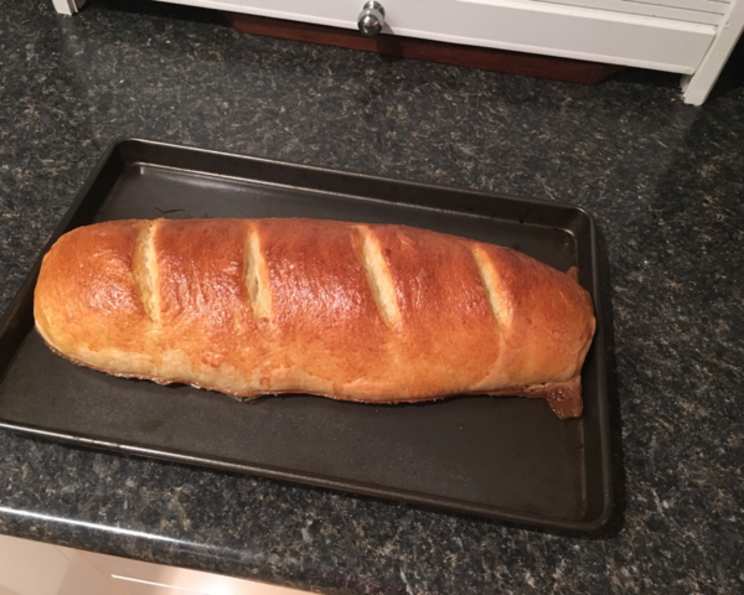
The Ultimate French Bread
I remember the first time I truly appreciated the magic of French bread. It was a chilly autumn evening, and my grandmother, a woman who could coax life into the most stubborn dough, pulled a golden-brown loaf from her ancient oven. The crust crackled as she sliced it, releasing a fragrant cloud that filled her cozy kitchen. Smothered in homemade garlic butter, each bite was a symphony of textures – the sharp, yielding crust giving way to a soft, airy interior. From that day on, French bread wasn’t just a staple; it was a memory, a feeling, a symbol of comfort and home. Now, I share my perfected version of that simple joy with you.
Recipe Overview
- Prep Time: 20 minutes
- Cook Time: 20-25 minutes
- Total Time: 1 hour 45 minutes (includes rising time)
- Servings: 10-12
- Yield: 1 long loaf
- Dietary Type: Vegetarian
Ingredients
- 1 1⁄4 cups warm water
- 1 tablespoon sugar
- 1 teaspoon salt
- 3 1⁄2 cups bread flour
- 1 tablespoon yeast
For Crunchy Crust Glaze:
- 2 tablespoons water
- 1⁄2 teaspoon salt
For Soft Crust Glaze:
- 1 egg, beaten with a little water
For Silky Crust Glaze:
- 1 egg, beaten with a little milk
Equipment Needed
- Bread machine
- Lightly floured surface
- Greased baking sheet or baking stone
- Small bowl
- Pastry brush (optional)
Instructions
- Add the warm water, sugar, salt, bread flour, and yeast to your bread machine according to the manufacturer’s instructions. Typically, liquids go in first, but consult your specific machine’s manual.
- Program the bread machine for the DOUGH cycle or the MANUAL cycle, if available. This will mix and knead the dough for you.
- Once the dough cycle is complete, carefully remove the dough from the bread machine and place it on a lightly floured surface.
- Using a rolling pin, gently roll the dough into a large rectangle, approximately 12×18 inches.
- Starting at the longest end of the rectangle, tightly roll the dough up, pressing the seam firmly with each turn. This creates the characteristic tight crumb structure of French bread.
- As you reach the end, pinch the seam together to seal it completely.
- Taper each end of the loaf by gently rolling and tucking the dough underneath. This will give your loaf a classic French bread shape.
- Place the shaped loaf on a greased baking sheet or baking stone.
- Cover the loaf loosely with a clean kitchen towel or plastic wrap and let it rise in a warm place for one hour, or until it has doubled in size. This crucial step allows the yeast to work its magic, creating a light and airy texture.
- Near the end of the rising time, preheat your oven to 400 degrees Fahrenheit (200 degrees Celsius).
- Prepare your glaze by whisking the water and salt (for a crunchy crust), the egg and water (for a soft crust), or the egg and milk (for a silky crust) together in a small bowl.
- Once the loaf has doubled in size, gently brush the glaze of your choice generously over the entire surface of the loaf.
- Using a sharp knife or a lame (a special bread-scoring tool), snip three diagonal slashes across the top of the loaf. These slashes not only look beautiful, but they also allow the bread to expand properly in the oven, preventing it from cracking unevenly.
- Bake the French bread in the preheated oven for 20-25 minutes, or until the top is a deep golden brown. The internal temperature of the bread should reach 200-210 degrees Fahrenheit (93-99 degrees Celsius).
- Remove the baked French bread from the oven and let it cool on a wire rack before slicing and serving. This allows the internal structure of the bread to set, preventing it from becoming gummy.
Expert Tips & Tricks
- For an extra-crispy crust: Place a shallow pan of hot water on the bottom rack of your oven during baking. The steam will create a wonderfully crusty exterior.
- Don’t over-knead: Over-kneading can result in a tough loaf. Trust your bread machine to do its job.
- Temperature is key: Ensure your water is warm (around 105-115 degrees Fahrenheit or 40-46 degrees Celsius) to activate the yeast properly. Too hot and it will kill the yeast; too cold and it won’t activate.
- Proof your yeast (optional): If you’re unsure about the freshness of your yeast, proof it by dissolving it in the warm water with the sugar. If it foams up after 5-10 minutes, it’s good to go.
- Scoring matters: The angle and depth of your slashes will affect the final appearance of your loaf. Practice makes perfect!
Serving & Storage Suggestions
Serve your freshly baked French bread warm, sliced, and with butter, olive oil, or your favorite spreads. It’s also delicious as an accompaniment to soups, stews, and salads.
Store leftover French bread at room temperature in a bread bag or wrapped in a clean kitchen towel for up to 2 days. To keep it longer, wrap it tightly in plastic wrap and freeze it for up to 2 months. To reheat, thaw completely and bake in a preheated 350 degrees Fahrenheit (175 degrees Celsius) oven for 5-10 minutes, or until warmed through.
Nutritional Information
| Nutrient | Amount per Serving | % Daily Value |
|---|---|---|
| Calories | 182 kcal | – |
| Calories from Fat | 13 g | – |
| Total Fat | 1.5 g | 2% |
| Saturated Fat | 0.4 g | 1% |
| Cholesterol | 37.2 mg | 12% |
| Sodium | 365.5 mg | 15% |
| Total Carbohydrate | 35.2 g | 11% |
| Dietary Fiber | 1.5 g | 6% |
| Sugars | 1.4 g | – |
| Protein | 6.3 g | 12% |
Note: Nutritional information is an estimate and may vary based on specific ingredients and portion sizes.
Variations & Substitutions
- Garlic Herb Bread: After rolling the dough into a rectangle, brush it generously with melted butter and sprinkle with minced garlic, dried herbs (such as rosemary, thyme, and oregano), and grated Parmesan cheese. Then, roll it up tightly and proceed as directed.
- Cheesy Bread: Sprinkle grated cheese (cheddar, mozzarella, or a blend) over the rolled-out dough before rolling it up.
- Pizza Bread: Spread leftover marinara sauce over the rolled-out dough, leaving a small border around the edges. Sprinkle with mozzarella cheese and your favorite pizza toppings.
- Onion Bread: Mince one small onion (about 1/4 cup) and add it to the wet ingredients in the bread machine.
- Baby French Bread Loaflets: Divide the dough into 12 equal pieces and shape them into mini loaves. Bake for 15-20 minutes, or until golden brown.
- French Twist: Divide the dough into 3 equal pieces and roll each piece into a 14-16 inch rope. Lay the ropes on a baking sheet and braid them together. Tuck the ends underneath, brush with melted butter, cover, and let rise for 30 minutes. Brush with glaze and bake for 20-25 minutes.
FAQs (Frequently Asked Questions)
Q: Can I make this recipe without a bread machine?
A: Yes, you can! Combine the ingredients in a large bowl, knead the dough for 8-10 minutes until smooth and elastic, and then proceed with the rising and baking instructions.
Q: How can I tell if the bread is fully baked?
A: The bread should be golden brown on top and sound hollow when you tap it on the bottom. You can also use a thermometer to check the internal temperature, which should be between 200-210 degrees Fahrenheit (93-99 degrees Celsius).
Q: Why did my bread come out flat?
A: This could be due to several factors, such as using old yeast, not letting the dough rise enough, or using too much flour. Make sure your yeast is fresh, give the dough enough time to rise, and measure your ingredients accurately.
Q: Can I freeze this bread?
A: Yes, you can freeze it. Wrap the bread tightly in plastic wrap and then place it in a freezer bag. It can be stored in the freezer for up to 2 months.
Q: What kind of flour is best for French bread?
A: Bread flour is recommended because it has a higher protein content than all-purpose flour, which helps to create a strong gluten network and a chewy texture.
Final Thoughts
Baking your own French bread is a rewarding experience that fills your kitchen with an irresistible aroma and provides you with a delicious, homemade loaf to enjoy. Don’t be afraid to experiment with different glazes, toppings, and shapes to create your own signature version. Share your creations with friends and family, and savor the simple pleasure of fresh, homemade bread. Now, go on, preheat that oven, and let the baking begin! I’m eager to hear about your experiences with this recipe, so please leave your feedback and suggestions below. Perhaps pair it with a hearty French onion soup for a truly authentic meal! Bon appétit!