
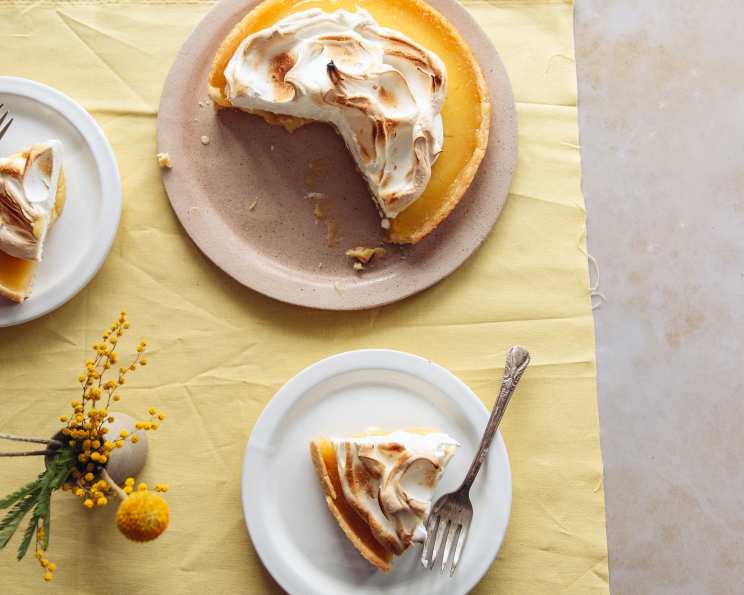
The Ultimate Lemon Meringue Pie
The first time I tasted lemon meringue pie, I was a child at my grandmother’s farm. The sun streamed through the kitchen window, illuminating dust motes dancing in the air as she carefully sliced into the golden-brown meringue. The tangy scent of lemon filled the room, a promise of tartness that perfectly balanced the sweet, fluffy cloud of meringue. That first bite was pure magic – a symphony of textures and flavors that transported me to a world of sunshine and simple joys. It’s a memory etched in my heart, and I’ve been chasing that perfect pie ever since.
Recipe Overview
- Prep Time: 1 hour
- Cook Time: 45 minutes
- Total Time: 1 hour 45 minutes
- Servings: 8
- Yield: 1 pie
- Dietary Type: Not Gluten-Free
Ingredients
For the Graham Cracker Coated Pie Shell
- 1 1/4 cups flour
- 1 tablespoon sugar
- 1/2 teaspoon salt
- 6 tablespoons unsalted butter, cut into pieces and frozen
- 4 tablespoons vegetable shortening, frozen
- 3-5 tablespoons ice water, as needed
- 1/2 cup graham cracker crumbs
For the Lemon Filling
- 1 cup sugar
- 1/4 cup cornstarch
- 1/8 teaspoon salt
- 6 large egg yolks
- 1 1/2 cups water
- 1 tablespoon lemon zest
- 1/2 cup lemon juice (fresh from 2-3 lemons)
- 2 tablespoons unsalted butter
For the Meringue Topping
- 1 tablespoon cornstarch
- 1/3 cup water
- 1/4 teaspoon cream of tartar
- 1/2 cup sugar
- 4 large egg whites
- 1/2 teaspoon vanilla extract
Equipment Needed
- Food processor
- 9-inch pie pan
- Whisk
- Large, nonreactive saucepan
- Mixer with whip attachment
- Small saucepan
- Measuring cups and spoons
Instructions
- Make the Pie Shell: In a food processor, combine the flour, sugar, and salt. Pulse a few times to mix.
- Scatter the frozen butter pieces over the flour mixture.
- Pulse in 1-second pulses about 5 times to mix in the butter.
- Add the frozen shortening; pulsing in 1-second pulses until the mixture resembles cornmeal with pieces about the size of peas.
- Slowly add the ice water through the processor feed tube, with the motor running, one tablespoon at a time.
- When the dough forms a ball, stop processing. It should take about 2 or 3 tablespoons of ice water to reach this stage. Be careful not to over-process.
- Shape the dough into a ball in your flour-coated hands, and then flatten into a 4-inch wide disk.
- Flour the disk and wrap it in plastic. Refrigerate for at least 30 minutes. This step is crucial for a tender crust.
- Generously coat your work surface or pastry sheet with a little flour and about 1/4 cup of graham cracker crumbs. The graham cracker crumbs will add a delightful flavor and texture to the crust.
- Place the dough on the floured surface, coat with some flour and graham cracker crumbs, and roll into a 9-inch disk.
- Lift, coat the surface with more graham cracker crumbs and flour, turn the dough, add more graham cracker crumbs and flour on top, and roll out to a 13-inch disk.
- Place into a 9-inch pie pan, and finish the edges. You can crimp the edges with a fork or use your fingers to create a decorative pattern.
- Refrigerate the crust until firm, about 30 minutes. This helps prevent shrinking during baking.
- Prick the dough with a fork to prevent bubbling up in the oven.
- While the oven is pre-heating to 375°F (190°C), put the pie crust in the freezer. This helps to further solidify the butter and shortening, resulting in a flakier crust.
- Bake at 375°F (190°C) for 20-25 minutes, checking occasionally to make sure it’s browning evenly and not bubbling up. If the edges are browning too quickly, you can cover them with foil.
- Lemon Filling: Whisk the sugar, cornstarch, and salt together in a large, nonreactive saucepan. Using a nonreactive saucepan is important to prevent the lemon juice from reacting with the metal and altering the flavor of the filling.
- Add the egg yolks, then immediately but gradually whisk in the 1 1/2 cups water. Whisking immediately prevents the egg yolks from cooking and becoming lumpy.
- Bring the mixture to a simmer over medium heat, whisking regularly, for 8-10 minutes, until thickened. Be patient and continue whisking to prevent the filling from sticking to the bottom of the pan and burning.
- Remove from heat, whisk in the lemon zest, then the lemon juice, and finally the butter. The lemon zest adds an extra layer of lemon flavor, while the butter enriches the filling and gives it a glossy sheen.
- Keep warm until the meringue is made. You can place the saucepan over a pot of simmering water to keep it warm, or simply cover it with plastic wrap, pressing the wrap directly onto the surface of the filling to prevent a skin from forming.
- Meringue Topping: Mix the cornstarch and 1/3 cup water in a small saucepan.
- Bring to a simmer, whisking occasionally until thickened.
- Remove from heat when translucent and thickened. This cornstarch slurry will help stabilize the meringue and prevent it from weeping.
- Preheat the oven to 325°F (160°C).
- In a large mixing bowl, mix the cream of tartar and sugar together. Cream of tartar helps to create a stable meringue by preventing the egg whites from over-coagulating.
- Beat the egg whites with the whip attachment of a mixer until frothy. Add the vanilla extract.
- Beat in the sugar mixture, 1 tablespoon at a time.
- Then drop in the cornstarch mixture, 1 tablespoon at a time until stiff peaks form. The meringue should be glossy and hold its shape when the beaters are lifted.
- Pour the warm lemon filling into the pie crust.
- Distribute the meringue evenly over the top, starting with the edges, and then the middle.
- Make sure it attaches to the crust. This will help to seal the filling and prevent the meringue from shrinking.
- Lifting with the back of a spoon, create peaks in the meringue. These peaks will brown beautifully in the oven.
- Bake until golden brown, about 20 minutes. Keep a close eye on the pie during baking, as the meringue can brown quickly.
- Cool completely before serving. This allows the filling to set and the meringue to stabilize.
Expert Tips & Tricks
- Freezing the butter and shortening is crucial for a flaky crust. The cold fat creates layers of steam when baked, resulting in a light and tender texture.
- Don’t overmix the pie dough. Overmixing develops the gluten in the flour, which can lead to a tough crust.
- Use fresh lemon juice. Bottled lemon juice simply doesn’t have the same bright, tangy flavor as fresh.
- Make sure the bowl and beaters are clean and grease-free when whipping the meringue. Even a tiny bit of grease can prevent the egg whites from whipping properly.
- For extra shine in your meringue, try using superfine sugar.
- If your meringue starts to weep, it could be due to overbaking or underbaking. Make sure to bake the meringue until it’s golden brown and set, but not dry.
- To prevent the crust from getting soggy, brush the bottom of the baked crust with melted chocolate before adding the lemon filling.
Serving & Storage Suggestions
Serve the lemon meringue pie chilled or at room temperature. A dollop of whipped cream or a few fresh berries would make a lovely accompaniment.
Store leftovers in the refrigerator for up to 3 days. The meringue may deflate slightly over time.
It is not recommended to freeze lemon meringue pie, as the meringue will become soggy.
Nutritional Information
| Nutrient | Amount per Serving | % Daily Value |
|---|---|---|
| Calories | 476.3 kcal | N/A |
| Calories from Fat | 198 g | 42% |
| Total Fat | 22.1 g | 33% |
| Saturated Fat | 10.5 g | 52% |
| Cholesterol | 168.9 mg | 56% |
| Sodium | 245.1 mg | 10% |
| Total Carbohydrate | 64.4 g | 21% |
| Dietary Fiber | 0.8 g | 3% |
| Sugars | 41.3 g | 165% |
| Protein | 6.4 g | 12% |
Note: Nutritional information is an estimate and may vary based on specific ingredients and serving sizes.
Variations & Substitutions
- Gluten-Free Pie Crust: Use a gluten-free pie crust recipe or a store-bought gluten-free crust.
- Lime Meringue Pie: Substitute lime juice and lime zest for the lemon juice and lemon zest.
- Coconut Meringue: Add a teaspoon of coconut extract to the meringue for a subtle coconut flavor.
FAQs (Frequently Asked Questions)
Q: Why is my meringue weeping?
A: Meringue can weep due to underbaking, overbaking, or high humidity. Make sure to bake it until golden brown and avoid making the pie on a very humid day.
Q: Can I make the pie crust ahead of time?
A: Yes, you can make the pie crust up to 2 days in advance. Store it tightly wrapped in the refrigerator.
Q: How do I prevent the pie crust from shrinking?
A: Chilling the dough before baking and using pie weights or dried beans during the first part of baking can help prevent shrinking.
Q: Can I use a store-bought pie crust?
A: Absolutely! Using a store-bought crust is a great shortcut when you’re short on time.
Q: What if my lemon filling is too tart?
A: You can add a tablespoon or two of extra sugar to the filling to balance the tartness.
Final Thoughts
This lemon meringue pie recipe is a labor of love, but the reward is a dessert that’s both visually stunning and utterly delicious. The bright, tangy lemon filling, the sweet, fluffy meringue, and the buttery, crumbly crust combine to create a symphony of flavors and textures that will tantalize your taste buds. Don’t be intimidated by the number of steps – each one is simple and straightforward. So go ahead, bake this classic pie and share it with your loved ones. They’ll thank you for it! And if you are feeling ambitious, try pairing this pie with a light, crisp glass of Moscato d’Asti. Cheers to baking!