
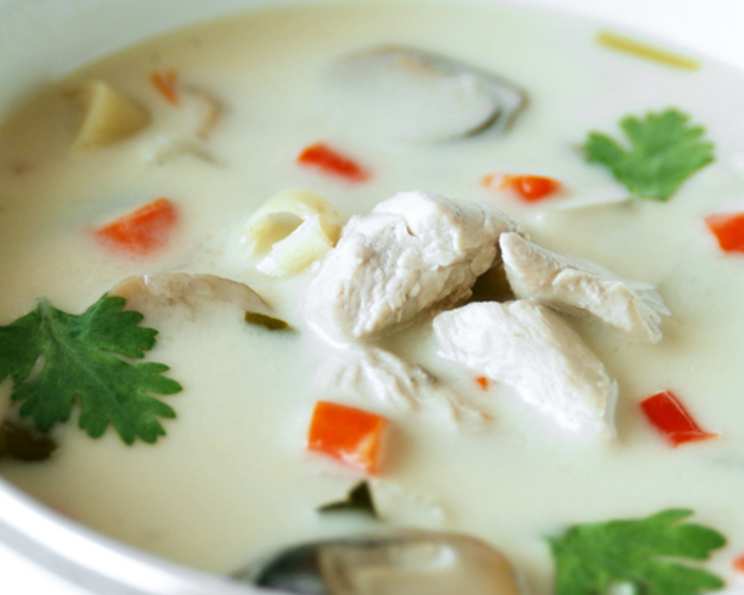
Tom Ka Kai: A Symphony of Thai Flavors in Coconut Soup
The first time I tasted Tom Ka Kai, I was backpacking through Thailand, a world away from my familiar kitchen. The aroma alone, a fragrant blend of lemongrass, galangal, and coconut milk, stopped me in my tracks. Served in a rustic bowl at a bustling street food stall, the creamy, spicy, and sour broth awakened my senses. It was more than just soup; it was a cultural immersion, a taste of Thailand I’ve been chasing ever since. This recipe is my attempt to capture that memory, that perfect bowl of Tom Ka Kai, and bring it to your table.
Recipe Overview
- Prep Time: 15 minutes
- Cook Time: 20 minutes
- Total Time: 35 minutes
- Servings: 4
- Yield: 4 bowls
- Dietary Type: Gluten-Free (naturally)
Ingredients
- 2 tablespoons vegetable oil
- 2 boneless skinless chicken breasts, cut into 1 inch pieces
- 1/4 teaspoon salt
- 4 ounces fresh mushrooms, sliced (a stir-fry mix of shitakes, oyster mushrooms, and portabellas works well)
- 3 green onions, sliced (divided)
- 1 stalk lemongrass
- 1 inch fresh galangal root or 1 inch gingerroot, grated
- 2 red chilies (more or less to desired heat level)
- 6 cups chicken stock (use good quality here)
- 1 (14 ounce) can coconut milk
- 1 1/2 tablespoons fresh lime juice
- 2 tablespoons fish sauce
- 1/2 teaspoon brown sugar
- Fresh cilantro, for garnish
- Fresh basil leaf, for garnish
Equipment Needed
- Large soup pot or wok
- Knife
- Cutting board
- Food processor (optional, for lemongrass)
Instructions
- In a large soup pot or wok, heat the vegetable oil over high heat until very hot but not smoking. A wok’s sloped sides make it ideal for evenly cooking ingredients.
- Season the chicken with salt. Add the chicken to the hot oil, tossing to brown all the pieces. Cook for about 3 minutes, or until the outside is browned but not necessarily cooked all the way through. We’re just building flavor here.
- Add the sliced mushrooms and toss to combine with the chicken. Allow the mushrooms to cook until some of the moisture is released and they become soft. Reduce the heat to medium-low. This prevents the mushrooms from burning and allows them to gently release their earthy flavors.
- Prepare the lemongrass. Slice and mince the lower, more tender portion of the stalk and reserve the upper stalk to flavor the soup. You can use a food processor for this, pulsing until finely minced, or mince it by hand. The woody upper portion of the stalk will be removed later, so don’t chop it up; simply score it by making a few superficial cuts to allow it to flavor the soup. Bruising the lemongrass releases its aromatic oils.
- Add the whites of the sliced green onions (reserving the greens for garnish), the minced lower portion of the lemongrass, grated galangal (or ginger), and sliced chilies to the pot. Toss everything together until just warmed through, about 1 minute. Be careful not to burn the spices; you just want to release their fragrance.
- Add the lemongrass stalk, chicken stock, coconut milk, lime juice, fish sauce, and brown sugar to the pot. Add most of the sliced green onions, reserving just a few for garnish.
- Bring the soup to a simmer over low heat and let it simmer gently for 15 minutes to allow the flavors to meld together beautifully. A slow simmer is key for achieving the signature depth of flavor.
- Taste and adjust the seasoning. If it’s not salty enough, add more fish sauce. If it’s too sour, add a little more brown sugar. If it’s too spicy, add more coconut milk. If it’s not spicy enough, add more chilies. Balance is everything in Thai cuisine!
- Ladle the soup into individual bowls and garnish with the reserved green onion greens, fresh cilantro, and fresh basil leaves. The fresh herbs add a final burst of flavor and visual appeal.
- For a heartier meal, consider adding more vegetables, such as sliced red bell peppers, along with the mushrooms. You can also serve the soup over wide rice noodles for a more substantial main dish.
- To make a vegetarian version, simply increase the amount of mushrooms in place of the chicken and substitute vegetable stock for chicken stock.
Expert Tips & Tricks
- Galangal vs. Ginger: While ginger can be used as a substitute, galangal has a more citrusy and piney flavor that is essential for authentic Tom Ka Kai. Look for it at Asian markets.
- Kaffir Lime Leaves: If you can find kaffir lime leaves, add 2-3 to the soup during the simmering process for an extra layer of citrusy aroma. Be sure to remove them before serving.
- Coconut Milk: Use full-fat coconut milk for the richest and creamiest texture. If you prefer a lighter soup, you can use light coconut milk, but the flavor will be less intense.
- Chili Paste: For a deeper chili flavor, consider adding a teaspoon of Thai chili paste (such as sambal oelek) to the soup.
- Make-Ahead Tip: You can prepare the soup base (up to step 7) ahead of time and store it in the refrigerator for up to 2 days. Add the lime juice and fresh herbs just before serving.
Serving & Storage Suggestions
Serve Tom Ka Kai hot, garnished with fresh cilantro and basil. It’s delicious on its own as a light lunch or appetizer, or served over rice noodles as a main course.
Leftovers can be stored in an airtight container in the refrigerator for up to 3 days. Reheat gently on the stovetop or in the microwave until heated through. The soup may thicken slightly upon refrigeration; add a splash of chicken stock or water to thin it out if needed. Freezing is not recommended as the coconut milk may separate and become grainy upon thawing.
Nutritional Information
| Nutrient | Amount per Serving | % Daily Value |
|---|---|---|
| Calories | 478 kcal | 24% |
| Total Fat | 34g | 44% |
| Saturated Fat | 21g | 105% |
| Cholesterol | 49mg | 16% |
| Sodium | 1454mg | 61% |
| Total Carbohydrate | 21g | 8% |
| Dietary Fiber | 1g | 4% |
| Sugars | 9g | – |
| Protein | 26g | 52% |
Note: Nutritional information is an estimate and may vary based on specific ingredients and portion sizes.
Variations & Substitutions
- Spicy Tom Kha: Add more red chilies or a spoonful of chili paste for a spicier version.
- Shrimp Tom Kha: Substitute the chicken with shrimp for a seafood variation. Add the shrimp during the last 5 minutes of cooking time to prevent overcooking.
- Vegan Tom Kha: As mentioned earlier, replace chicken with extra mushrooms, and use vegetable stock.
- Creamier Tom Kha: Stir in an extra splash of coconut cream at the end for an even richer soup.
- Lemongrass Alternative: If fresh lemongrass is unavailable, use 2 teaspoons of lemongrass paste.
- Lime Juice Alternative: If fresh lime juice is unavailable, use bottled lime juice, but the flavor will be slightly less vibrant.
FAQs (Frequently Asked Questions)
Q: Can I use dried mushrooms instead of fresh?
A: Yes, you can use dried mushrooms. Rehydrate them in hot water before adding them to the soup. Be sure to drain them well.
Q: Can I make this soup ahead of time?
A: Yes, the soup base (before adding lime juice and fresh herbs) can be made a day or two in advance and stored in the refrigerator.
Q: How can I make this soup less spicy?
A: Remove the seeds from the red chilies before adding them to the soup, or use a milder chili variety. You can also add more coconut milk to dilute the spiciness.
Q: Where can I find galangal?
A: Galangal can usually be found at Asian markets. If you can’t find it, you can substitute it with ginger.
Q: Can I freeze Tom Ka Kai?
A: Freezing is not generally recommended as the coconut milk can separate and become grainy. However, if you must freeze it, use a freezer-safe container and thaw it slowly in the refrigerator before reheating. Be aware that the texture may change.
Final Thoughts
Tom Ka Kai is more than just a soup; it’s an experience, a journey of flavors that transports you to the heart of Thailand. Don’t be intimidated by the exotic ingredients; most are readily available at Asian markets. I encourage you to give this recipe a try and discover the magic of Tom Ka Kai for yourself. Feel free to adjust the spice level to your liking and experiment with different variations. And please, share your creations and feedback with me – I’d love to hear about your own Tom Ka Kai adventures! This soup pairs wonderfully with a crisp, dry Riesling or a refreshing Thai iced tea.