
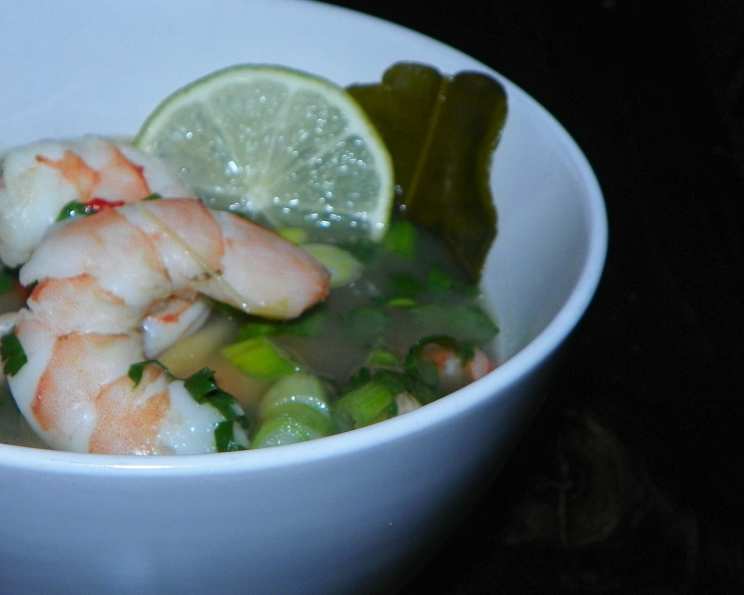
Tom Yum Koong: A Symphony of Thai Flavors
The first time I tasted Tom Yum Koong, I was utterly transported. It wasn’t just the explosion of flavors – the fiery chili, the fragrant lemongrass, the sour lime dancing on my tongue – but the way it felt, a warming hug from the inside out. It was a rainy evening in Bangkok, streetlights reflecting in the puddles, and this soup, served piping hot from a street vendor’s cart, chased away the chill and filled me with a sense of comforting adventure. That’s a memory I try to recreate every time I make this incredible soup.
Recipe Overview
- Prep Time: 15 minutes
- Cook Time: 20 minutes
- Total Time: 35 minutes
- Servings: 4
- Dietary Type: Dairy-Free
Ingredients
- 2 quarts fish stock (or chicken broth)
- 2 stalks fresh lemongrass, sliced on a bias in 1-inch pieces
- 4 kaffir lime leaves
- 1 inch fresh galangal root or 1 inch ginger, sliced
- 2 Thai red chili peppers, fresh, sliced
- 2 tablespoons fish sauce, such as nam pla
- 1 1/2 teaspoons sugar
- 1 (8 ounce) can straw mushrooms, rinsed
- 1 lb large shrimp, peeled with tails on
- 1 lime, juice of
- 1 lime, thinly sliced
- 2 green onions, sliced
- 6 sprigs fresh cilantro, chopped
Equipment Needed
- Saucepan
Instructions
- In a saucepan, bring the fish stock (or chicken broth) to a boil over medium heat.
- Add the sliced lemongrass, galangal (or ginger), kaffir lime leaves, and sliced Thai red chili peppers.
- Lower the heat to medium-low, cover the saucepan, and simmer for 15 minutes to allow the spices to infuse the broth fully. This step is crucial for developing the characteristic Tom Yum flavor.
- Uncover the saucepan and add the fish sauce, sugar, and straw mushrooms.
- Simmer for another 5 minutes.
- Add the shrimp and cook for approximately 5 minutes, or until they turn pink and are cooked through. Be careful not to overcook the shrimp, as they will become rubbery.
- Remove the saucepan from the heat.
- Stir in the lime juice, lime slices, green onions, and cilantro.
- Taste the soup and adjust the seasonings as needed. The ideal Tom Yum Koong should have a balanced flavor profile: spicy, salty, and sour. Add more fish sauce for saltiness, lime juice for sourness, sugar for sweetness, or chili peppers for more heat.
- When serving the soup, inform your guests that the lemongrass, kaffir lime leaves, and lime slices are primarily for flavoring the broth and are not meant to be eaten.
Expert Tips & Tricks
- Boosting the Broth: For a deeper, more complex flavor, consider lightly toasting the lemongrass, galangal, and chili peppers in a dry pan before adding them to the stock. This releases their aromatic oils.
- Freshness Matters: Whenever possible, use fresh ingredients for the best flavor. If you can’t find galangal, ginger is a decent substitute, but the flavor will be slightly different. Kaffir lime leaves are essential, though – try to source them online or at an Asian market.
- Shrimp Perfection: Ensure you are using high-quality, fresh shrimp. You can also use frozen shrimp, but thaw them completely before cooking. Patting the shrimp dry before adding them to the soup will help them brown slightly and develop better flavor.
- Spice Control: Don’t be afraid to adjust the amount of chili peppers to your liking. If you prefer a milder soup, remove the seeds from the peppers before slicing them.
- Mushroom Variety: While straw mushrooms are traditional, you can experiment with other types of mushrooms, such as shiitake or oyster mushrooms.
- Make Ahead Tip: You can prepare the broth ahead of time and store it in the refrigerator for up to 2 days. Add the shrimp, lime juice, and fresh herbs just before serving.
Serving & Storage Suggestions
Serve Tom Yum Koong hot, garnished with extra cilantro and a wedge of lime. It’s delicious on its own or served with steamed jasmine rice.
Leftovers can be stored in an airtight container in the refrigerator for up to 2 days. Reheat gently on the stovetop, being careful not to overcook the shrimp. The shrimp will become tougher each time it is reheated. It is not recommended to freeze Tom Yum Koong, as the texture of the shrimp and mushrooms may change.
Nutritional Information
| Nutrient | Amount per Serving | % Daily Value |
|---|---|---|
| Calories | 246.8 kcal | N/A |
| Calories from Fat | 56g | 23% |
| Total Fat | 6.3 g | 9% |
| Saturated Fat | 1.4 g | 6% |
| Cholesterol | 177.5 mg | 59% |
| Sodium | 1814.7 mg | 75% |
| Total Carbohydrate | 10.8 g | 3% |
| Dietary Fiber | 2.6 g | 10% |
| Sugars | 3.7 g | 14% |
| Protein | 37 g | 74% |
Variations & Substitutions
- Vegetarian Tom Yum: Substitute the fish stock with vegetable broth and omit the fish sauce. Add a splash of soy sauce or vegetarian “fish sauce” to maintain the umami flavor. Use tofu instead of shrimp.
- Tom Yum Gai (Chicken): Replace the shrimp with bite-sized pieces of chicken breast or thigh.
- Coconut Milk Tom Yum (Tom Kha): Add a can of coconut milk to the soup for a creamier, richer flavor. This variation is known as Tom Kha.
- Seafood Medley: Add other seafood, such as mussels, scallops, or squid, along with the shrimp.
- Spicy Level Adjustment: Adjust the number of chili peppers according to your preference for spiciness. For a milder version, remove the seeds from the chilies or use less chili.
FAQs (Frequently Asked Questions)
Q: Can I use dried lemongrass instead of fresh?
A: While fresh lemongrass is preferred for its vibrant flavor, you can use dried lemongrass as a substitute. Use about 1 tablespoon of dried lemongrass for every 2 stalks of fresh lemongrass.
Q: Where can I find galangal and kaffir lime leaves?
A: These ingredients are typically found in Asian markets or online specialty food stores. If you can’t find galangal, ginger can be used as a substitute, although the flavor will be slightly different.
Q: Can I make this soup ahead of time?
A: Yes, you can prepare the broth ahead of time and store it in the refrigerator for up to 2 days. Add the shrimp, lime juice, and fresh herbs just before serving.
Q: How do I adjust the spice level of the soup?
A: To increase the spice level, add more sliced Thai red chili peppers or a pinch of chili flakes. To reduce the spice level, remove the seeds from the chili peppers before slicing them or use less chili.
Q: What is the best way to reheat leftover Tom Yum Koong?
A: Reheat the soup gently on the stovetop over medium-low heat. Be careful not to overcook the shrimp, as they can become rubbery.
Final Thoughts
Tom Yum Koong is more than just a soup; it’s an experience. It’s a journey for your taste buds, a vibrant exploration of Thai flavors that will leave you feeling both satisfied and invigorated. Don’t be intimidated by the slightly unusual ingredients. Once you’ve gathered them, the process is simple and the reward is immense. I encourage you to try this recipe and share the vibrant, flavorful experience of Tom Yum Koong with your family and friends. Pair it with a crisp, cold Thai beer for the ultimate culinary adventure!