
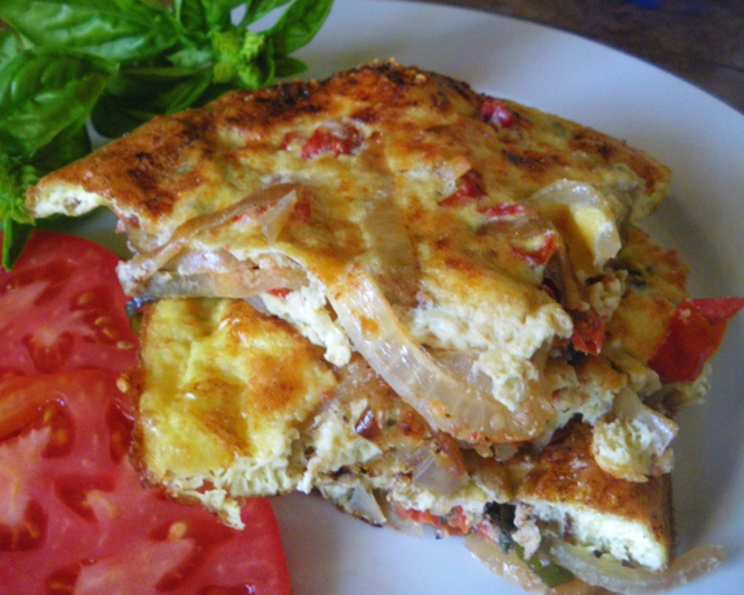
Tomato and Basil Frittata: A Taste of Italian Sunshine
I still remember the first time I tasted a frittata that truly sang. It was at a small trattoria nestled in the hills of Tuscany, where the air hummed with the scent of sun-baked earth and ripening tomatoes. The frittata, studded with vibrant red tomatoes and fragrant basil, was served at room temperature, each bite a burst of simple, honest flavors. It was a dish that spoke of the land and the love poured into its creation, and it ignited my passion for bringing that same rustic elegance to my own kitchen.
Recipe Overview
- Prep Time: 10 minutes
- Cook Time: 25 minutes
- Total Time: 35 minutes
- Servings: 2-4
- Yield: 1 frittata
- Dietary Type: Vegetarian
Ingredients
- 1 cup thinly sliced onion
- 1 teaspoon olive oil, for sauteing
- 1 medium tomatoes, diced
- Salt and pepper to taste
- 1/4 cup fresh basil, chopped (or 1 tsp dried)
- 4 tablespoons Parmesan cheese, grated
- 4 large eggs
- 1 tablespoon water
Equipment Needed
- Small nonstick skillet (8-inch recommended)
- Mixing bowl
- Whisk or fork
Instructions
-
Begin by preparing your vegetables. In a small nonstick skillet (an 8-inch skillet works perfectly), heat the olive oil over medium heat. Add the thinly sliced onion and sauté until they become translucent and softened, about 5-7 minutes. Be careful not to brown them too much; we want them sweet and yielding.
-
Add the diced tomatoes to the skillet with the onions. Season generously with salt and pepper. Cook, stirring occasionally, for approximately 5 minutes. This allows the tomatoes to soften and release their juices, creating a flavorful base for the frittata.
-
Now, introduce the aromatic element. Add the chopped fresh basil (or dried, if you’re using it) to the tomato mixture. Cook for an additional 2 minutes, allowing the basil to infuse its fragrance into the other ingredients. Remove the pan from the heat and transfer the vegetable mixture to a bowl to cool slightly. This prevents the hot vegetables from cooking the eggs prematurely.
-
While the vegetables are cooling, prepare the egg mixture. Clean out the skillet you used earlier and lightly spray it with nonstick cooking spray. This ensures the frittata doesn’t stick and is easy to release later.
-
In a mixing bowl, crack the eggs. Add the water and 3 tablespoons of the grated Parmesan cheese. Beat the mixture vigorously with a whisk or fork until it is light and a little foamy. This incorporates air into the eggs, resulting in a fluffier frittata.
-
Pour the egg mixture into the prepared nonstick skillet. Then, gently pour the slightly cooled vegetable mixture into the eggs, distributing it evenly. Use a fork to lightly mix the vegetables into the egg mixture, being careful not to overmix.
-
Place the skillet over low heat. Cook the frittata slowly, without stirring, for approximately 10-15 minutes, or until the eggs are mostly set. The top will likely still be a bit runny, but the edges should be firm. Patience is key here; cooking the frittata over low heat ensures it cooks evenly without burning.
-
While the frittata is cooking on the stovetop, preheat your broiler. Once the eggs have mostly set, sprinkle the remaining 1 tablespoon of Parmesan cheese evenly over the top of the frittata.
-
Carefully place the skillet under the preheated broiler. Broil until the Parmesan is bubbly, melted, and lightly browned, about 2-3 minutes. Watch it closely to prevent burning.
-
Remove the frittata from the broiler and let it cool slightly before slicing and serving.
Expert Tips & Tricks
- For a richer flavor, consider using sun-dried tomatoes instead of fresh. Just be sure to drain them well before adding them to the pan.
- Don’t have fresh basil? Dried basil works in a pinch, but use about half the amount, as its flavor is more concentrated.
- To prevent the frittata from sticking, ensure your skillet is truly nonstick and that you’ve used enough cooking spray.
- If you’re short on time, you can skip the broiling step and simply cover the skillet with a lid during the last few minutes of cooking to help the top set.
- For a creamier frittata, add a splash of cream or milk to the egg mixture.
Serving & Storage Suggestions
This Tomato and Basil Frittata is delicious served warm, at room temperature, or even cold. It’s perfect for a weekend brunch, a light lunch, or even a simple supper. Cut into wedges and serve on its own, or alongside a fresh green salad. Leftovers can be stored in an airtight container in the refrigerator for up to 3 days. Reheat gently in a skillet or microwave.
Nutritional Information
| Nutrient | Amount per Serving | % Daily Value |
|---|---|---|
| Calories | 210 kcal | 11% |
| Total Fat | 14g | 18% |
| Saturated Fat | 5g | 25% |
| Cholesterol | 200mg | 67% |
| Sodium | 200mg | 9% |
| Total Carbohydrate | 5g | 2% |
| Dietary Fiber | 1g | 4% |
| Sugars | 3g | N/A |
| Protein | 13g | 26% |
Note: Nutritional information is an estimate and may vary based on specific ingredients and serving size.
Variations & Substitutions
- Cheese: Feel free to experiment with different cheeses. Mozzarella, feta, or goat cheese would all be delicious additions.
- Vegetables: Add other vegetables such as spinach, zucchini, or bell peppers to the tomato and onion mixture.
- Herbs: If you’re not a fan of basil, try oregano, thyme, or parsley instead.
- Spicy: Add a pinch of red pepper flakes to the vegetable mixture for a little heat.
- Dairy-Free: For a dairy-free version, omit the Parmesan cheese or substitute with a vegan Parmesan alternative.
FAQs (Frequently Asked Questions)
Q: Can I make this frittata ahead of time?
A: Yes, you can prepare the frittata a day ahead of time and store it in the refrigerator. Serve cold or reheat gently before serving.
Q: Can I freeze this frittata?
A: While you can freeze it, the texture might change slightly upon thawing. For best results, wrap individual portions tightly in plastic wrap and then foil.
Q: What’s the best way to prevent the frittata from sticking to the pan?
A: Use a good quality nonstick skillet and generously spray it with cooking spray.
Q: Can I add meat to this frittata?
A: Absolutely! Cooked sausage, bacon, or ham would be delicious additions. Add them to the skillet along with the vegetables.
Q: How do I know when the frittata is done?
A: The frittata is done when the eggs are mostly set and the top is bubbly and lightly browned. A toothpick inserted into the center should come out mostly clean.
Final Thoughts
This Tomato and Basil Frittata is a testament to the beauty of simple ingredients and straightforward cooking. It’s a dish that’s perfect for any occasion, from a leisurely weekend brunch to a quick and easy weeknight meal. I encourage you to try it, experiment with different variations, and make it your own. Share your creations and feedback – I can’t wait to hear how you enjoy this little slice of Italian sunshine.