
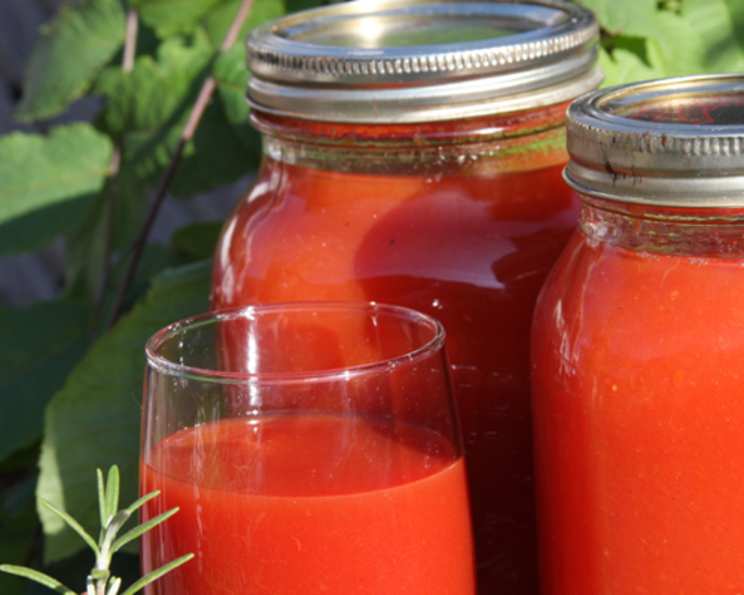
Canning Tomato Juice: A Taste of Summer All Year Round
My grandmother’s garden was legendary. Rows upon rows of vibrant vegetables, bursting with flavor, filled her backyard. But the tomato plants always held a special place in my heart. I remember standing beside her, the late summer sun warming my face, as she plucked ripe tomatoes, their skins taut and glistening. The air was thick with their sweet, earthy aroma. We’d spend days turning those tomatoes into jars of deep red juice, a taste of summer we could savor all winter long. The memory of those shared days, the comforting scent of simmering tomatoes, and the satisfying “pop” of the jar sealing, is a tradition I carry on to this day.
Recipe Overview
- Prep Time: 1 hour (includes washing and coring)
- Cook Time: 2 hours (approximately)
- Total Time: 3 hours
- Servings: Varies
- Yield: Approximately 15 quarts/liters
- Dietary Type: Vegan, Gluten-Free, Dairy-Free
Ingredients
- 1 bushel Roma tomatoes (approximately 25 pounds)
- 1 bushel regular tomatoes (approximately 25 pounds)
- 15 teaspoons salt (optional, approximately 1 teaspoon per quart/liter)
Equipment Needed
- Large stock pot (at least 12-quart capacity)
- Food mill or tomato strainer
- Canning jars (quart or liter size)
- Canning lids and rings
- Jar lifter
- Canning funnel
- Water bath canner
Instructions
-
Prepare the Tomatoes: Begin by thoroughly washing both the Roma and regular tomatoes. Core each tomato, removing the stem end. You can peel the tomatoes at this stage for a smoother juice, or leave the skins on – the food mill will remove them later. (See note below regarding freezing for easier peeling).
-
Cook the Tomatoes: Place the cored (and peeled, if desired) tomatoes into your large stock pot. As you add tomatoes, begin heating the pot over medium-high heat. To prevent scorching at the beginning, squish the first few handfuls of tomatoes with a potato masher to release their juices and create a liquid base.
-
Bring to a Rolling Boil: Continue adding tomatoes to the pot, stirring frequently to prevent burning. The tomatoes will release their juices and begin to cook down. Bring the mixture to a rolling boil, stirring regularly. A rolling boil means the bubbles cannot be stirred down.
-
Process with Food Mill: Once all the tomatoes are in the pot and boiling, carefully ladle the cooked tomatoes into your food mill. Use the food mill to separate the juice and pulp from the skins and seeds. Direct the resulting tomato juice into clean pots or bowls. As you process, be sure to scrape the “good stuff” from the sides of the food mill cone into the juice for maximum flavor and yield.
-
Discard Pulp: Discard the remaining pulp from the food mill. This is primarily skins and seeds that have been separated from the usable juice.
-
Second Boil: Pour the extracted tomato juice back into the cleaned stock pot. This second boiling is crucial for preventing separation in your canned juice. Bring the juice back to a rolling boil, stirring occasionally to prevent scorching.
-
Add Salt (Optional): Once the juice is boiling again, add salt to taste. A general guideline is 1 teaspoon of salt per quart or liter of juice, but adjust to your preference. Remember that salt also acts as a preservative, so adding some is recommended for longer shelf life.
-
Prepare Jars: While the juice is coming back to a boil, sterilize your canning jars. The easiest method is to run them through a cycle in your dishwasher. You can also sterilize them by boiling them in water for 10 minutes. Keep the jars hot until ready to fill.
-
Fill Jars: Using a canning funnel, carefully pour the boiling hot tomato juice into the sterilized jars, leaving a 1/2-inch headspace (the space between the top of the juice and the lid). Wipe the rims of the jars with a clean, damp cloth to remove any spills or drips.
-
Seal Jars: Place the sterilized lids on the jars, followed by the rings. Tighten the rings fingertip-tight (not too tight).
-
Process in Water Bath Canner: Carefully lower the filled jars into your water bath canner. Ensure that the jars are completely covered with water; add more boiling water if necessary. Bring the water to a rolling boil and process the jars for 25 minutes. Start timing when the water begins to boil.
-
Cool and Check Seals: After 25 minutes, turn off the heat and carefully remove the jars from the canner using a jar lifter. Place the jars on a towel-lined surface, allowing them to cool completely undisturbed for 12-24 hours. As the jars cool, you should hear a “pop” sound, indicating that the jars have sealed properly. After cooling, check the seals by pressing down on the center of each lid. If the lid doesn’t flex or move, the jar is sealed. If the lid flexes, the jar didn’t seal properly and should be reprocessed with a new lid or refrigerated and used within a week.
-
Store: Store your sealed jars of tomato juice in a cool, dark place for up to a year.
Expert Tips & Tricks
- Freezing Tomatoes for Easy Peeling: To easily peel your tomatoes, wash and core them, then place them in the freezer overnight. The next day, simply dunk them in a sink full of hot water for a few seconds, and the skins will slip right off.
- Adding Flavor: For extra flavor, consider adding a few sprigs of fresh basil or a clove of garlic to the stock pot while the tomatoes are cooking. Remove them before processing the juice.
- Consistency: The 50/50 mix of Roma and regular tomatoes provides the best consistency, similar to store-bought juice. Romas have a meaty texture and lower water content, while regular tomatoes contribute more juice.
- Acidification: If you’re concerned about acidity levels, especially when using heirloom tomatoes, you can add 1 tablespoon of lemon juice or 1/4 teaspoon of citric acid per quart jar.
Serving & Storage Suggestions
Serve your homemade tomato juice chilled, straight from the jar. It’s delicious on its own or as a base for Bloody Marys, soups, and sauces. Store sealed jars in a cool, dark place for up to a year. Once opened, refrigerate and use within a week. Unsealed jars should be refrigerated immediately and consumed within a week.
Nutritional Information
(Estimated per 1 cup serving, assuming minimal salt added)
| Nutrient | Amount per Serving | % Daily Value |
|---|---|---|
| Calories | 41 kcal | 2% |
| Total Fat | 0.2 g | 0% |
| Saturated Fat | 0 g | 0% |
| Cholesterol | 0 mg | 0% |
| Sodium | 5 mg | 0% |
| Potassium | 556 mg | 12% |
| Total Carbohydrate | 9 g | 3% |
| Dietary Fiber | 2 g | 7% |
| Sugars | 6 g | |
| Protein | 2 g | 4% |
| Vitamin A | 1499 IU | 30% |
| Vitamin C | 24.9 mg | 41% |
Variations & Substitutions
- Spicy Tomato Juice: Add a pinch of cayenne pepper or a small, seeded jalapeno pepper to the stock pot while cooking for a spicy kick.
- Herb Infused: Experiment with different herbs like oregano, thyme, or rosemary for a unique flavor profile.
- Roasted Tomato Juice: Roast the tomatoes before cooking them in the stock pot for a deeper, more complex flavor. Toss the cored tomatoes with olive oil, salt, and pepper, then roast at 400°F (200°C) for 30-40 minutes before proceeding with the recipe.
- Low-Sodium: Omit the salt entirely for a low-sodium version.
FAQs (Frequently Asked Questions)
Q: Why do I need to bring the juice to a rolling boil a second time?
A: The second boiling helps to break down the remaining pectin in the juice, preventing separation and ensuring a smooth, consistent texture similar to store-bought tomato juice.
Q: Can I use all Roma tomatoes for this recipe?
A: While you can, the juice might be thicker and less abundant. The combination of Roma and regular tomatoes provides the best balance of flavor, texture, and yield.
Q: Is it necessary to peel the tomatoes?
A: No, it’s not strictly necessary. The food mill will remove the skins. However, peeling the tomatoes beforehand will result in a smoother juice.
Q: How do I know if my jars are sealed correctly?
A: After cooling, the lids should be concave and not flex when pressed down in the center. If a lid flexes, the jar is not sealed properly and should be reprocessed with a new lid or refrigerated and used within a week.
Q: Can I freeze tomato juice instead of canning it?
A: Yes, you can freeze tomato juice. Allow the juice to cool completely, then pour it into freezer-safe containers, leaving some headspace to allow for expansion during freezing.
Final Thoughts
Canning tomato juice is a labor of love, but the reward is a taste of summer sunshine that you can enjoy all year long. Don’t be intimidated by the process – it’s simpler than it seems, and the results are incredibly satisfying. Gather your tomatoes, enlist some helping hands, and create a batch of homemade tomato juice that your family will cherish. Feel free to experiment with different herbs and spices to personalize the flavor, and don’t hesitate to share your creations with friends and neighbors. Happy canning!