
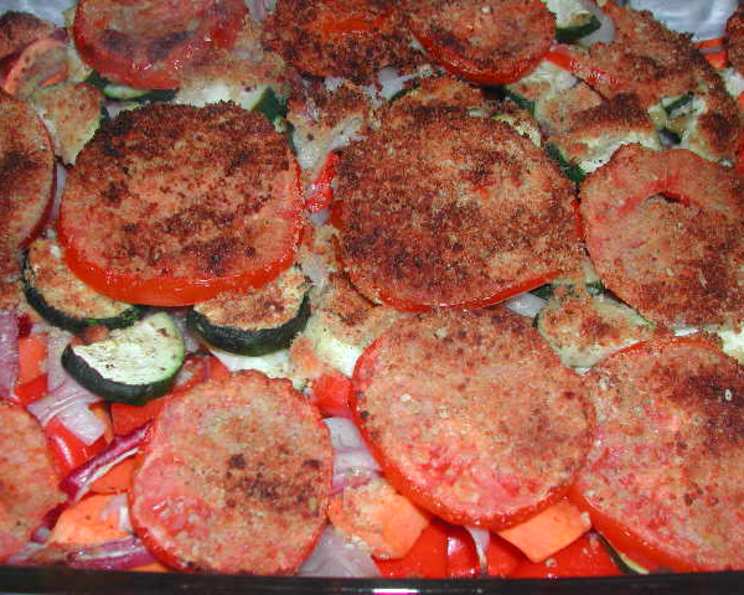
Tomato Vegetable Casserole: A Colorful Harvest Bake
My grandmother, bless her heart, wasn’t the most adventurous cook. But she had a knack for taking simple, seasonal ingredients and transforming them into comforting, memorable meals. I vividly remember the aroma of her late-summer vegetable casseroles wafting through the house, a symphony of earthy root vegetables mingling with the sweet tang of ripe tomatoes. Each bite was like a warm hug, a reminder of family gatherings and simpler times. This tomato vegetable casserole is my homage to her, a dish that captures the essence of her simple, yet deeply satisfying cooking.
Recipe Overview
- Prep Time: 25 minutes
- Cook Time: 40 minutes
- Total Time: 65 minutes
- Servings: 6
- Dietary Type: Vegetarian
Ingredients
- 1 medium potato, peeled and cut into 1/2 inch pieces
- 1 medium yam, peeled and cut into 1/2 inch pieces
- 1 red bell pepper, seeded and cut into 1/2 inch pieces
- 2 carrots, peeled and cut into 1/2 inch pieces
- 5 tablespoons olive oil
- 1 red onion, thinly sliced into rings
- 2 small zucchini, cut into 1/4 inch pieces
- 1 dash salt (or to taste)
- 1 dash pepper (or to taste)
- 2 large tomatoes, cut crosswise into 1/4 inch slices
- 1/2 cup Parmesan cheese, grated
- 2 tablespoons breadcrumbs, dried Italian style
- Fresh basil (to garnish)
Equipment Needed
- 13×9 inch baking dish
- Cutting board
- Sharp knife
- Small bowl
Instructions
-
Begin by preheating your oven to 400 degrees F (200 degrees C). This ensures the vegetables will roast evenly and develop a beautiful caramelization.
-
Prepare the base of the casserole. In a 13×9 inch baking dish, toss the potato, yam, bell pepper, and carrots with 2 tablespoons of olive oil. Ensure the vegetables are well coated so they roast properly.
-
Sprinkle with salt and pepper to taste and toss again until everything is evenly seasoned. Remember, a generous seasoning is key to bringing out the natural flavors of the vegetables. Don’t be shy with the salt and pepper!
-
Spread the vegetables evenly over the bottom of the pan in a single layer. This will allow for even cooking and browning.
-
Now, layer on the aromatics. Arrange the red onion slices evenly over the vegetables, creating a flavorful foundation.
-
Next, arrange the zucchini over the onions in a similar even layer.
-
Drizzle with 2 tablespoons of olive oil, ensuring it’s distributed across all the zucchini. Sprinkle with salt and pepper.
-
For the final vegetable layer, arrange the tomato slices over the zucchini, overlapping slightly if needed. Make sure the tomato slices are evenly distributed for consistent flavor in each bite.
-
Prepare the topping. In a small bowl, stir together the Parmesan cheese and bread crumbs until well combined. This topping will add a delightful golden crust and savory notes to the casserole.
-
Sprinkle the Parmesan and bread crumb mixture evenly over the vegetables in the baking dish, ensuring a good coating on the tomatoes.
-
Drizzle with the remaining 1 tablespoon of olive oil. This will help the topping crisp up beautifully in the oven.
-
Bake uncovered until the vegetables are tender and the topping is golden brown, about 40 minutes. Check for doneness by piercing the potatoes with a fork. They should be easily pierced with no resistance.
-
Once baked, garnish with fresh basil if desired, adding a final burst of freshness and color.
Expert Tips & Tricks
- For enhanced flavor: Roasting the vegetables separately before assembling the casserole can intensify their flavors even further. Simply toss each vegetable (potato, yam, bell pepper, and carrots together, then the onion and zucchini) with olive oil and seasoning, spread them on a baking sheet, and roast at 400°F (200°C) for about 15-20 minutes, or until slightly tender. This step is optional but worth the extra effort.
- Don’t overcrowd the pan: Overcrowding can lead to steaming instead of roasting. If you’re doubling the recipe, use two baking dishes instead of one.
- Ingredient swaps: Feel free to experiment with other vegetables like eggplant, mushrooms, or bell peppers of different colors.
- Make-ahead tip: The casserole can be assembled ahead of time and stored in the refrigerator for up to 24 hours before baking. This is great for meal prepping.
- Cheese Alternatives: Use nutritional yeast for a vegan alternative to Parmesan.
Serving & Storage Suggestions
Serve the Tomato Vegetable Casserole warm as a side dish or a light main course. Its vibrant colors and delicious aroma make it an appealing addition to any meal. Garnish with a sprig of fresh basil for an elegant touch.
To store leftovers, allow the casserole to cool completely before transferring it to an airtight container. Store in the refrigerator for up to 3 days.
To reheat, you can microwave individual portions until heated through. Alternatively, reheat the entire casserole in a preheated oven at 350°F (175°C) for about 15-20 minutes, or until warmed through. You can also freeze the cooked casserole in an airtight container for up to 2 months. Thaw overnight in the refrigerator before reheating.
Nutritional Information
| Nutrient | Amount per Serving | % Daily Value |
|---|---|---|
| Calories | 272.4 kcal | N/A |
| Calories from Fat | 128 g | 47% |
| Total Fat | 14.3 g | 22% |
| Saturated Fat | 3.1 g | 15% |
| Cholesterol | 7.3 mg | 2% |
| Sodium | 215.8 mg | 8% |
| Total Carbohydrate | 31.1 g | 10% |
| Dietary Fiber | 5.2 g | 20% |
| Sugars | 5.7 g | N/A |
| Protein | 6.8 g | 13% |
Note: Nutritional information is an estimate and may vary based on specific ingredients and preparation methods.
Variations & Substitutions
- Vegan Version: Omit the Parmesan cheese or substitute with a plant-based Parmesan alternative. Use breadcrumbs that are confirmed vegan.
- Spicy Kick: Add a pinch of red pepper flakes or a diced jalapeño to the vegetable mixture for a touch of heat.
- Mediterranean Twist: Incorporate Kalamata olives, feta cheese (if not vegan), and oregano for a Mediterranean-inspired flavor profile.
- Seasonal Adaptation: Adapt the vegetables based on what’s in season. In the fall, try adding butternut squash or Brussels sprouts. In the spring, asparagus or spring onions would be delicious.
- Grain-Free: Use almond flour instead of breadcrumbs.
FAQs (Frequently Asked Questions)
Q: Can I use frozen vegetables in this casserole?
A: While fresh vegetables are preferred for their flavor and texture, you can use frozen vegetables in a pinch. Be sure to thaw and drain them well before adding them to the casserole to prevent it from becoming watery.
Q: Can I add meat to this recipe?
A: Absolutely! Cooked sausage, chicken, or ground beef would all be delicious additions. Add the cooked meat to the vegetable mixture before topping with the Parmesan and breadcrumbs.
Q: How do I prevent the vegetables from burning?
A: If you notice the topping is browning too quickly, tent the casserole with aluminum foil for the last 15 minutes of baking.
Q: Can I make this casserole ahead of time?
A: Yes, you can assemble the casserole a day in advance and store it in the refrigerator until ready to bake. You may need to add a few extra minutes to the baking time.
Q: What kind of tomatoes should I use?
A: Ripe, juicy tomatoes are best for this casserole. Roma or beefsteak tomatoes work well. You can also use canned diced tomatoes, but be sure to drain them well.
Final Thoughts
This Tomato Vegetable Casserole is more than just a recipe; it’s an invitation to celebrate the bounty of fresh vegetables and create a dish that’s both comforting and nourishing. I hope this recipe inspires you to gather your favorite seasonal ingredients and create your own version of this classic dish. Don’t be afraid to experiment with different vegetables, cheeses, and herbs to personalize it to your taste. And, most importantly, share it with the people you love! Bon appétit!