
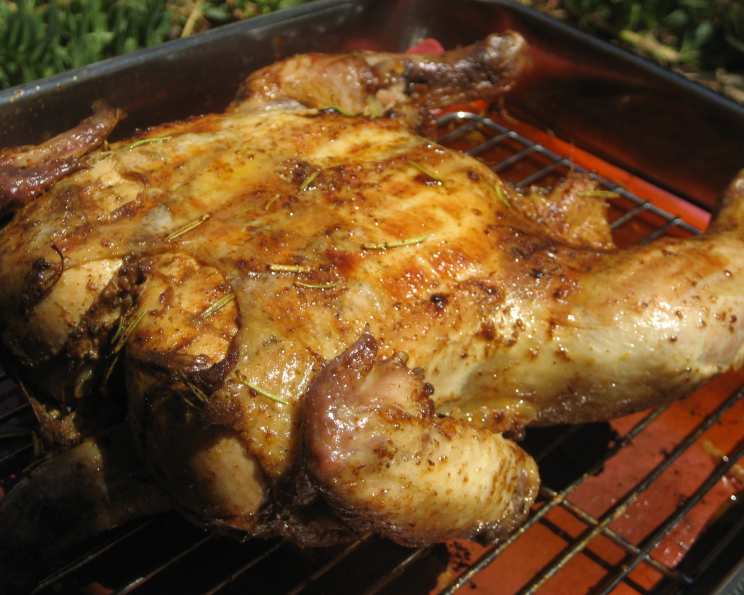
Topsy Turvy Crispy Roast Chicken With Salt Crust Seasoning
There’s something magical about a perfectly roasted chicken. I remember watching my grandmother, her hands dusted with flour, expertly trussing a bird for Sunday dinner. The aroma that filled her kitchen, a heady mix of herbs and roasting chicken, is a scent I’ll forever associate with comfort and family. It was always a celebratory meal, even if the occasion was simply being together. This recipe, with its unique “topsy turvy” method and flavorful salt crust, is my attempt to recreate that magic, ensuring the juiciest meat and the crispiest skin imaginable.
Recipe Overview
- Prep Time: 9 hours 15 minutes (includes salting time)
- Cook Time: 1 hour 45 minutes
- Total Time: 9 hours 45 minutes
- Servings: 4
- Dietary Type: Not specified
Ingredients
- 1 fresh roasting chicken, weighing approximately 1.5kg (3 1/4 lbs)
- 1 lemon, cut in half
- 1 onion, cut in half
- Fresh herb, such as rosemary, sage, parsley, tarragon, or thyme
- Sea salt (rock salt)
- Melted butter or olive oil
Seasoning Mix
- 1/2 teaspoon salt
- 1/2 teaspoon ground black pepper
- 1/4 teaspoon mustard powder
- 1/4 teaspoon sweet paprika
- 1/4 teaspoon garlic granules
Equipment Needed
- Roasting tin
- Small jar (for seasoning mix)
- Kitchen paper
- Roasting forks
- Fine skewer
- Large plate
- Wooden spoon
- Large sharp knife
Instructions
- First, prepare the seasoning mix. Combine 1/2 teaspoon salt, 1/2 teaspoon ground black pepper, 1/4 teaspoon mustard powder, 1/4 teaspoon sweet paprika, and 1/4 teaspoon garlic granules in a small jar. Seal the jar and shake well to ensure all ingredients are thoroughly mixed. Set aside until needed.
- Remove the chicken from its packaging. Snip any elasticated string that ties the chicken together. Thoroughly wipe the chicken all over with kitchen paper to remove any excess moisture; this will help achieve maximum crispiness later.
- Sprinkle a generous amount of sea salt (rock salt) over the entire chicken, ensuring every part is covered. The salt will draw out excess moisture, resulting in firmer flesh and crispier skin.
- Place the heavily salted chicken in the refrigerator and chill overnight, or for at least 8 hours. This is a crucial step; don’t skip it!
- Preheat your oven to 190°C (375°F or gas mark 5).
- Remove the chicken from the refrigerator 30 minutes before cooking. This allows the bird to come closer to room temperature, promoting more even cooking.
- Brush and shake off the excess rock salt. You don’t want the chicken to be overly salty, just seasoned.
- Place the chicken in a roasting tin.
- Season the inside of the chicken’s cavity.
- Push the lemon halves, onion halves, and a generous sprig or two of your chosen fresh herb (rosemary, sage, parsley, tarragon, or thyme) inside the cavity. These aromatics will release steam and flavor during cooking, keeping the chicken moist from the inside out.
- Brush the chicken all over with melted butter or olive oil. The butter will add richness and help with browning, while the oil will promote crispiness.
- Liberally season the chicken all over with the reserved seasoning mix.
- Roast the chicken, breast side up, in the center of the preheated oven for 1 hour.
- After 1 hour, carefully remove the chicken from the oven. Using two roasting forks to steady the bird, carefully turn the chicken over so that the breast is now underneath. This “topsy turvy” method ensures the breast meat stays incredibly moist.
- Continue to cook for a further 30 minutes.
- Take the chicken out of the oven and turn it over once more, so the breast side is now facing up again.
- Continue to roast for a final 15 minutes, or until the chicken is crispy and golden brown. The total cooking time will be 1 hour and 45 minutes.
- To check if the chicken is cooked through, pierce the fattest part of the thigh with a fine skewer. If the juices run pink or show traces of blood, cook the chicken for a further 10-15 minutes, then check again. If the juices run clear or are pale golden, the chicken is cooked.
- Using two forks, carefully lift the chicken from the roasting tin onto a large plate. Reserve the cooking juices in the tin; these will be used to make gravy.
- Let the chicken rest for 10 minutes before carving. This resting period allows the juices, which have risen to the surface during cooking, to be reabsorbed into the meat, resulting in a more moist and tender texture.
Gravy Instructions:
- Drain all but 3 tablespoons of the juices from the roasting tin.
- Place the roasting tin on a hob (stovetop) and reheat the juices over medium heat.
- Sprinkle in 2 teaspoons of plain flour and stir well with a wooden spoon. Cook for 1-2 minutes, stirring constantly, to create a roux.
- Gradually stir in 300ml (approximately 1 1/4 cups) of chicken stock.
- Bring the mixture to a boil, stirring continuously until it thickens and becomes smooth.
- Season the gravy well with salt and pepper to taste. If the gravy tastes bland, add a small amount of mustard and a splash of soy sauce for extra depth of flavor. For a special gravy, replace some of the chicken stock with red or white wine.
Carving Instructions:
- Hold the chicken steady with a fork.
- Insert a large, sharp knife between the body and the leg.
- Cut off the leg.
- Divide the leg in half at the joint to separate the drumstick and thigh.
- Cut away the wing on the same side.
- Carve down the breast in thick slices.
- Repeat on the other side of the chicken.
Expert Tips & Tricks
- For an even more intense flavor, try rubbing the seasoning mix under the chicken’s skin before roasting.
- If your oven tends to brown food unevenly, rotate the roasting tin halfway through each cooking phase (breast up, then breast down, then breast up again).
- To prevent the chicken from drying out, especially during the initial roasting phase, you can tent it loosely with foil. Remove the foil during the last 30 minutes to allow the skin to crisp up.
- Don’t discard the leftover carcass! Use it to make a delicious and nutritious chicken stock.
Serving & Storage Suggestions
Serve the Topsy Turvy Crispy Roast Chicken immediately after carving. It pairs perfectly with traditional accompaniments such as roast potatoes, stuffing, and fresh seasonal vegetables. Don’t forget the gravy!
Leftover roast chicken can be stored in an airtight container in the refrigerator for up to 3-4 days. You can also freeze the cooked chicken for up to 2-3 months. To reheat, bake in a preheated oven at 175°C (350°F) until warmed through, or microwave in short intervals, checking frequently to prevent drying out. The reheating method can affect the crispness of the skin.
Nutritional Information
Note: Nutritional information is an estimate and may vary based on specific ingredients and portion sizes.
| Nutrient | Amount per Serving | % Daily Value |
|---|---|---|
| Calories | 175.8 kcal | N/A |
| Calories from Fat | 105 kcal | 60% |
| Total Fat | 11.8 g | 18% |
| Saturated Fat | 3.4 g | 16% |
| Cholesterol | 53.5 mg | 17% |
| Sodium | 342.2 mg | 14% |
| Total Carbohydrate | 4.4 g | 1% |
| Dietary Fiber | 1 g | 4% |
| Sugars | 1.6 g | N/A |
| Protein | 13.1 g | 26% |
Variations & Substitutions
- For a spicier kick, add a pinch of cayenne pepper or chili flakes to the seasoning mix.
- If you don’t have mustard powder, you can substitute with a teaspoon of Dijon mustard when brushing the chicken with butter or oil.
- Experiment with different herbs to suit your taste. Try a mix of rosemary and thyme, or sage and parsley.
- Instead of lemon and onion, you can stuff the cavity with other aromatics such as garlic cloves, celery, or carrots.
FAQs (Frequently Asked Questions)
Q: Why do I need to salt the chicken overnight?
A: Salting the chicken overnight draws out excess moisture, resulting in a firmer texture and crispier skin when roasted. It’s a crucial step for achieving the best possible results.
Q: Can I use a different type of salt?
A: While sea salt (rock salt) is recommended, you can use kosher salt as a substitute. Avoid using iodized table salt, as it can impart a metallic taste.
Q: What if I don’t have time to salt the chicken overnight?
A: While overnight salting is ideal, you can salt the chicken for a minimum of 4 hours. However, the longer the salting time, the better the results.
Q: How do I prevent the chicken from drying out?
A: The “topsy turvy” method, along with stuffing the cavity with aromatics and basting with butter or oil, helps keep the chicken moist during roasting.
Q: Can I use this method for a larger or smaller chicken?
A: Yes, but you’ll need to adjust the cooking time accordingly. Use a meat thermometer to ensure the chicken reaches an internal temperature of 74°C (165°F) in the thickest part of the thigh.
Final Thoughts
Roasting a chicken might seem intimidating, but with this Topsy Turvy Crispy Roast Chicken recipe, you’ll be well on your way to creating a show-stopping meal. The combination of the salt crust seasoning and the unique roasting method guarantees juicy meat and perfectly crisp skin. Don’t be afraid to experiment with different herbs and spices to create your own signature flavor. And most importantly, enjoy the process! Cooking should be a joyful experience, so put on some music, pour yourself a glass of wine, and get ready to impress your family and friends with this incredible roast chicken.