
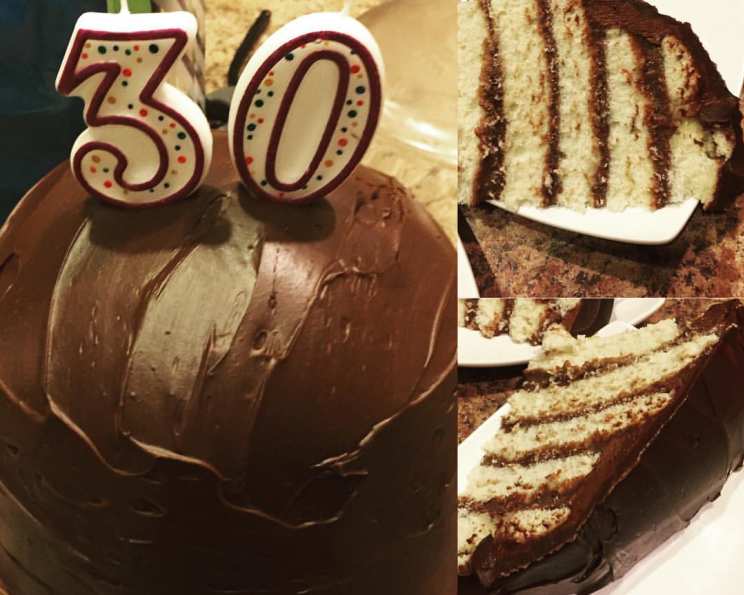
Traditional 8-Layer Doberge Cake
There’s something about the scent of chocolate and butter mingling in the air that instantly transports me back to my grandmother’s kitchen. She wasn’t a professional baker, not in the slightest, but she possessed a magic touch when it came to comfort desserts. Her Doberge cake, a labor of love passed down through generations, was a masterpiece – eight delicate layers of cake, each cradling a rich chocolate custard, all enrobed in a luscious buttercream and finished with a glossy chocolate icing. Every bite was a celebration, a sweet reminder of family and the simple joys of sharing good food. It was always worth the effort, even if “dough-bosh” sounds intimidating at first!
Recipe Overview
- Prep Time: 1 hour 50 minutes
- Cook Time: 1 hour
- Total Time: 2 hours 50 minutes (excluding cooling/chilling time)
- Servings: 8-10
- Yield: 1 cake
- Dietary Type: Not Gluten-Free
Ingredients
For the Doberge Torte:
- 3/4 cup (1 1/2 sticks) butter, softened
- 2 cups granulated sugar
- 1/4 teaspoon salt
- 4 eggs, separated, whites stiffly beaten
- 1 cup milk
- 3 teaspoons baking powder
- 3 1/2 cups cake flour, measured after sifting
- Scant teaspoon lemon juice
- 1 teaspoon vanilla extract
For the Chocolate Custard:
- 2 cups granulated sugar
- 1/2 teaspoon salt
- 4 tablespoons all-purpose flour
- 4 tablespoons cornstarch
- 2 kitchen spoons (heaping) unsweetened cocoa powder
- 4 tablespoons bitter chocolate, finely chopped
- 4 eggs, whole
- 1 tablespoon butter
- 1 tablespoon vanilla extract
- 4 cups milk
For the Chocolate Butter Cream Icing:
- 2 cups confectioners’ sugar, sifted
- 1/2 lb (2 sticks) margarine, softened
- 1 teaspoon vanilla extract
- 1 cup unsweetened cocoa powder
- 1 ounce bitter chocolate, melted
For the Chocolate Icing:
- 1 cup light brown sugar, packed
- 1 cup granulated sugar
- 4 squares semi-sweet chocolate baking squares, melted
- 1/4 cup (1/2 stick) butter
- 3/4 cup heavy cream
- 1 teaspoon vanilla extract
Equipment Needed
- 9-inch cake pans (8)
- Mixer (stand or hand mixer)
- Saucepan
- Whisk
- Spatula
- Cooling rack
Instructions
-
Prepare the Doberge Torte: In a large bowl, cream the butter, sugar, and salt together until smooth and light. This is best done with a mixer, but a sturdy arm and a wooden spoon will work too!
-
Add the Egg Yolks: Add the egg yolks, one at a time, to the creamed mixture, blending thoroughly after each addition until the batter is completely smooth.
-
Combine Dry and Wet Ingredients: In a separate bowl, sift together the cake flour and baking powder. Gradually add the sifted dry ingredients to the butter mixture, alternating with the milk. Begin and end with the dry ingredients. Beat until just blended – avoid overmixing, which can result in a tough cake.
-
Add Flavor Enhancers: Stir in the vanilla extract and lemon juice. The lemon juice adds a subtle tang that balances the sweetness.
-
Fold in Egg Whites: In a separate, clean bowl, beat the egg whites until stiff peaks form. Gently fold the stiffly beaten egg whites into the batter using a spatula. Be careful not to deflate the egg whites; fold until just combined. This incorporates air into the batter, giving the cake its light and airy texture.
-
Bake the Cake Layers: Grease and lightly flour eight 9-inch cake pans. This ensures the cakes release easily after baking. Pour approximately ¾ cup of batter into each pan, spreading it evenly over the bottom.
-
Bake the Layers: Bake in a preheated 375-degree Fahrenheit oven for 12 to 15 minutes, or until a toothpick inserted into the center comes out clean. The layers are thin, so watch them carefully to prevent burning.
-
Cool the Cake Layers: Remove the cake layers from the oven and let them cool in the pans for a few minutes before inverting them onto a wire rack to cool completely.
-
Prepare the Chocolate Custard: In a medium saucepan, stir together the granulated sugar, salt, flour, cornstarch, and cocoa powder. This step ensures the dry ingredients are evenly distributed, preventing lumps in the custard.
-
Add Wet Ingredients to Custard: Add the bitter chocolate, eggs, butter, vanilla extract, and milk to the saucepan with the dry ingredients.
-
Cook the Custard: Cook over medium heat, stirring constantly, until the mixture thickens and coats the back of a spoon. This usually takes about 10-15 minutes. Continue stirring even as it thickens to prevent scorching. Remove from heat and let cool completely. A skin may form on the surface as it cools; you can prevent this by pressing plastic wrap directly onto the surface of the custard.
-
Prepare the Chocolate Butter Cream Icing: In a large bowl, cream together the confectioners’ sugar and margarine until light and fluffy.
-
Add Chocolate to Butter Cream: Add the cocoa powder and melted bitter chocolate to the creamed mixture and beat until well combined.
-
Adjust Consistency: If the buttercream is too thick, add a little hot water, very slowly, until the desired consistency is reached. Be careful not to add too much water, as this can make the buttercream too thin.
-
Prepare the Chocolate Icing: In a medium saucepan, combine the light brown sugar, granulated sugar, melted semi-sweet chocolate baking squares, butter, and heavy cream.
-
Cook the Icing: Bring the mixture slowly to a boil over medium heat, then boil for about 10 minutes, or until it thickens. Stir constantly to prevent scorching.
-
Beat the Icing: Remove the icing from the heat and beat until it is thick enough to spread. It will thicken further as it cools.
-
Assemble the Cake: Once the cake layers and custard have cooled completely, it’s time to assemble the Doberge cake. Place one cake layer on a serving plate or cake stand. Spread a generous layer of the chocolate custard over the cake layer. Repeat with the remaining cake layers and custard, ending with a cake layer on top.
-
Frost the Cake: Spread the chocolate butter cream icing evenly over the top and sides of the cake.
-
Chill the Cake: Chill the cake in the refrigerator for at least 30 minutes to allow the buttercream to set.
-
Ice the Cake: Finally, ice the chilled cake with the chocolate icing, spreading it evenly over the top.
-
Chill Again: Chill the finished Doberge cake for at least an hour before serving to allow the icings to set completely.
Expert Tips & Tricks
- Room Temperature Ingredients: Ensure all ingredients, especially butter, eggs, and milk, are at room temperature before starting. This allows them to emulsify properly, creating a smoother batter and custard.
- Cake Flour is Key: Cake flour has a lower protein content than all-purpose flour, resulting in a more tender cake. Do not substitute all-purpose flour for cake flour in this recipe.
- Evenly Distribute Batter: To ensure the cake layers are uniform in thickness, use a kitchen scale to weigh the batter for each layer. This will help them bake evenly.
- Don’t Overbake: Since the cake layers are thin, they can easily overbake and become dry. Check them frequently during baking and remove them from the oven as soon as a toothpick inserted into the center comes out clean.
- Patience is a Virtue: Allow ample time for cooling and chilling the cake layers, custard, and icings. This is crucial for achieving the best texture and flavor. Rushing the process can result in a messy and less flavorful cake.
- Margarine Note: The original recipe calls for margarine in the buttercream icing. While butter can be substituted, the margarine provides a specific texture that closely mimics the original recipe.
Serving & Storage Suggestions
Serve the Doberge cake chilled. A slice of this cake pairs wonderfully with a cup of strong coffee or a glass of cold milk. Store leftover cake in an airtight container in the refrigerator for up to 3 days. The cake can also be frozen for longer storage. Wrap individual slices tightly in plastic wrap and then in foil before freezing. Thaw in the refrigerator overnight before serving.
Nutritional Information
(Estimated values – will vary based on specific ingredients used)
| Nutrient | Amount per Serving | % Daily Value |
|---|---|---|
| Calories | 650 kcal | 33% |
| Total Fat | 35g | 54% |
| Saturated Fat | 20g | 100% |
| Cholesterol | 150mg | 50% |
| Sodium | 300mg | 13% |
| Carbohydrates | 80g | 27% |
| Fiber | 2g | 8% |
| Sugar | 50g | N/A |
| Protein | 8g | 16% |
Variations & Substitutions
- Lemon Doberge: Substitute lemon extract for the vanilla in the cake and custard, and use a lemon buttercream frosting.
- Caramel Doberge: Use a caramel custard filling and a caramel buttercream frosting. Drizzle with caramel sauce.
- Gluten-Free: Substitute a gluten-free cake flour blend for the cake flour, ensuring it’s a 1:1 replacement.
- Chocolate Ganache Icing: Instead of the cooked chocolate icing, use a simple chocolate ganache made with equal parts chocolate and heavy cream.
FAQs (Frequently Asked Questions)
Q: Why are the cake layers so thin?
A: The thin layers are a defining characteristic of Doberge cake, ensuring a high custard-to-cake ratio and creating a delicate texture.
Q: Can I use a different type of chocolate for the custard and icing?
A: Yes, you can adjust the type of chocolate based on your preference. However, using a combination of bitter and semi-sweet chocolate provides the best balance of flavor.
Q: How do I prevent the custard from becoming lumpy?
A: Whisk the dry ingredients together thoroughly before adding the wet ingredients, and stir constantly while cooking the custard over medium heat.
Q: Can I make the cake layers ahead of time?
A: Yes, the cake layers can be baked a day in advance and stored at room temperature, wrapped tightly in plastic wrap.
Q: Is margarine really necessary for the buttercream?
A: While butter can be used, margarine will better replicate the texture of the original recipe. Consider using a high-quality margarine for the best results.
Final Thoughts
The Traditional 8-Layer Doberge Cake is more than just a dessert; it’s a testament to the art of baking and the joy of sharing something special with loved ones. Don’t be intimidated by the number of steps – each one is manageable, and the result is well worth the effort. Gather your ingredients, put on some music, and immerse yourself in the process. I encourage you to try this recipe and experience the magic of Doberge cake for yourself. Share your creations and any adaptations you make – I’d love to hear about your baking adventures! Consider pairing this cake with a sweet dessert wine or a dark roast coffee to enhance the chocolate flavors. Happy baking!