
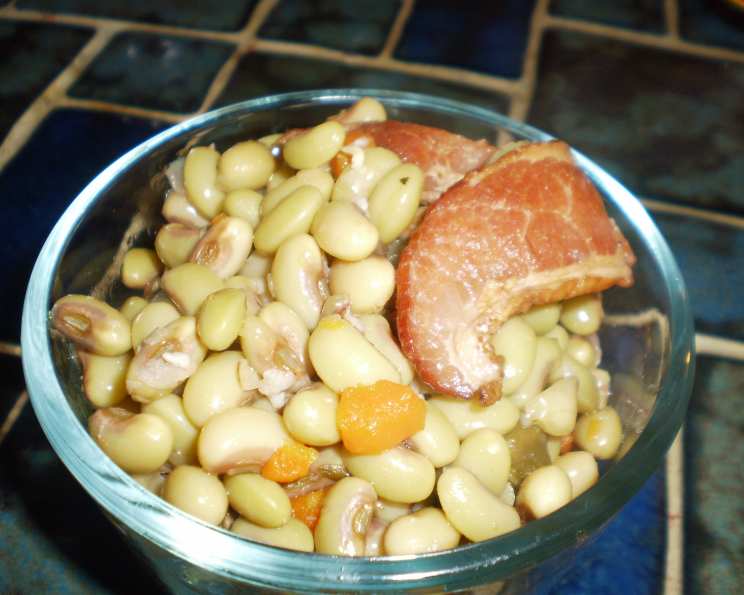
Soulful Southern Comfort: Traditional Black-Eyed Peas
The aroma still takes me back. My grandmother’s kitchen, always warm and fragrant, especially on New Year’s Day. The rich, savory scent of simmering black-eyed peas, mingling with the sweet perfume of cornbread baking in the oven. This wasn’t just a meal; it was a ritual, a promise of prosperity and good fortune for the year ahead, each spoonful a taste of hope and tradition passed down through generations.
Recipe Overview
- Prep Time: 15 minutes
- Cook Time: 1 hour 35 minutes
- Total Time: 1 hour 50 minutes
- Servings: 4
- Dietary Type: Gluten-Free
Ingredients
- 16 ounces black-eyed peas
- 1/2 lb lean salt pork or 1/2 lb thick lean bacon, diced
- 1 cup chopped onion
- 1 carrot, peeled and diced
- 4 garlic cloves, smashed and minced
- 1/2 teaspoon dried red pepper flakes
- 1/2 teaspoon fresh ground black pepper
- 1 teaspoon dried leaf thyme
- 1/4 teaspoon dried oregano leaves
- 2 teaspoons salt (to taste)
- 1 dash Tabasco sauce (optional)
Equipment Needed
- Medium saucepan
- Large stock pot
Instructions
- Begin by rinsing the black-eyed peas thoroughly. Carefully pick them over, removing any discolored peas, small stones, or debris. This ensures a clean and enjoyable eating experience.
- Transfer the rinsed and sorted peas to a medium saucepan.
- Cover the peas completely with water and bring the mixture to a vigorous boil over high heat.
- Once boiling, reduce the heat to maintain a gentle simmer and continue cooking for precisely 5 minutes. After simmering, set the saucepan aside. This brief parboiling helps to soften the peas and reduce the overall cooking time later.
- In a large stock pot, place the diced salt pork or bacon. Cook over medium heat for approximately 5 minutes, or until the fat is rendered and the meat begins to brown. This rendered fat will provide a flavorful base for the dish.
- Add the chopped onion, diced carrot, and minced garlic to the stock pot. Cook, stirring frequently, until the vegetables are tender and fragrant, about 6 to 8 minutes. This step is crucial for building depth of flavor in the dish.
- Add the parboiled black-eyed peas to the stock pot along with enough fresh water to cover the peas by about 2 inches. Ensure the peas have ample liquid to cook properly without scorching.
- Stir in the dried red pepper flakes, black pepper, dried leaf thyme, and dried oregano leaves. These spices infuse the dish with warmth and complexity.
- Bring the mixture to a boil once again, then reduce the heat to medium and simmer, covered, for about 1 hour. Simmering allows the flavors to meld and the peas to soften gradually.
- Uncover the pot and continue cooking for an additional 30 to 45 minutes, or until the peas are tender to your liking. During this time, monitor the liquid level and add more water as needed to keep the peas moist and prevent them from sticking to the bottom of the pot.
- Once the peas are tender, stir in the salt to taste and the Tabasco sauce if desired. Taste and adjust seasonings as needed to achieve the perfect balance of flavors.
- Serve hot with freshly baked cornbread and a crisp tossed salad for a complete and satisfying meal.
Expert Tips & Tricks
- For a richer flavor, consider using smoked ham hocks instead of salt pork or bacon. Simmer the ham hocks with the peas, then shred the meat and return it to the pot before serving.
- If you’re short on time, you can use canned black-eyed peas. Drain and rinse them thoroughly before adding them to the pot during the last 30 minutes of cooking time.
- To avoid mushy peas, don’t overcook them. They should be tender but still hold their shape.
- Add a bay leaf during simmering for an extra layer of aroma, remembering to remove it before serving.
Serving & Storage Suggestions
Serve your black-eyed peas hot, garnished with a sprig of fresh thyme or a sprinkle of chopped parsley. They are traditionally paired with cornbread or corn muffins, and a side of seasoned greens.
Leftovers can be stored in an airtight container in the refrigerator for up to 3-4 days. For longer storage, freeze the peas in freezer-safe containers for up to 2-3 months.
To reheat, simply simmer the peas on the stovetop over medium heat, adding a little water or broth if needed. You can also microwave them in a microwave-safe dish until heated through.
Nutritional Information
| Nutrient | Amount per Serving | % Daily Value |
|---|---|---|
| Calories | 512.4 kcal | N/A |
| Calories from Fat | N/A | 71% |
| Total Fat | 40.7 g | 62% |
| Saturated Fat | 14.7 g | 73% |
| Cholesterol | 51.1 mg | 17% |
| Sodium | 1531 mg | 63% |
| Total Carbohydrate | 28 g | 9% |
| Dietary Fiber | 8.5 g | 34% |
| Sugars | 2.5 g | N/A |
| Protein | 11.2 g | 22% |
Variations & Substitutions
- Vegetarian/Vegan: Omit the salt pork or bacon and use vegetable broth instead of water. Add a tablespoon of smoked paprika for a smoky flavor.
- Spicy: Increase the amount of red pepper flakes or add a chopped jalapeño pepper for extra heat.
- Smoked: Use smoked sausage or turkey sausage for a smoky flavor variation.
- Regional Variations: In some regions, black-eyed peas are cooked with collard greens or other leafy greens.
FAQs (Frequently Asked Questions)
Q: Do I need to soak the black-eyed peas before cooking?
A: While soaking can shorten the cooking time, it’s not strictly necessary. Rinsing and picking over the peas is sufficient for this recipe.
Q: Can I use a slow cooker or pressure cooker for this recipe?
A: Yes, you can adapt this recipe for a slow cooker or pressure cooker. In a slow cooker, cook on low for 6-8 hours. In a pressure cooker, cook for 20-25 minutes on high pressure, followed by a natural pressure release.
Q: How can I prevent the black-eyed peas from being bland?
A: Ensure you use enough salt and seasonings, and consider adding smoked meat or broth for a richer flavor. Adjust seasonings to your taste preference.
Q: What’s the significance of eating black-eyed peas on New Year’s Day?
A: In Southern tradition, eating black-eyed peas on New Year’s Day is believed to bring good luck and prosperity in the coming year.
Q: Can I use dried beans instead of black-eyed peas in this recipe?
A: While you could, the cooking time would need to be adjusted. Dried beans typically require a longer soaking and cooking time than black-eyed peas. Black-eyed peas have a distinct taste and texture.
Final Thoughts
This recipe for traditional black-eyed peas is more than just a dish; it’s a taste of heritage, a connection to family, and a symbol of hope. Whether you’re celebrating a special occasion or simply craving a comforting meal, I encourage you to try this recipe and experience the soulful flavors of the South. Feel free to adjust the seasonings to your liking and make it your own. Don’t hesitate to share your feedback and creations – happy cooking! And may your year be filled with prosperity, happiness, and plenty of delicious food.