
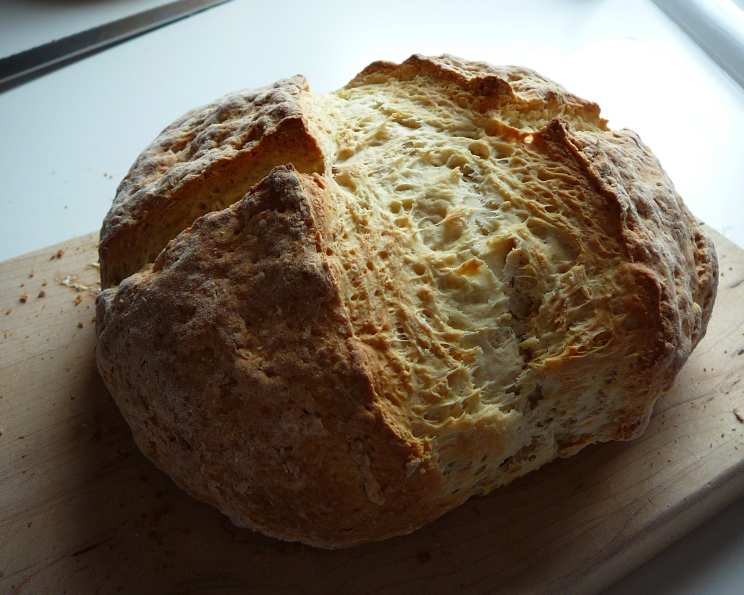
A Taste of Home: Traditional Irish Currant Soda Bread
The aroma of freshly baked bread has always been synonymous with warmth and comfort in my family. I distinctly remember my grandmother, a woman of few words but incredible skill in the kitchen, meticulously crafting soda bread every year for St. Patrick’s Day. The air would be thick with the sweet scent of currants and the comforting warmth of the oven, a promise of the delicious, slightly tangy, and deeply satisfying treat to come. That simple bread, shared with loved ones, remains a powerful symbol of home and heritage for me.
Recipe Overview
- Prep Time: 15 minutes
- Cook Time: 55 minutes
- Total Time: 1 hour 10 minutes
- Servings: 8
- Yield: 1 loaf
- Dietary Type: Vegetarian
Ingredients
- 3 cups sifted flour
- 3 tablespoons sugar
- 1/2 teaspoon baking soda
- 1/2 teaspoon baking powder
- 1/2 teaspoon salt
- 1 cup dry currants
- 1 1/3 cups buttermilk
- 2 tablespoons sugar (for glaze)
- 2 tablespoons hot water (for glaze)
Equipment Needed
- Large mixing bowl
- Measuring cups and spoons
- Baking sheet
- Knife
- Small bowl (for glaze)
Instructions
-
Begin by preheating your oven to 375°F (190°C). Ensuring the oven is properly heated is crucial for even baking and a beautifully browned crust.
-
In a large mixing bowl, sift together the flour, sugar, baking soda, baking powder, and salt. Sifting is important to ensure that the dry ingredients are evenly distributed and to prevent lumps in the final dough. This results in a lighter and more tender crumb.
-
Add the dry currants to the bowl with the dry ingredients. Stir them in thoroughly to ensure they are evenly dispersed throughout the flour mixture. This prevents clumps of currants in one part of the bread and ensures a consistent flavor in every slice.
-
Pour in the buttermilk and combine the ingredients until they are well blended. The dough will be sticky at this stage, which is perfectly normal. Avoid overmixing, as this can develop the gluten in the flour and result in a tough bread.
-
Lightly flour a clean work surface or board. Turn out the sticky dough onto the floured surface. With lightly floured hands, knead the dough approximately 10 times, just until it comes together and becomes smoother. Over-kneading will lead to a tough loaf. The goal is simply to bring the ingredients together into a cohesive mass.
-
Shape the dough into an 8-inch round loaf. The shape doesn’t need to be perfect, a rustic look is part of the charm of soda bread!
-
Place the shaped loaf on an ungreased baking sheet. Using a sharp knife, cut an “X” into the top of the loaf, cutting about halfway through. This allows the bread to expand during baking and helps to ensure that it cooks evenly.
-
Bake the loaf in the preheated oven for 45 minutes. After 45 minutes, remove the loaf from the oven.
-
While the bread is baking, prepare the sugar glaze. In a small bowl, combine the 2 tablespoons of sugar with the 2 tablespoons of hot water and stir until the sugar is completely dissolved.
-
After the initial 45 minutes of baking, remove the bread from the oven and pour the sugar and water glaze over the top. Be sure to distribute it evenly.
-
Return the glazed bread to the oven and bake for an additional 10 minutes, or until the top is golden brown and the bread sounds hollow when tapped. The glaze will create a beautiful sheen and add a touch of sweetness to the crust.
-
Remove the soda bread from the oven and let it cool slightly on the baking sheet before transferring it to a wire rack to cool completely. This prevents the bottom from becoming soggy.
Expert Tips & Tricks
- Sift that flour! Sifting the flour is more than just an old-fashioned habit; it aerates the flour, leading to a lighter, more tender crumb. If you don’t have a sifter, whisking the flour vigorously for a minute or two will achieve a similar effect.
- Don’t overmix: Overmixing develops the gluten, making for a tough loaf. Mix just until the dough comes together.
- Buttermilk substitute: If you don’t have buttermilk, you can easily make a substitute. Add 1 tablespoon of lemon juice or white vinegar to a liquid measuring cup, then add enough milk to reach 1 1/3 cups. Let it stand for 5 minutes before using.
- Scoring the loaf: The “X” you cut into the top isn’t just for show; it allows the bread to expand and bake evenly. Make sure your knife is sharp for a clean cut.
- Currant Soak: For extra plump and juicy currants, try soaking them in warm water or even a splash of Irish whiskey for about 30 minutes before adding them to the dough. Drain them well before using.
- Glaze Alternative: If you prefer a simpler glaze, you can brush the loaf with melted butter before the final 10 minutes of baking.
Serving & Storage Suggestions
Serve your Traditional Irish Currant Soda Bread warm with a generous slab of salted butter. It’s the perfect accompaniment to a hearty stew, corned beef and cabbage, or simply enjoyed on its own with a cup of tea.
To store leftover soda bread, wrap it tightly in plastic wrap or place it in an airtight container. It will stay fresh at room temperature for 2-3 days. For longer storage, you can freeze it for up to 2 months. Thaw it completely before serving and consider toasting it lightly to refresh the texture. Reheating slices in a toaster oven also works wonders!
Nutritional Information
| Nutrient | Amount per Serving | % Daily Value |
|---|---|---|
| Calories | 268.5 kcal | N/A |
| Calories from Fat | 7 g | 3% |
| Total Fat | 0.9 g | 1% |
| Saturated Fat | 0.3 g | 1% |
| Cholesterol | 1.6 mg | 0% |
| Sodium | 292.1 mg | 12% |
| Total Carbohydrate | 59 g | 19% |
| Dietary Fiber | 2.5 g | 9% |
| Sugars | 22.1 g | 88% |
| Protein | 6.9 g | 13% |
Note: Nutritional information is an estimate and may vary based on specific ingredients and preparation methods.
Variations & Substitutions
- Spice it up: Add 1/2 teaspoon of mixed spice or ground cinnamon to the dry ingredients for a warm, aromatic twist.
- Orange zest: Grate the zest of one orange into the dry ingredients for a bright, citrusy flavor.
- Seeds and nuts: Add 1/4 cup of chopped walnuts, pecans, or pumpkin seeds for added texture and flavor.
- Herbs: For a savory variation, try adding 1 tablespoon of chopped fresh rosemary or thyme to the dough.
- Gluten-free: Substitute the all-purpose flour with a gluten-free flour blend. You may need to adjust the amount of buttermilk to achieve the right consistency.
FAQs (Frequently Asked Questions)
Q: Why is my soda bread so dense?
A: Overmixing is the most common cause of dense soda bread. Be sure to mix the ingredients just until they come together, and avoid kneading the dough too much.
Q: Can I use regular milk instead of buttermilk?
A: While buttermilk is traditionally used for its tangy flavor and leavening properties, you can substitute it with regular milk mixed with 1 tablespoon of lemon juice or white vinegar. Let it sit for 5 minutes before using.
Q: How do I know when the soda bread is done?
A: The soda bread is done when it’s golden brown on top and sounds hollow when you tap the bottom. A toothpick inserted into the center should come out clean.
Q: Can I make soda bread ahead of time?
A: Soda bread is best enjoyed fresh, but you can bake it a day ahead and store it in an airtight container at room temperature. Reheat it slightly before serving for the best flavor and texture.
Q: Why is the “X” cut on top of the bread necessary?
A: The “X” cut allows the bread to expand during baking, preventing it from cracking unevenly. It also helps to ensure that the bread cooks evenly throughout.
Final Thoughts
This Traditional Irish Currant Soda Bread is more than just a recipe; it’s a connection to history, a taste of home, and a celebration of simple pleasures. I encourage you to try your hand at baking this delightful bread and share it with your loved ones. The warm, comforting aroma and the satisfying taste will undoubtedly create lasting memories. Don’t be afraid to experiment with variations and substitutions to make it your own. And if you do, please share your creations – I’d love to see what you come up with! Sláinte!