
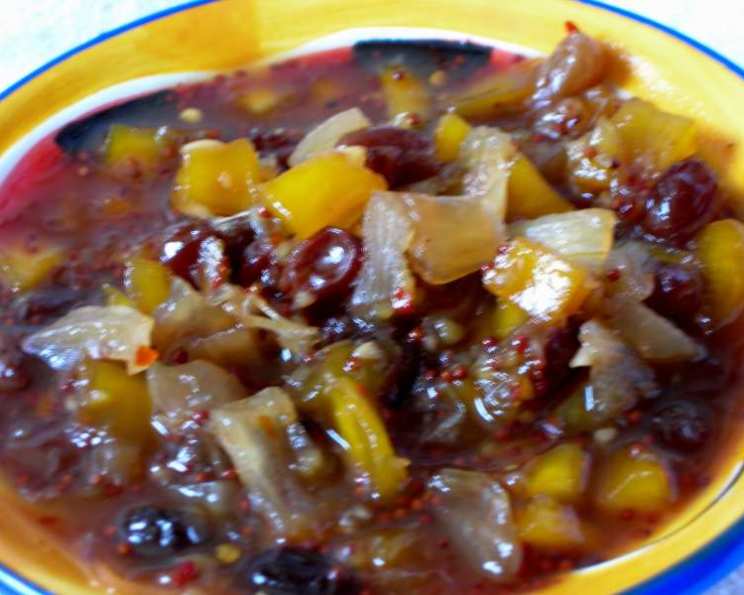
Traditional Mango Chutney: A Taste of Sunshine in Every Bite
The aroma still transports me back to my grandmother’s sun-drenched kitchen. I can almost feel the warmth on my face as I watched her stir a bubbling pot, the sweet and tangy scent of mangoes, spices, and vinegar swirling around us. It wasn’t just cooking; it was a ritual, a passing down of tradition, a taste of summer captured in a jar. This mango chutney is more than a condiment; it’s a spoonful of memories.
Recipe Overview
- Prep Time: 30 minutes
- Cook Time: 35 minutes (20 minutes initial simmer, 15 minutes second simmer)
- Total Time: 12 hours 35 minutes (includes 12 hours standing time)
- Yields: 4 half-pint jars
- Dietary Type: Vegan, Gluten-Free
Ingredients
- 4 cups mangoes (Ripe, peeled, seeded and sliced)
- ½ cup lime, seeded and chopped
- 1 cup yellow onion, chopped
- ½ cup fresh ginger, grated
- 3 garlic cloves, minced
- ¾ cup white raisins
- 2 cups light brown sugar
- 1 cup apple cider vinegar
- ¼ cup fresh orange juice
- ¼ cup fresh lemon juice
- 1 tablespoon whole mustard seeds
- 1 teaspoon dried red pepper flakes
- 1 teaspoon ground cinnamon
- ¼ teaspoon ground clove
Equipment Needed
- Large, heavy-bottomed saucepan
- Sterilized jars (for canning)
- Ladle
- Jar lifter (optional, but recommended for safety)
Instructions
- Begin by preparing your mangoes. They should be ripe, but still firm enough to hold their shape during cooking. Peel, seed, and slice the mangoes into roughly ½-inch pieces.
- In a large, heavy-bottomed saucepan, combine the sliced mangoes with the chopped lime, chopped yellow onion, grated fresh ginger, minced garlic cloves, and white raisins.
- Add the light brown sugar, apple cider vinegar, fresh orange juice, and fresh lemon juice to the saucepan.
- Now for the spices: add the whole mustard seeds, dried red pepper flakes, ground cinnamon, and ground clove.
- Place the saucepan over medium heat. Bring the mixture to a boil, stirring constantly to prevent sticking and ensure the sugar dissolves completely.
- Once boiling, reduce the heat to low and simmer for approximately 20 minutes, stirring frequently. This allows the flavors to meld and the chutney to begin to thicken.
- Remove the saucepan from the heat, cover it tightly, and let it stand at room temperature for about 12 hours. This resting period is crucial as it allows the flavors to fully develop and deepen.
- After the 12-hour resting period, bring the chutney back to a boil over medium heat.
- Reduce the heat to low again and simmer for another 15 minutes, stirring frequently. The chutney should thicken further during this second simmer.
- Remove from heat and immediately ladle the hot chutney into hot, sterilized jars, leaving about ¼-inch headspace at the top.
- Wipe the rims of the jars clean. Place sterilized lids on the jars and screw on the bands finger-tight.
- Process the jars in a boiling water bath for the time recommended for your altitude to ensure a proper vacuum seal. If you’re unfamiliar with canning, consult a reliable canning resource for detailed instructions.
- After processing, carefully remove the jars from the water bath using a jar lifter. Place them on a towel-lined surface and let them cool completely. You should hear a “pop” as the lids seal.
- Check the seals by pressing down on the center of each lid. If the lid doesn’t flex, it’s properly sealed. If the lid flexes, the jar hasn’t sealed and should be refrigerated immediately and used within a few weeks.
Expert Tips & Tricks
- Mango Selection: The type of mango you use will affect the final flavor. Firm, ripe mangoes like Tommy Atkins or Kent work well. Avoid overripe mangoes, as they can make the chutney too mushy.
- Spice Level: Adjust the amount of red pepper flakes to your desired level of heat. For a milder chutney, reduce or omit them entirely.
- Don’t Skip the Resting Period: The 12-hour resting period is essential for flavor development. Don’t be tempted to skip this step!
- Sterilizing Jars: Proper sterilization is crucial for safe canning. You can sterilize jars by boiling them in water for 10 minutes or by running them through a dishwasher cycle with a sanitizing option.
- Thickening Issues: If your chutney isn’t thick enough after the second simmering period, you can continue to simmer it for a few more minutes, stirring constantly, until it reaches your desired consistency. Be careful not to burn it.
Serving & Storage Suggestions
Mango chutney is incredibly versatile. Serve it as a condiment with grilled meats, poultry, or fish. It’s also delicious with cheese and crackers, as a spread in sandwiches, or as a topping for yogurt or ice cream.
- Storage: Properly sealed jars of mango chutney can be stored in a cool, dark place for up to a year. Once opened, refrigerate the chutney and use it within a few weeks.
- Unsealed Jars: Jars that do not seal properly should be refrigerated immediately and consumed within a few weeks.
- Presentation: Serve the chutney in a small dish alongside your main course. Garnish with a sprig of fresh cilantro or a sprinkle of red pepper flakes for added visual appeal.
Nutritional Information
Estimated nutritional information per serving (approximately 1/2 cup):
| Nutrient | Amount per Serving | % Daily Value |
|---|---|---|
| Calories | 671.5 kcal | – |
| Total Fat | 1.6 g | 2% |
| Saturated Fat | 0.2 g | 1% |
| Cholesterol | 0 mg | 0% |
| Sodium | 56.3 mg | 2% |
| Total Carbohydrate | 168.6 g | 56% |
| Dietary Fiber | 5.7 g | 22% |
| Sugars | 150.4 g | – |
| Protein | 3.3 g | 6% |
Note: Nutritional information is an estimate and may vary based on specific ingredients and preparation methods.
Variations & Substitutions
- Spice it Up: For a spicier chutney, add a finely chopped chili pepper along with the red pepper flakes.
- Vinegar Variations: Experiment with different types of vinegar, such as white wine vinegar or rice vinegar, for a subtle flavor change.
- Fruit Combinations: Add other fruits like apples, peaches, or cranberries for a unique twist. Adjust the cooking time accordingly.
- Nutty Addition: Toast some slivered almonds or chopped walnuts and add them to the chutney during the last few minutes of cooking for added texture and flavor.
FAQs (Frequently Asked Questions)
Q: Can I use frozen mangoes?
A: Yes, you can use frozen mangoes, but make sure to thaw them completely and drain any excess liquid before using. This will help prevent the chutney from being too watery.
Q: How do I know if the chutney is thick enough?
A: The chutney should be thick enough to coat the back of a spoon. If it’s too thin, continue simmering it for a few more minutes, stirring constantly, until it reaches your desired consistency.
Q: Can I make this chutney without canning it?
A: Yes, you can make this chutney and store it in the refrigerator for up to a week. However, canning allows you to preserve it for a longer period.
Q: What is the best way to sterilize jars?
A: The best way to sterilize jars is to boil them in water for 10 minutes or run them through a dishwasher cycle with a sanitizing option.
Q: What can I do if my chutney is too sweet?
A: If your chutney is too sweet, you can add a little more vinegar or lemon juice to balance the flavors.
Final Thoughts
Now, go ahead and recreate this sunshine in a jar! The warmth of the spices, the tang of the vinegar, and the sweetness of the mangoes will transport you to a happy place. Don’t be afraid to experiment with variations and make it your own. Share your creations with friends and family, and let them experience the magic of homemade mango chutney. Enjoy!