
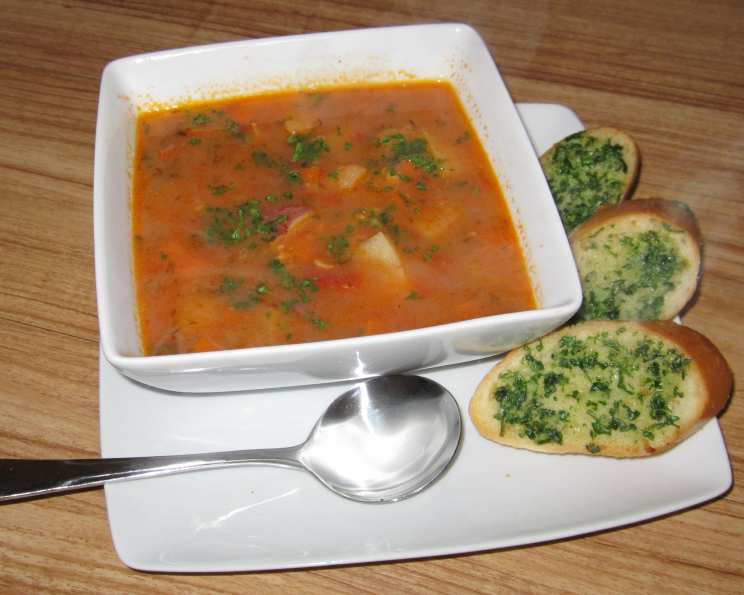
Traditional Manhattan Clam Chowder (A.k.a. Coney Island or Fulton Market Chowder)
The aroma alone transports me back to the salty air of the Jersey shore, even though my own family history is firmly rooted in landlocked Pennsylvania. My grandfather, a man of few words but steadfast traditions, would make a huge pot of Manhattan clam chowder every summer, the rich tomato base simmering for hours on the stove, filling the house with the promise of a comforting, deeply flavorful meal. It was always served with a side of crusty bread, perfect for sopping up every last drop. It wasn’t just food, it was a ritual – a taste of the ocean far from the sea.
Recipe Overview
- Prep Time: 20 minutes
- Cook Time: 60 minutes
- Total Time: 1 hour 20 minutes
- Servings: 6-8
- Yield: About 8 cups
- Dietary Type: Pescatarian
Ingredients
- 3 (6 1/2 ounce) cans of chopped clams
- 1 (8 ounce) bottle clam juice
- 1 quart fresh stewed tomatoes or 35 ounces canned stewed tomatoes
- 1 onion, diced
- 2 stalks celery, diced
- 2 carrots, peeled and diced
- 2 thick slices Canadian bacon, diced, or 1 slice Virginia baked ham, diced
- 4 red potatoes, large dice with skin
- 4 Yukon gold potatoes, peeled and large diced
- 1 garlic clove, minced
- 1⁄2 teaspoon red pepper flakes
- 1 teaspoon dried thyme
- 2 bay leaves
- 1⁄3 cup of chopped fresh curly-leaf parsley
- 1⁄2 teaspoon fresh ground black pepper
- 1 tablespoon olive oil and 1 tablespoon unsalted butter
- Sea salt (to taste)
Equipment Needed
- Large pot or Dutch oven (a “Cauldron”, as the original Chef might say)
- Cutting board
- Knife
- Potato masher
Instructions
-
Start the “Cauldron” (your large pot) over medium-high heat and add the olive oil and butter. We’re creating a flavorful base here, so don’t skimp on the quality of your fats.
-
As soon as the butter stops foaming, add the red pepper flakes, onions, celery, and carrots. The red pepper flakes will bloom in the hot oil and infuse the chowder with a gentle warmth.
-
Cook until the onion is translucent, being careful not to burn. This step is crucial for building a deep, savory flavor foundation. Stir frequently to prevent sticking.
-
Add the garlic and chopped bacon or ham. Cook until the meat gets a light brown on it. The browning process, also known as the Maillard reaction, unlocks even more flavor.
-
Add the potatoes, clam juice, and clams with the liquor from the cans. Don’t discard that clam juice! It’s liquid gold. Add enough water to just cover the potatoes.
-
Add the bay leaves and thyme. These herbs will slowly release their aromatic oils into the broth, adding complexity and depth.
-
Pour the tomatoes into a large bowl and mash with a potato masher until just crushed, leaving some larger bits if desired. The texture is important here; you want some chunks for visual appeal and textural interest.
-
Add the tomatoes to the “Cauldron” and bring to a light boil for about 10 minutes. Boiling the tomatoes helps to meld the flavors and slightly reduce the liquid.
-
Add a few twists of black pepper. Reduce the heat and allow to simmer for about 30-45 minutes, stirring occasionally. Simmering allows all the flavors to marry and the potatoes to become tender. Check the potatoes with a fork to ensure they are done.
-
Salt to taste, then add some of the parsley during the simmer. Reserve some parsley for garnish. Taste frequently and adjust the salt as needed. Remember, the clam juice is already salty, so add salt gradually.
-
Serve hot with buttered toast points or saltine crackers. A simple garnish of fresh parsley adds a touch of freshness and visual appeal.
Expert Tips & Tricks
- For a thicker chowder: Mash a small portion of the potatoes against the side of the pot to release their starch. This will naturally thicken the broth.
- Don’t overcook the clams: Overcooked clams become rubbery. Adding them along with their liquor ensures they stay tender and flavorful.
- Spice it up: If you like a spicier chowder, add a pinch more red pepper flakes or a dash of hot sauce.
- Make ahead: The chowder tastes even better the next day as the flavors meld together. Make it a day in advance and refrigerate.
- Bacon Variation: If you prefer a smokier flavor, substitute regular bacon for the Canadian bacon. Cook the bacon first, remove it from the pot, and use the rendered bacon fat to sauté the vegetables. Crumble the cooked bacon and add it back to the chowder in the final simmering stage.
Serving & Storage Suggestions
Serve your Manhattan clam chowder hot, garnished with fresh parsley. Buttered toast points or saltine crackers are classic accompaniments. A side salad with a light vinaigrette can also provide a refreshing contrast to the rich chowder.
Leftovers can be stored in an airtight container in the refrigerator for up to 3 days. For longer storage, freeze in individual portions for up to 2 months. Thaw overnight in the refrigerator before reheating.
Reheat gently over medium heat on the stovetop, stirring occasionally, until heated through. Avoid boiling, as this can toughen the clams. You can also reheat in the microwave in 30-second intervals, stirring in between, until heated through.
Nutritional Information
| Nutrient | Amount per Serving | % Daily Value |
|---|---|---|
| Calories | 357 kcal | N/A |
| Calories from Fat | 32 g | 9% |
| Total Fat | 3.6 g | 5% |
| Saturated Fat | 1.5 g | 7% |
| Cholesterol | 32.4 mg | 10% |
| Sodium | 1117.5 mg | 46% |
| Total Carbohydrate | 63.5 g | 21% |
| Dietary Fiber | 7.3 g | 29% |
| Sugars | 11.9 g | N/A |
| Protein | 20.2 g | 40% |
Note: Nutritional information is an estimate and may vary based on specific ingredients and portion sizes.
Variations & Substitutions
- Seafood Medley: Add other seafood, such as shrimp, scallops, or mussels, for a more complex flavor profile. Add the shrimp and scallops during the last 10 minutes of simmering to prevent overcooking. Mussels should be added during the last 5 minutes.
- Spicy Kick: Incorporate diced jalapeño peppers along with the onions and celery for an added layer of heat.
- Vegetarian Option: While not strictly Manhattan Clam Chowder anymore, you can make a vegetarian version by omitting the bacon or ham and using vegetable broth instead of clam juice. Add some smoked paprika for a smoky flavor.
- Creamy Version: For a richer, creamier chowder, stir in a splash of heavy cream or half-and-half during the last few minutes of simmering. Be careful not to boil after adding the cream, as it can curdle.
- Root Vegetable Medley: Incorporate other root vegetables like parsnips or turnips for a unique twist on the classic recipe.
FAQs (Frequently Asked Questions)
Q: Can I use canned diced tomatoes instead of fresh or stewed tomatoes?
A: While fresh or stewed tomatoes are preferred for their flavor and texture, canned diced tomatoes can be used in a pinch. Be sure to drain off any excess liquid.
Q: How do I know when the chowder is done?
A: The chowder is done when the potatoes are tender and easily pierced with a fork. The flavors should also be well-melded.
Q: Can I freeze Manhattan Clam Chowder?
A: Yes, Manhattan Clam Chowder freezes well. Allow it to cool completely before transferring it to an airtight container. Freeze for up to 2 months.
Q: Why is it called Manhattan Clam Chowder if it contains tomatoes?
A: The name refers to its origin in the Manhattan area and distinguishes it from the cream-based New England Clam Chowder.
Q: What is the best way to reheat leftover chowder?
A: Gently reheat the chowder over medium heat on the stovetop, stirring occasionally. You can also reheat it in the microwave in 30-second intervals.
Final Thoughts
So, gather your ingredients, dust off that “Cauldron,” and embark on a culinary journey to create this comforting and flavorful Manhattan Clam Chowder. It’s more than just a recipe; it’s a taste of history, a connection to tradition, and a delicious way to warm both body and soul. Don’t be afraid to experiment and make it your own. And most importantly, share it with loved ones and savor every spoonful! I’d love to hear your experiences and variations, so please share your feedback and pairings in the comments below. Happy cooking!