
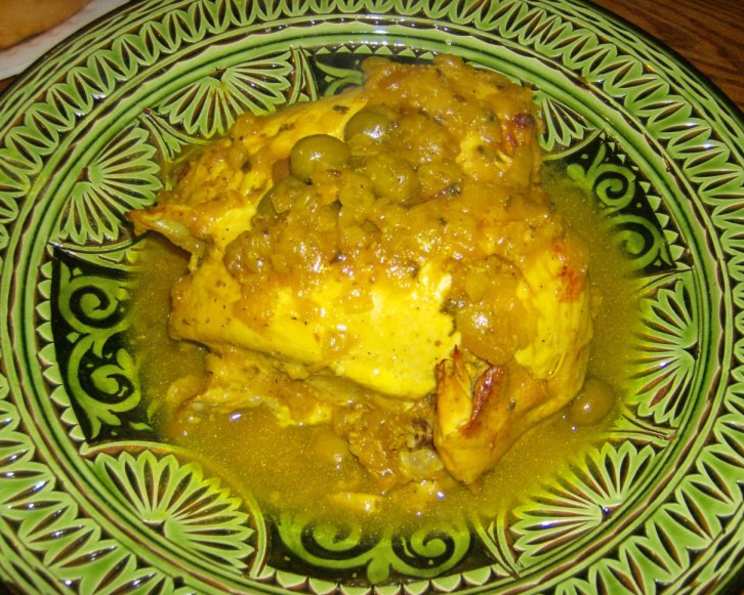
Traditional Moroccan Chicken with Preserved Lemon and Olives
The scent of warm spices, citrus, and olives instantly transports me back to a sun-drenched courtyard in Marrakech. I remember sitting cross-legged on a colorful rug, the air filled with the melodic sounds of Arabic conversation and the tantalizing aroma of tagine simmering over coals. My first taste of Moroccan chicken, fragrant with preserved lemons and olives, was a revelation – a harmonious blend of sweet, savory, and tangy flavors that I’ve been chasing ever since.
Recipe Overview
- Prep Time: 20 minutes (plus 6+ hours marinating)
- Cook Time: 30 minutes
- Total Time: 50 minutes (plus marinating)
- Servings: 4-6
- Dietary Type: Gluten-Free (naturally)
Ingredients
Marinade:
- 1 whole chicken
- 1 tablespoon olive oil
- ½ teaspoon smen, softened (see note below)
- 2 large garlic cloves, peeled & grated
- 1 tablespoon fresh parsley, finely chopped
- ½ teaspoon turmeric
- ¼ teaspoon salt
- ¼ teaspoon black pepper
Sauce:
- 2-3 onions, chopped
- 2 tablespoons olive oil
- 1 tablespoon canola oil
- 2 teaspoons ginger
- 1 teaspoon turmeric
- ½ teaspoon salt
- ½ teaspoon black pepper
- ¼ teaspoon powdered saffron
- ½ teaspoon smen
- 1 tablespoon fresh parsley, finely chopped
- ½ preserved lemon, rinsed (rind only, sliced)
- ½ cup green olives, cracked & pitted
Browning Mixture:
- ½ preserved lemon, fleshly insides (remove seeds)
- ½ teaspoon smen
- 1 teaspoon butter
- 1 pinch saffron
Note on Smen: Smen is a traditional Moroccan preserved butter, similar to ghee but with a distinct, tangy flavor. It can be purchased online or at Middle Eastern stores. If you can’t find smen, you can substitute with ghee or clarified butter, but the flavor won’t be exactly the same.
Equipment Needed
- Large bowl
- Pressure cooker
- Baking pan
- Small bowl
Instructions
- Prepare the chicken: Use a skewer to poke small holes all over the chicken. This helps the marinade penetrate the meat and keeps it moist.
- Make the marinade: In a large bowl, mix together the olive oil, softened smen, grated garlic, chopped parsley, turmeric, salt, and black pepper.
- Marinate the chicken: Thoroughly coat the meat and skin of the chicken with the marinade. Ensure every part is covered. Place the marinated chicken in the refrigerator and let it sit for at least 6 hours, or preferably overnight. The longer it marinates, the more flavorful it will be.
- Prepare the preserved lemon: Remove the flesh from the preserved lemon that will be used in the browning mixture. Set the flesh aside.
- Start the cooking process: Place the marinated chicken in a large pressure cooker. Add the chopped onions, olive oil, canola oil, ginger, turmeric, salt, black pepper, powdered saffron, smen, chopped parsley, sliced preserved lemon rind, and cracked and pitted green olives to the cooker.
- Add Water: Add enough water to the pressure cooker to reach halfway up the side of the chicken. Be careful not to add too much, as this will dilute the sauce.
- Pressure cook the chicken: Seal the pressure cooker with the lid and cook for 20 minutes after it begins to hiss. Cooking times may vary depending on your pressure cooker, so refer to your manufacturer’s instructions.
- Check for doneness: After 20 minutes, carefully release the pressure and open the cooker. Use a fork to poke the chicken and make sure that it is done and no blood leaks out. If it’s not fully cooked, seal the cooker again and cook for a few more minutes.
- Prepare the browning mixture: While the chicken is cooking, mix the ingredients for the browning mixture in a small bowl. Combine the preserved lemon flesh (remove any seeds), smen, butter, and a pinch of saffron.
- Brown the chicken: Once the chicken is done cooking in the pressure cooker, carefully remove it and place it on a baking pan. Use a brush to coat both sides of the chicken with the browning mixture.
- Bake the chicken: Place the baking pan in the oven and cook at 350 degrees Fahrenheit (175 degrees Celsius) until the chicken is golden brown, about 15-20 minutes. Keep a close eye on it to prevent burning.
- Thicken the sauce: While the chicken is browning in the oven, simmer the sauce from the pressure cooker over medium heat until it thickens, about 10 minutes. Stir occasionally to prevent sticking. If you want your sauce to be more brown in color, add ¼-½ teaspoon of sugar to the pot while simmering. This will caramelize the sauce and deepen the flavor.
- Serve the chicken: Place the browned chicken in the center of a large serving dish. Pour the thickened sauce over the chicken. If desired, top with fried potatoes.
- Enjoy! Serve hot with thick, crusty bread to soak up the flavorful sauce.
Expert Tips & Tricks
- Marinating is key: Don’t skimp on the marinating time. The longer the chicken sits in the marinade, the more flavorful and tender it will be. Overnight marinating is ideal.
- Adjust the spices: Feel free to adjust the spice levels to your liking. If you prefer a spicier dish, add a pinch of cayenne pepper or some harissa paste to the marinade or sauce.
- Use good quality preserved lemons: The flavor of preserved lemons can vary greatly depending on the brand. Look for lemons that are soft and fragrant, with a good balance of sourness and saltiness.
- Don’t overcook the chicken: Overcooked chicken will be dry and tough. Use a meat thermometer to ensure that the chicken is cooked to an internal temperature of 165 degrees Fahrenheit (74 degrees Celsius).
- Make ahead: The sauce can be made a day ahead of time and stored in the refrigerator. This will allow the flavors to meld together even more.
Serving & Storage Suggestions
Serve the Moroccan chicken hot, garnished with fresh parsley or cilantro. It’s delicious with a side of couscous, rice, or roasted vegetables. As mentioned, fried potatoes are a very traditional accompaniment!
Storage: Leftover Moroccan chicken can be stored in an airtight container in the refrigerator for up to 3 days. It can also be frozen for up to 2 months.
Reheating: To reheat, simply place the chicken and sauce in a saucepan over medium heat and cook until heated through. You can also reheat it in the microwave.
Nutritional Information
| Nutrient | Amount per Serving | % Daily Value |
|---|---|---|
| Calories | 650 kcal | 33% |
| Total Fat | 45g | 69% |
| Saturated Fat | 15g | 75% |
| Cholesterol | 200mg | 67% |
| Sodium | 800mg | 33% |
| Total Carbohydrate | 10g | 3% |
| Dietary Fiber | 2g | 8% |
| Sugars | 3g | N/A |
| Protein | 50g | 100% |
Note: Nutritional information is an estimate and may vary depending on specific ingredients and cooking methods.
Variations & Substitutions
- Vegetarian/Vegan Option: Substitute the chicken with chickpeas or firm tofu for a vegetarian or vegan version. Adjust cooking times accordingly.
- Spice it up: Add a pinch of red pepper flakes or a dash of harissa paste for extra heat.
- Sweeten the deal: Add a tablespoon of honey or maple syrup to the sauce for a touch of sweetness.
- Citrus Variety: Experiment with different types of citrus, such as oranges or grapefruits, in addition to or in place of the preserved lemon.
- Herbal Infusion: Infuse the sauce with other fresh herbs like cilantro, mint, or dill for a unique flavor profile.
FAQs (Frequently Asked Questions)
Q: Can I make this without a pressure cooker?
A: Yes, you can. Use a Dutch oven or heavy-bottomed pot. Increase the cooking time significantly, simmering until the chicken is very tender, about 1.5 – 2 hours.
Q: What can I use if I can’t find preserved lemons?
A: Preserved lemons have a unique flavor, but you can try substituting with lemon zest and a bit of extra salt. However, the flavor will not be quite the same.
Q: Can I use chicken thighs instead of a whole chicken?
A: Absolutely. Adjust the cooking time accordingly, as chicken thighs will cook faster than a whole chicken. Reduce the pressure cooking time to about 15 minutes.
Q: How do I crack green olives?
A: Gently smash the olives with the flat side of a knife or the bottom of a glass. This will help them release their flavor into the sauce.
Q: Is smen absolutely necessary?
A: While smen adds a unique flavor, ghee or clarified butter can be used as a substitute. However, try to find smen for the most authentic taste.
Final Thoughts
This Traditional Moroccan Chicken recipe is more than just a dish; it’s a journey to a land of vibrant flavors and warm hospitality. I urge you to embark on this culinary adventure, filling your kitchen with the enticing aromas of Morocco. Don’t be afraid to experiment with the spices and ingredients to create your own unique version. Gather your loved ones, share this delicious meal, and let the flavors transport you to a faraway land. And, of course, I’d love to hear your thoughts and experiences after you’ve given it a try!