
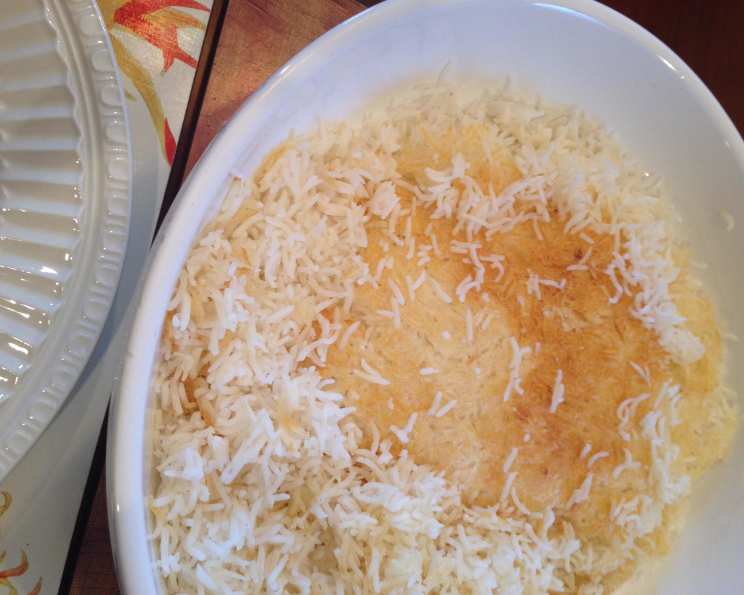
The Golden Jewel: Mastering Traditional Persian Basmati Rice with Tadig
The first time I tasted tadig, the crispy, golden crust at the bottom of a pot of Persian rice, I was a university student far from home. A friend’s mother, visiting from Tehran, made a massive pot for our potluck. The fluffy, fragrant rice was incredible, but the tadig… that was another level. Each bite was an explosion of texture – a satisfying crunch giving way to the nutty flavor of perfectly caramelized rice. I remember vying for every last piece, convinced it was the most delicious thing I’d ever eaten. From that moment on, I was determined to learn the secrets of making this magnificent dish myself.
Recipe Overview
- Prep Time: 15 minutes
- Cook Time: 43 minutes
- Total Time: 58 minutes
- Servings: 12
- Yield: 9-12 cups rice
- Dietary Type: Gluten-Free
Ingredients
- Water (enough to fill a large pot)
- 3-4 tablespoons salt
- 3-4 cups basmati rice
- 1 pinch saffron
- 4 tablespoons butter
- 3-4 tablespoons oil (vegetable or canola oil recommended)
Equipment Needed
- Large, heavy-bottomed pot with a tight-fitting lid
- Colander
- Small bowl
- Mortar and pestle (optional)
- Paper towels
Instructions
-
Begin by bringing a large pot of water to a vigorous boil. It’s crucial to use a heavy-bottomed pot to ensure even heat distribution and prevent scorching.
-
Add 3-4 tablespoons of salt to the boiling water. The water should taste noticeably salty, similar to seawater. This is essential for properly seasoning the rice.
-
Measure out 3-4 cups of basmati rice. Remember that one cup of dry rice yields approximately three cups of cooked rice, so adjust the quantity according to your needs.
-
Rinse the rice thoroughly. Place the rice in a bowl and cover it with water. Gently swirl the rice with your hand, then pour off the cloudy water. Repeat this rinsing process until the water runs clear. This removes excess starch, resulting in fluffier rice.
-
Add the rinsed rice to the boiling, salted water.
-
Boil the rice rapidly for precisely 5 minutes. This parboiling step is crucial for achieving the desired texture.
-
Bring the pot to the sink and turn on the cold water, allowing it to overflow and wash away the starchy water. This further removes excess starch.
-
Drain the rice completely in a colander.
-
Return the pot to the stovetop over medium to medium-high heat. Add 3-4 tablespoons of oil, ensuring the bottom of the pot is evenly coated. The amount of oil may vary depending on the size of your pot.
-
In a small bowl, prepare the saffron butter. Melt 1 tablespoon of butter per cup of dry rice. Add a pinch of saffron to the melted butter. If you have a mortar and pestle, grind the saffron threads before adding them to the butter to release their color and aroma more effectively. If not, simply add the saffron threads directly to the melted butter.
-
Using a spoon, carefully sprinkle the drained rice into the pot, creating a mound in the center. Avoid clumping the rice together.
-
Poke 3-4 holes into the top of the rice mound. Pour the melted saffron butter down these holes, allowing it to seep through the rice. This will infuse the rice with flavor and help create a beautifully golden tadig.
-
Take a scoop of rice from the mound and stir it in the bowl used to melt the butter. This ensures you capture any remaining saffron butter. Return this rice to the pot.
-
Cover the top of the pot with approximately 3 layers of paper towels. This absorbs excess steam, preventing the rice from becoming soggy.
-
Place the lid tightly over the paper towels. This creates a secure seal, trapping the steam inside the pot.
-
Cook the rice over medium-medium high heat for 8 minutes.
-
Reduce the heat to the lowest setting and steam the rice for an additional 35 minutes. This gentle steaming process allows the rice to fully cook and develop its fluffy texture.
-
To serve, carefully scoop the rice from the top of the pot, avoiding disturbing the crust on the bottom.
-
Once all the fluffy rice has been removed, carefully loosen the tadig from the bottom of the pot. Place a plate large enough to cover the opening of the pot over the tadig and invert the pot, flipping the tadig onto the plate. The tadig should be a beautiful golden brown color. If it is black, the heat was too high, and the rice may taste burnt.
-
For added variety, consider experimenting with sliced rounds of potato or pita bread on the bottom of the pot before adding the rice. These alternatives also create a delicious crispy layer.
Expert Tips & Tricks
- Rice Quality: Use high-quality basmati rice for the best results. Aged basmati rice tends to be less sticky and produces a fluffier final product.
- Saffron Power: The quality of your saffron will significantly impact the color and aroma. Look for saffron threads that are deep red and have a strong fragrance.
- Heat Control is Key: Mastering the heat control is crucial for achieving perfect tadig. It may take a few tries to find the sweet spot for your stove. If the tadig is burning, reduce the heat slightly. If it’s not browning, increase the heat a little.
- Paper Towel Technique: The paper towels are essential for absorbing excess moisture. Make sure they are placed securely between the pot and the lid to prevent steam from escaping.
- Pre-soaking Rice: Soaking the rice for 30 minutes before cooking can further improve the texture. Simply rinse the rice as described above, then cover it with cold water and let it soak. Drain the rice before proceeding with the boiling step.
Serving & Storage Suggestions
Serve the Persian rice immediately after cooking. The fluffy rice is a perfect accompaniment to a variety of Persian stews (khoresh) and kebabs. The tadig can be served as a side dish or as a delicious snack on its own.
Leftover rice can be stored in an airtight container in the refrigerator for up to 3 days. To reheat, sprinkle a little water over the rice and microwave it or steam it gently in a pot. The tadig may lose some of its crispness upon reheating. Freezing is not recommended, as it can alter the texture of the rice.
Nutritional Information
| Nutrient | Amount per Serving | % Daily Value |
|---|---|---|
| Calories | 235 kcal | N/A |
| Total Fat | 8.6g | 13% |
| Saturated Fat | 3.1g | 15% |
| Cholesterol | 10.2mg | 3% |
| Sodium | 1781.2mg | 74% |
| Total Carbohydrate | 35.7g | 11% |
| Dietary Fiber | 1.6g | 6% |
| Sugars | 0.4g | 1% |
| Protein | 3.7g | 7% |
Note: Nutritional information is an estimate and may vary based on specific ingredients and portion sizes.
Variations & Substitutions
- Vegan Option: Substitute the butter with a plant-based butter alternative.
- Aromatic Infusion: Add a few cardamom pods or a cinnamon stick to the pot while steaming for a subtle aromatic flavor.
- Herbaceous Twist: Incorporate finely chopped fresh herbs like dill or parsley into the rice after it’s cooked.
- Potato or Bread Tadig: Get creative with the tadig base! Sliced potatoes, lavash bread, or even tortillas can be used to create unique and flavorful crusts.
- Turmeric Infusion: Add a pinch of turmeric to the saffron butter for a slightly different color and flavor profile.
FAQs (Frequently Asked Questions)
Q: Why is my rice sticky?
A: Sticky rice is often caused by insufficient rinsing or using too much water. Be sure to rinse the rice thoroughly until the water runs clear and use the correct water-to-rice ratio.
Q: How do I prevent the tadig from burning?
A: The key is to control the heat. Start with medium-high heat to create the crust, then reduce the heat to the lowest setting to prevent burning. If the tadig starts to burn, immediately reduce the heat further.
Q: Can I make this recipe in a rice cooker?
A: While you can cook the rice in a rice cooker, achieving a proper tadig is difficult. The traditional pot method is recommended for the best results.
Q: What if I don’t have saffron?
A: Saffron adds a unique flavor and color, but it can be omitted if unavailable. A pinch of turmeric can be used as a substitute for color, but the flavor will be different.
Q: How can I tell if the rice is cooked through?
A: The rice should be tender and fluffy. If it is still hard, add a tablespoon or two of water to the pot, cover it, and continue steaming for a few more minutes.
Final Thoughts
Making Persian rice with tadig might seem daunting at first, but with a little practice, you’ll be rewarded with a truly exceptional dish. The combination of fluffy, fragrant rice and the irresistible crispy crust is a culinary experience like no other. Don’t be afraid to experiment with different variations and find what works best for you. I encourage you to try this recipe and share your creations with friends and family. Serve it alongside a hearty ghormeh sabzi or jujeh kabob for a truly memorable Persian feast!