
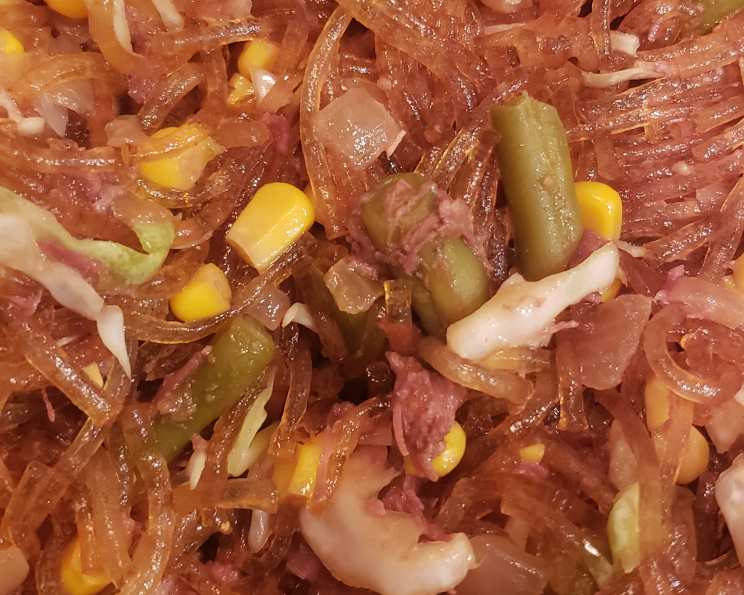
Traditional Sapa Sui (Samoan Chop Suey)
I can still picture it vividly: the vibrant tablecloth, the boisterous laughter of family, and the aroma that filled my friend David’s house every Sunday. It wasn’t a fancy affair, but the sheer abundance of food, lovingly prepared by his Samoan mother, was legendary. And among all the incredible dishes, the Sapa Sui, or Samoan Chop Suey, always stood out. The savory blend of tender noodles, flavorful meat, and crisp vegetables, simmered in a rich, umami-packed sauce, was a taste of home and hospitality that I’ll never forget. It was a comforting, heartwarming experience that cemented my love for this dish.
Recipe Overview
- Prep Time: 15 minutes
- Cook Time: 15 minutes
- Total Time: 30 minutes
- Servings: 6-8
- Dietary Type: Varies depending on meat used
Ingredients
- 250 g mung bean vermicelli (also called cellophane noodles or glass noodles – found in the Asian section of your supermarket)
- 2 tablespoons oil
- 1 large onion, diced
- 2-4 garlic cloves, crushed (or 1 tablespoon of prepared garlic in a jar)
- 1 tablespoon of fresh grated gingerroot (or 1 tablespoon of ginger from a jar)
- 300 g mincemeat (beef, chicken, or pork) or 500 g of chopped meat (beef, chicken, or pork)
- 2 tablespoons soy sauce
- 2 cups water
- ½ cup soy sauce
- 2 tablespoons ketjap manis (sweet soy sauce)
- 2-5 cups chopped vegetables (fresh or frozen – a mix of carrots, celery, cabbage, and green beans works well)
- 1 teaspoon chicken stock powder or 1 teaspoon beef stock powder
Equipment Needed
- Large pan or wok
- Cutting board
- Knife
- Measuring cups and spoons
Instructions
-
In a large pan or wok, heat the oil over medium-high heat. Add the diced onion, crushed garlic, and grated ginger. Fry until the onion becomes translucent and fragrant, about 3-5 minutes. Be careful not to burn the garlic.
-
Add the mincemeat or chopped meat to the pan. Fry for no more than 2 minutes, just until it’s seared on the outside. Stir frequently to prevent burning and break up any large clumps.
-
Pour in the 2 tablespoons of soy sauce and the 2 cups of water. The water should almost, but not completely, cover the meat. Bring the mixture to a simmer over medium heat. Let it simmer gently while you prepare the noodles, which should take approximately 5 minutes.
-
Prepare the mung bean vermicelli according to the package instructions. Typically, this involves placing the noodles in a bowl and covering them with hot water. Let them stand until they are re-hydrated and pliable, about 3-5 minutes.
-
Once the noodles are softened, drain them and use kitchen scissors to snip them into shorter strands. You want each strand to be a manageable length for easy eating.
-
Add the snipped noodles to the pan with the meat mixture, along with 1 cup of the noodle soaking water.
-
Add the remaining ingredients: the ½ cup of soy sauce, ketjap manis, chopped vegetables, and chicken or beef stock powder.
-
Stir everything together thoroughly. The mixture will appear soupy at this stage, which is normal.
-
Let the Sapa Sui simmer over medium heat for 10-15 minutes, or until the vegetables are tender-crisp and the sauce has thickened slightly. Be sure to stir occasionally to prevent sticking.
-
Serve hot and enjoy!
Expert Tips & Tricks
-
For Extra Flavor: To enhance the flavor profile, consider adding a small amount of sesame oil or a dash of fish sauce (patis) to the dish during the last few minutes of cooking.
-
Vegetable Variety: Feel free to experiment with different vegetables based on your preferences and what’s available. Bell peppers, mushrooms, bok choy, and snow peas are all great additions.
-
Meat Choices: While the recipe calls for mincemeat, you can use cubed chicken thighs, sliced pork tenderloin, or even shrimp for a different protein option. Adjust the cooking time accordingly.
-
Adjusting Sweetness: Ketjap manis is a sweet soy sauce. Adjust the amount to your liking. If you don’t have ketjap manis, you can substitute with regular soy sauce and a teaspoon of brown sugar or honey.
-
Thickening the Sauce: If the sauce is too thin for your liking, you can mix a tablespoon of cornstarch with a tablespoon of cold water to make a slurry. Add the slurry to the pan during the last few minutes of cooking, stirring constantly, until the sauce thickens to your desired consistency.
Serving & Storage Suggestions
Serve the Sapa Sui hot, straight from the pan. It’s a complete meal on its own, but you can also serve it with a side of steamed rice for a more substantial meal. Garnishing with chopped green onions or a sprinkle of sesame seeds adds a nice finishing touch.
Leftovers can be stored in an airtight container in the refrigerator for up to 3-4 days. To reheat, simply microwave until heated through, or warm it in a pan on the stovetop over medium heat, adding a splash of water if needed to prevent sticking. Sapa Sui can also be frozen for longer storage (up to 2 months), but the texture of the noodles and vegetables may change slightly upon thawing.
Nutritional Information
| Nutrient | Amount per Serving | % Daily Value |
|---|---|---|
| Calories | 351.4 kcal | – |
| Calories from Fat | 47 g | 14% |
| Total Fat | 5.3 g | 8% |
| Saturated Fat | 0.7 g | 3% |
| Cholesterol | 0 mg | 0% |
| Sodium | 1711.3 mg | 71% |
| Total Carbohydrate | 63.5 g | 21% |
| Dietary Fiber | 8.9 g | 35% |
| Sugars | 25.9 g | – |
| Protein | 14.2 g | 28% |
Note: Nutritional information is an estimate and can vary based on specific ingredients and portion sizes.
Variations & Substitutions
-
Vegetarian Sapa Sui: Omit the meat and add extra vegetables like tofu, mushrooms, or tempeh. Use vegetable stock powder instead of chicken or beef stock powder.
-
Gluten-Free Sapa Sui: Ensure that the soy sauce and ketjap manis are gluten-free. Some brands use wheat as a thickener. Use tamari instead of soy sauce for a guaranteed gluten-free option. Check the ingredient list for the chicken/beef stock powder as well.
-
Spicy Sapa Sui: Add a pinch of red pepper flakes or a drizzle of chili oil to the pan while cooking for a spicy kick. You could also include sliced jalapenos with the other vegetables.
-
Seafood Sapa Sui: Substitute the meat with shrimp, scallops, or a combination of seafood. Reduce the cooking time to prevent the seafood from becoming overcooked.
-
Coconut Sapa Sui: Replace some of the water with coconut milk for a richer, creamier sauce. This will add a subtle coconut flavor to the dish.
FAQs (Frequently Asked Questions)
Q: Can I make this dish ahead of time?
A: Yes, you can prepare the Sapa Sui a day in advance and store it in the refrigerator. However, keep in mind that the noodles may absorb some of the sauce as it sits, so you may need to add a little water when reheating.
Q: Can I use different types of noodles?
A: While mung bean vermicelli is traditional, you can experiment with other types of noodles such as rice noodles or wheat noodles. Just adjust the cooking time accordingly.
Q: What if I don’t have ketjap manis?
A: Ketjap manis is a sweet soy sauce, and you can substitute with regular soy sauce mixed with a teaspoon or two of brown sugar or honey to achieve a similar flavor.
Q: Is it okay to use frozen vegetables?
A: Absolutely! Frozen vegetables are a convenient and nutritious option. Just add them directly to the pan without thawing.
Q: Can I add eggs to this dish?
A: Yes, you can scramble an egg or two and add it to the pan during the last few minutes of cooking for added protein and richness.
Final Thoughts
I hope you’ll give this Traditional Sapa Sui recipe a try! It’s a versatile and delicious dish that’s perfect for a weeknight dinner or a casual gathering. Feel free to adapt it to your own tastes and preferences, and don’t be afraid to experiment with different ingredients. And if you are feeling adventurous, consider pairing it with a refreshing glass of passion fruit juice. Share your creations and feedback – I’d love to hear how it turns out!