
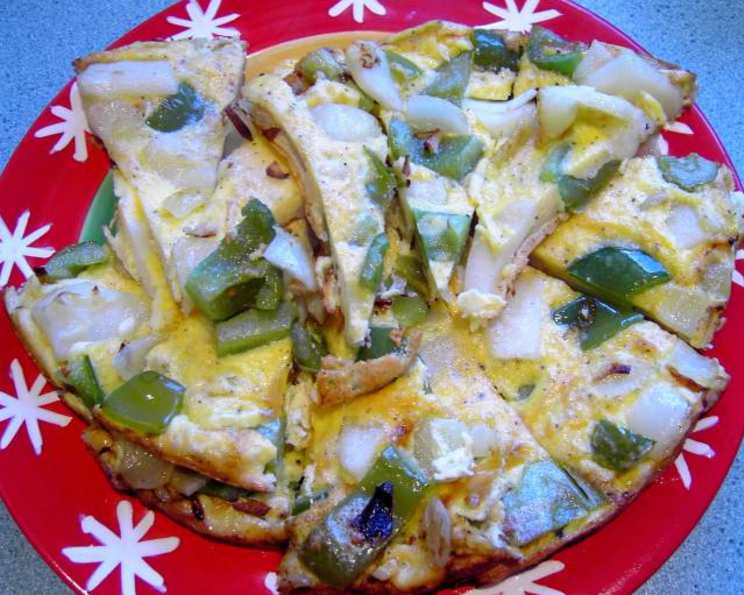
Unveiling the Secrets of a Traditional Spanish Omelette
The aroma alone transports me back to bustling tapas bars in Madrid. I remember sitting at a small, wobbly table, the vibrant chatter of locals filling the air, as a wedge of golden-brown tortilla Española was placed before me. The first bite – the soft, yielding potatoes, the subtle sweetness of caramelized onions, all bound together by perfectly cooked egg – was pure culinary magic. It wasn’t just a dish; it was a taste of Spain, a moment of pure joy. I knew right then that I needed to learn this recipe and share it with the world.
Recipe Overview
- Prep Time: 20 minutes
- Cook Time: 40 minutes
- Total Time: 1 hour
- Servings: 6
- Yield: 1 omelette
- Dietary Type: Gluten-Free
Ingredients
- Oil (for frying)
- 5 large potatoes
- 1 large brown onion
- 1 green capsicum
- Salt and pepper
- 5 (60 g) eggs
- 2 garlic cloves
Equipment Needed
- Large bowl
- Deep pan or large skillet
- Paper towels
- Another bowl for beating eggs
- Non-stick pan (approx. 8-10 inches)
- Plate (slightly larger than the non-stick pan)
Instructions
- Begin by preparing the vegetables. Wash and peel the potatoes. Cut them into quarters lengthwise, then slice thinly across the quarters. The goal is uniform slices for even cooking.
- Place the sliced potatoes in a large bowl.
- Slice the onion thinly.
- Remove the seeds from the green capsicum and cut it into thick slices. Add the onion and capsicum to the bowl with the potatoes.
- Season generously with salt to taste and mix everything together thoroughly.
- Pour a generous amount of oil (enough to almost submerge the vegetables) into a deep pan or large skillet. Heat the oil over medium heat.
- Carefully add the potato, onion, and capsicum mixture to the hot oil. Fry the vegetables, stirring occasionally, until the potatoes are soft and slightly golden. This should take about 20-25 minutes. The key is to cook them gently; you don’t want them to brown too quickly.
- Once the potatoes are tender, remove them from the pan using a slotted spoon and drain them thoroughly on paper towels to remove excess oil.
- While the vegetables are draining, crack the eggs into another bowl. Beat them well with a fork or whisk until they are light and frothy.
- Add the cooked potato mixture to the beaten eggs.
- Season with salt and pepper to taste. Finely chop the garlic cloves and add them to the mixture. Mix gently but thoroughly, ensuring that all the vegetables are coated with the egg. The mixture should appear as though it is just coating the potato. If the mixture seems too dry (not enough egg to bind everything), add another egg.
- Place a non-stick pan over medium heat. Spray the pan with a little oil.
- Pour the potato and egg mixture into the hot pan.
- Cook the mixture over medium heat until the bottom of the omelette looks cooked and set – enough that you can flip it without it falling apart. This will take about 8-10 minutes. You can gently lift the edges with a spatula to check.
- Place a plate (slightly larger than the pan) over the pan. Carefully but confidently flip the omelette onto the plate.
- Slide the omelette back into the pan, uncooked side down. Cook the other side for another 5-8 minutes, until it is set but still slightly soft in the center. Be careful not to overcook it, as this will make it dry.
- Remove the omelette from the pan and let it cool slightly before slicing and serving. This is a recipe that needs practice until it is just right.
Expert Tips & Tricks
- Low and Slow: The key to a truly great tortilla Española is to cook the potatoes and onions slowly and gently in the oil. This allows them to soften and caramelize without browning too quickly, resulting in a sweeter, richer flavor.
- Egg Ratio: The perfect egg-to-potato ratio is crucial. Too many eggs, and the tortilla will be rubbery. Too few, and it won’t hold together. Start with the suggested amount and add more only if needed.
- Patience is Key: Don’t rush the cooking process. Flipping the tortilla can be tricky, so make sure the bottom is well-set before attempting it. If you’re nervous, practice with a smaller omelette first.
- Adjust for Doneness: Some people prefer their tortilla slightly runny in the middle, while others prefer it fully cooked. Adjust the cooking time accordingly to your preference. A toothpick inserted into the center should come out mostly clean, but a little moistness is okay.
- Consider using duck eggs in place of chicken eggs for a richer flavor and texture.
- For a smokier flavor, use smoked paprika when seasoning the eggs.
Serving & Storage Suggestions
Serve the tortilla Española warm or at room temperature. It can be served as a tapa, sliced into squares, or as a main course, accompanied by a salad and crusty bread. Leftovers can be stored in the refrigerator for up to 3 days. To reheat, warm gently in a skillet or in the microwave. The tortilla can also be served cold, straight from the fridge.
Nutritional Information
| Nutrient | Amount per Serving | % Daily Value |
|---|---|---|
| Calories | 350 kcal | 18% |
| Total Fat | 20g | 31% |
| Saturated Fat | 5g | 25% |
| Cholesterol | 180mg | 60% |
| Sodium | 200mg | 8% |
| Total Carbohydrate | 30g | 10% |
| Dietary Fiber | 4g | 16% |
| Sugars | 5g | |
| Protein | 12g | 24% |
Variations & Substitutions
- Spicy Tortilla: Add a pinch of cayenne pepper or a finely chopped chili pepper to the egg mixture for a kick.
- Chorizo Tortilla: Fry some diced chorizo sausage along with the potatoes and onions for a smoky, savory flavor.
- Vegetarian Tortilla: Add other vegetables, such as mushrooms, zucchini, or bell peppers, to the potato mixture.
- Cheese Tortilla: Sprinkle some grated Manchego cheese over the top of the tortilla during the last few minutes of cooking for a cheesy, melted topping.
- Herbed Tortilla: Add fresh herbs, such as parsley, thyme, or rosemary, to the egg mixture for a fragrant twist.
FAQs (Frequently Asked Questions)
Q: Why is my tortilla sticking to the pan?
A: Make sure you’re using a non-stick pan and that you’ve sprayed it with oil. Also, ensure the bottom of the tortilla is cooked and set before attempting to flip it.
Q: How do I flip the tortilla without it breaking?
A: Use a plate slightly larger than the pan. Place the plate over the pan, then carefully but confidently flip the pan over, so the tortilla lands on the plate. Then, slide the tortilla back into the pan.
Q: Can I make this ahead of time?
A: Yes, the tortilla can be made ahead of time and stored in the refrigerator. It’s best served warm or at room temperature, but it can also be eaten cold.
Q: How do I prevent the tortilla from being dry?
A: Don’t overcook it. The center should still be slightly soft and moist.
Q: Can I use a different type of potato?
A: Yes, but waxy potatoes like Yukon Gold are ideal because they hold their shape well during cooking. Russet potatoes tend to break down more.
Final Thoughts
Now it’s your turn to embark on this culinary adventure and recreate the magic of a traditional Spanish omelette in your own kitchen. Don’t be intimidated by the flipping – with a little practice, you’ll master it in no time. This recipe is more than just a set of instructions; it’s an invitation to experience the heart and soul of Spanish cuisine. So gather your ingredients, embrace the process, and share this delicious dish with your loved ones. And if you find your own special twist, please share it in the comments below – I’m always eager to learn! Pair your freshly made tortilla with a glass of chilled Spanish wine and some crusty bread for a truly authentic experience.