
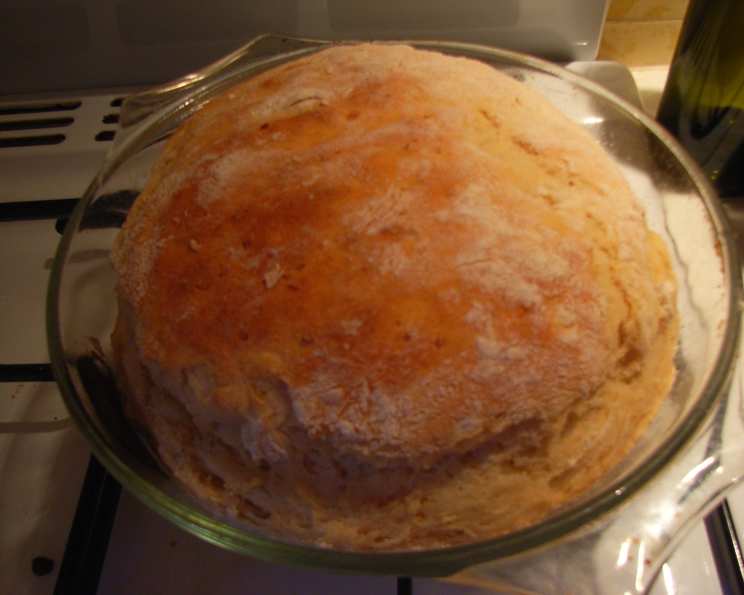
Transylvanian Potato Bread: A Taste of Home
The scent of baking bread always transports me back to my grandmother’s kitchen. She wasn’t a woman of many words, but her cooking spoke volumes. I specifically remember the first time she let me help her knead the dough for this Transylvanian potato bread, her strong hands guiding mine. The warmth of the oven, the earthy aroma of potatoes mingling with the yeasty tang – it’s a memory etched in my senses, a taste of comfort and connection that I cherish to this day. Her version was always slightly rustic, perfectly imperfect, and filled with love – just like her.
Recipe Overview
- Prep Time: 45 minutes
- Cook Time: 30 minutes
- Total Time: 3 hours 45 minutes (including rising time)
- Yields: 3 loaves
- Serves: 8-16
- Dietary Type: Vegetarian
Ingredients
- 1 kg white flour
- 600 ml water
- 4 medium potatoes, boiled until soft
- 100 g fresh yeast (or 50g dry active yeast)
- 1 1⁄2 teaspoons salt
- Oil or butter for greasing
Equipment Needed
- Large mixing bowl
- Clean kitchen towel or blanket
- Bread pans (3 standard loaf pans or baking sheet)
- Measuring cups and spoons
- Potato masher or ricer
Instructions
-
Preheat your oven to 400°F (200°C). Make sure your oven rack is positioned in the center.
-
While the oven is preheating, ensure your potatoes are boiled until they are easily pierced with a fork. Then, mash the potatoes thoroughly using a potato masher or ricer until there are no large lumps.
-
In a separate bowl, combine half of the white flour (500g) with the fresh yeast. If using dry active yeast, proof it first in the warm water according to package directions. Then, add approximately 1 cup of hot water to the yeast and flour mixture.
-
Pour this mixture over the mashed potatoes.
-
Mix the ingredients together very well for approximately 30 minutes. This initial mixing is crucial for developing the gluten and creating a good base for the bread. You can use a stand mixer with a dough hook or mix vigorously by hand. The mixture will be quite sticky at this stage.
-
Gradually knead in more of the remaining flour, adding it a little at a time, until a dough forms.
-
Place the dough in a clean, lightly oiled bowl. Cover the bowl with a clean kitchen towel or place it in a warm place (like an oven on the “warm” setting, or near a radiator). Let the dough rise for approximately 2 hours. This first rise is essential for the bread to develop its characteristic airy texture.
-
After the first rise, the dough should have doubled in size. Now, add the rest of the flour and the salt (dissolved in a little hot water) to the risen dough.
-
Knead the dough vigorously for at least 30 minutes, or until the dough no longer sticks to your hands. This is important for creating a smooth and elastic dough. If the dough is too sticky, add a little more flour, one tablespoon at a time.
-
Allow the dough to rise again for approximately 50 minutes.
-
After the second rise, divide the dough into three equal portions. You can then either shape them into loaves or create other forms, such as round boules.
-
Grease your bread pans with a bit of oil or butter. This will prevent the bread from sticking to the pans during baking.
-
Place the dough into the prepared bread pans. Allow the bread to rise for a final 30 minutes inside the bread pans. This final proof is crucial for achieving a light and airy texture.
-
Bake in the preheated oven for 30 minutes, or until the bread is golden brown and sounds hollow when tapped on the bottom. If the tops are browning too quickly, tent them loosely with foil.
Expert Tips & Tricks
- Potato Variety: The type of potato you use can affect the texture. Russet potatoes will create a drier bread, while Yukon Gold potatoes will result in a moister bread.
- Yeast Activity: Make sure your yeast is fresh and active. If it doesn’t bubble and foam when mixed with warm water, it may be expired.
- Kneading Time: Don’t skimp on the kneading! Proper kneading develops the gluten, which is essential for the bread’s structure and texture.
- Oven Temperature: Oven temperatures can vary. Keep an eye on the bread as it bakes and adjust the baking time if necessary. If the bread is browning too quickly, lower the oven temperature by 25°F (15°C).
- The Poke Test: To check for doneness, insert a toothpick into the center of the bread. If it comes out clean, the bread is done. You can also check the internal temperature with a thermometer; it should reach 200-210°F (93-99°C).
- Hydration: This recipe uses a high hydration dough. Don’t be afraid to add more flour a tablespoon at a time if the dough is unmanageable.
Serving & Storage Suggestions
This Transylvanian potato bread is delicious served warm with butter, alongside hearty stews and soups, or used to make sandwiches. It pairs beautifully with traditional Eastern European dishes like goulash or stuffed cabbage.
Store the bread at room temperature in a breadbox or airtight container for up to 3 days. For longer storage, wrap the bread tightly in plastic wrap and freeze it for up to 2 months. To reheat frozen bread, thaw it overnight at room temperature and then warm it in a preheated oven at 350°F (175°C) for 10-15 minutes. You can also slice the bread before freezing for easier portioning.
Nutritional Information
Note: Nutritional information is an estimate and can vary based on specific ingredients and portion sizes.
| Nutrient | Amount per Serving | % Daily Value |
|---|---|---|
| Calories | 420 kcal | 21% |
| Total Fat | 2g | 3% |
| Saturated Fat | 0.5g | 2% |
| Cholesterol | 0mg | 0% |
| Sodium | 380mg | 16% |
| Total Carbohydrate | 90g | 30% |
| Dietary Fiber | 6g | 24% |
| Sugars | 2g | 4% |
| Protein | 12g | 24% |
Variations & Substitutions
- Whole Wheat: Substitute up to half of the white flour with whole wheat flour for a nuttier flavor and added fiber.
- Rye Flour: Add a touch of rye flour (about 100-200g) for a more complex flavor profile.
- Herbs & Spices: Experiment with adding herbs like rosemary, thyme, or caraway seeds to the dough.
- Garlic: Add roasted garlic cloves to the mashed potatoes for an extra layer of flavor.
- Vegan Option: Ensure that the oil used for greasing is plant-based.
FAQs (Frequently Asked Questions)
Q: Why is it important to dissolve the salt in hot water?
A: Dissolving the salt in hot water helps it to distribute evenly throughout the dough, which is crucial for flavor and gluten development.
Q: Can I use a bread machine for this recipe?
A: Yes, you can use a bread machine, but you may need to adjust the liquid and flour amounts slightly to achieve the desired dough consistency. Follow your bread machine’s instructions.
Q: How do I know when the dough has risen enough?
A: The dough should have roughly doubled in size and feel light and airy. You can also use the “poke test” – gently poke the dough with your finger. If the indentation slowly springs back, it’s ready to bake.
Q: What if my bread is too dense?
A: This usually indicates that the dough hasn’t risen enough, or that the yeast wasn’t active enough. Make sure your yeast is fresh, and give the dough enough time to rise in a warm place. Over-kneading can also lead to a dense loaf.
Q: Can I freeze the dough instead of the baked bread?
A: Yes, you can freeze the dough after the first rise. Punch it down, shape it into loaves, wrap them tightly in plastic wrap, and freeze. Thaw overnight in the refrigerator before baking.
Final Thoughts
This Transylvanian potato bread is more than just a recipe; it’s a connection to tradition, a taste of home, and a reminder of the simple pleasures in life. I encourage you to try this recipe and experience the warmth and comfort of homemade bread. Don’t be afraid to experiment with variations and make it your own. And please, share your feedback and creations – I’d love to hear about your baking adventures! Consider serving this bread with a hearty bowl of goulash or a simple vegetable soup for a truly comforting meal.